A walking guide through Nagasaki's overlapping histories: Christian persecution, Chinese trade, Dutch science, and atomic peace.
Koku Travel · April 8, 2026
11 places in this guide
Nagasaki spent two centuries as Japan's only open window to the outside world. The layers of that contact are still visible. Portuguese churches stand beside Chinese temples. Dutch trading-post ruins share a waterfront with Meiji-era shipyards. And above it all, a peace park marks where the second atomic bomb fell on August 9, 1945.
Dejima: The Window
From 1641 to 1853, this tiny fan-shaped artificial island was Japan's sole point of contact with the West. Dutch traders lived here in a closely watched enclave, and Western science, medicine, and culture filtered into Japan through this single bottleneck. The reconstructed buildings are worth seeing, but visit after dark. The buildings are lit up, the night ticket is cheaper, and the Chief Factor's residence has the best period rooms.
The Chinese Quarter
Nagasaki Chinatown is one of Japan's three historic Chinatowns, a compact grid centered on Chinese-style gates. Champon noodles and sara udon originated here. At Kofukuji Temple, the first Obaku Zen temple in Japan (founded around 1620), the vermilion gates and incense-filled halls feel more Fujian than Kyushu. Visit as part of the Teramachi temple street walk, which connects four historic temples in sequence.
Sofukuji Temple, also Chinese-style Obaku Zen, has two structures designated kokuhō (Japan's highest cultural rank): the inner gate and the main Buddha hall. Look for the giant cauldron used to cook rice for the entire city during a 1681 famine.
The Christian Coast
Nagasaki's Sotome district holds UNESCO World Heritage churches built by communities that practiced Christianity in secret for over 200 years after the religion was banned. Shitsu Church, a simple whitewashed building from 1882, served the faithful who hid their practice for generations. The Father de Rotz Memorial Hall nearby tells the story of a French priest who spent 35 years building schools, a medical dispensary, and a pasta factory for the impoverished locals.
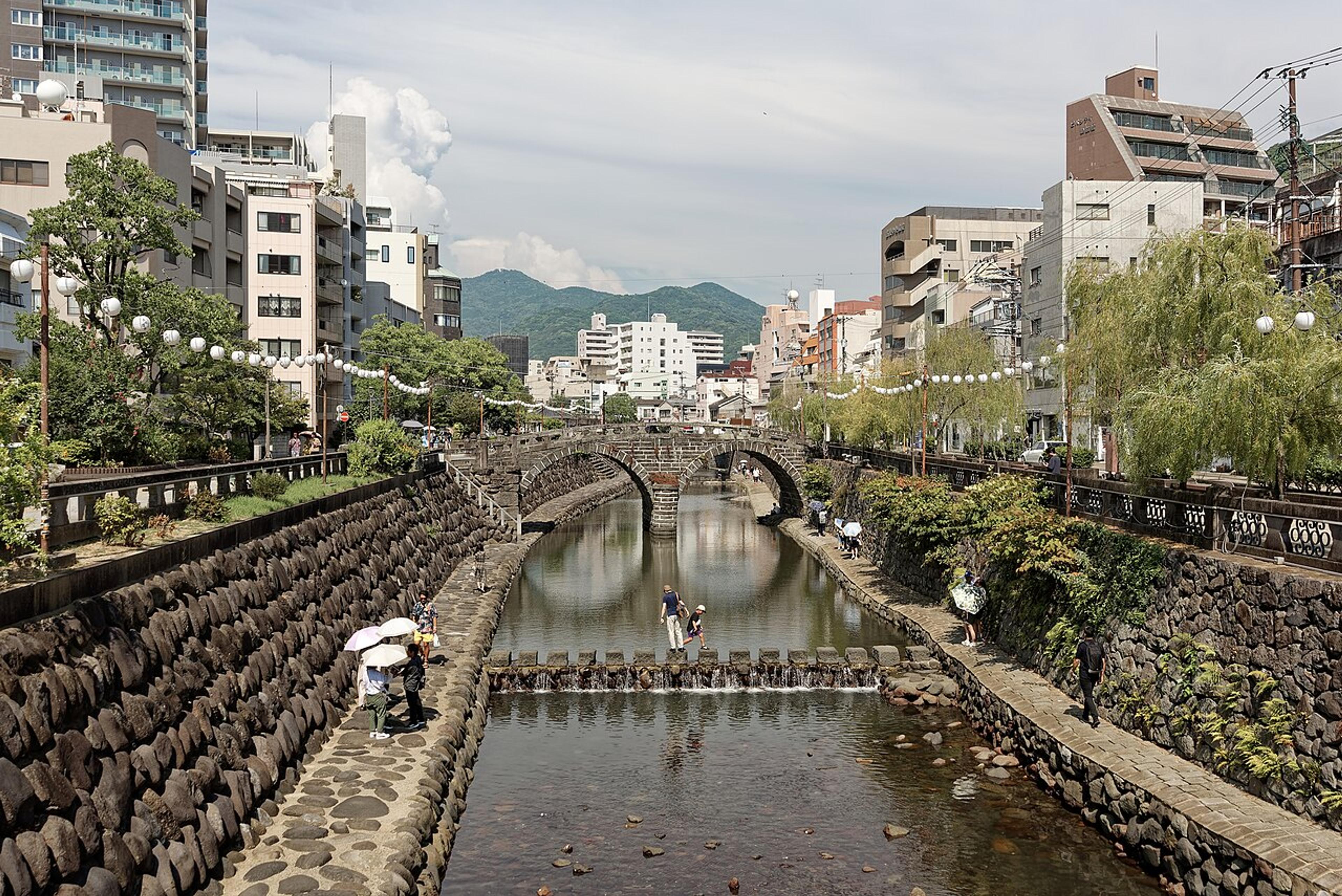
Meganebashi, the Spectacles Bridge built in 1634 by a Chinese monk, is one of Japan's oldest double-arch stone bridges. When the water is still, the arches and their reflection form a perfect pair of spectacles. Search the riverbank stones for the heart-shaped stone, about 20 meters downstream on the left bank.
The Peace Park
Established in 1955 on the ground above where the bomb detonated, killing tens of thousands in moments. The park is best experienced in early morning, when joggers and tai chi practitioners create a local atmosphere against the weight of the memorials. Sculptor Seibo Kitamura's 9.7-meter Peace Statue points one hand to the sky (the threat) and extends the other horizontally (peace).
The Atomic Bomb Museum, Peace Statue, and Urakami Cathedral form a walking route. Allow two hours.
Night View
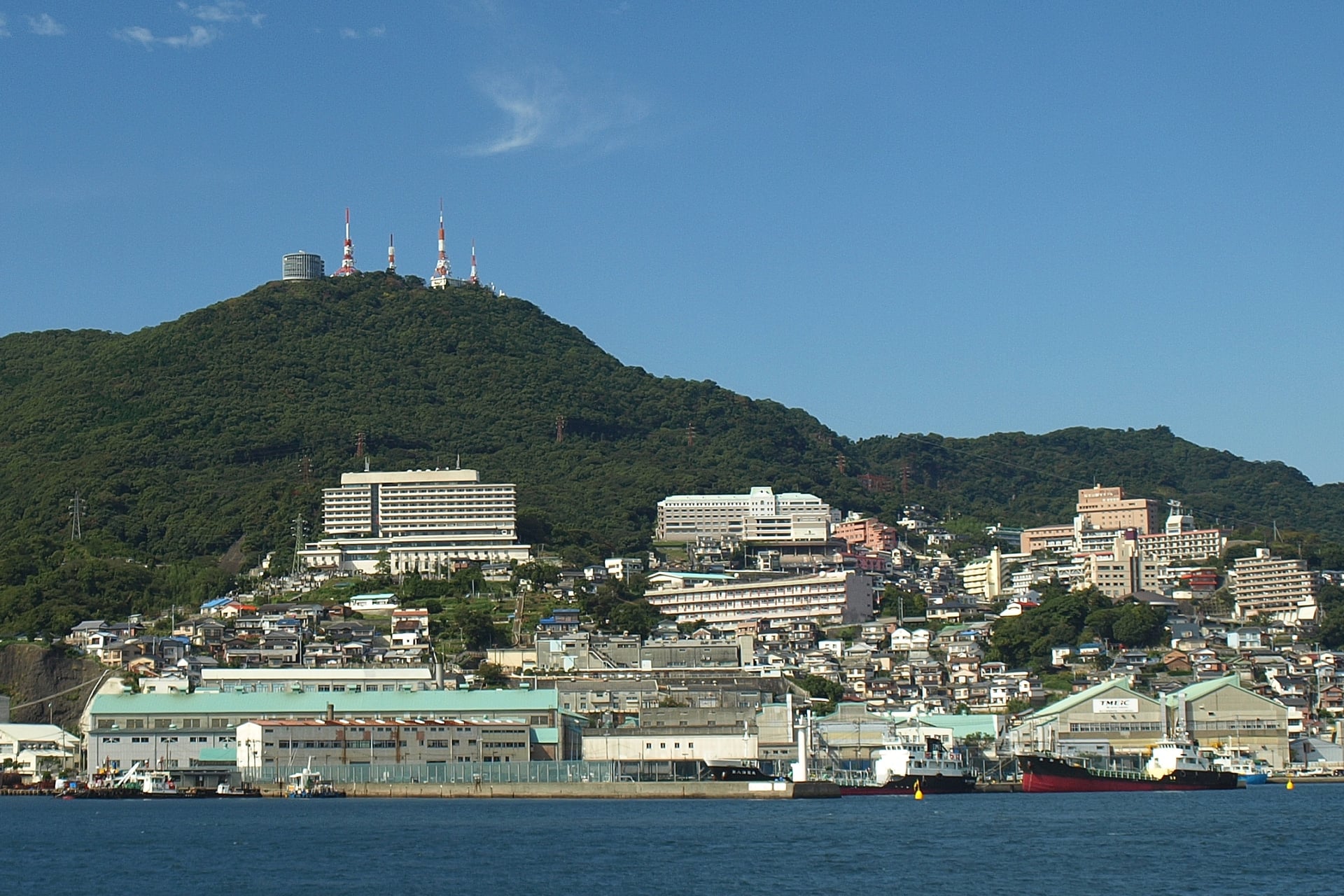
Mount Inasa's summit offers what many consider Japan's finest night view. Nagasaki's harbor city wedged between mountains, lights reflecting off the water in every direction. Arrive 30 minutes before sunset to see the transition. The last ropeway down is at 22:00.
Getting There
Nagasaki is 90 minutes from Fukuoka via the Nishi Kyushu Shinkansen, transferring at Takeo-Onsen, or a direct flight from Tokyo (1h50). The city's streetcar system covers most attractions for a flat fare. Bring walking shoes for the hillside churches.
Featured in this guide
Places to Visit
Turn this guide into a trip
We'll prioritize these 11 places when building your itinerary.