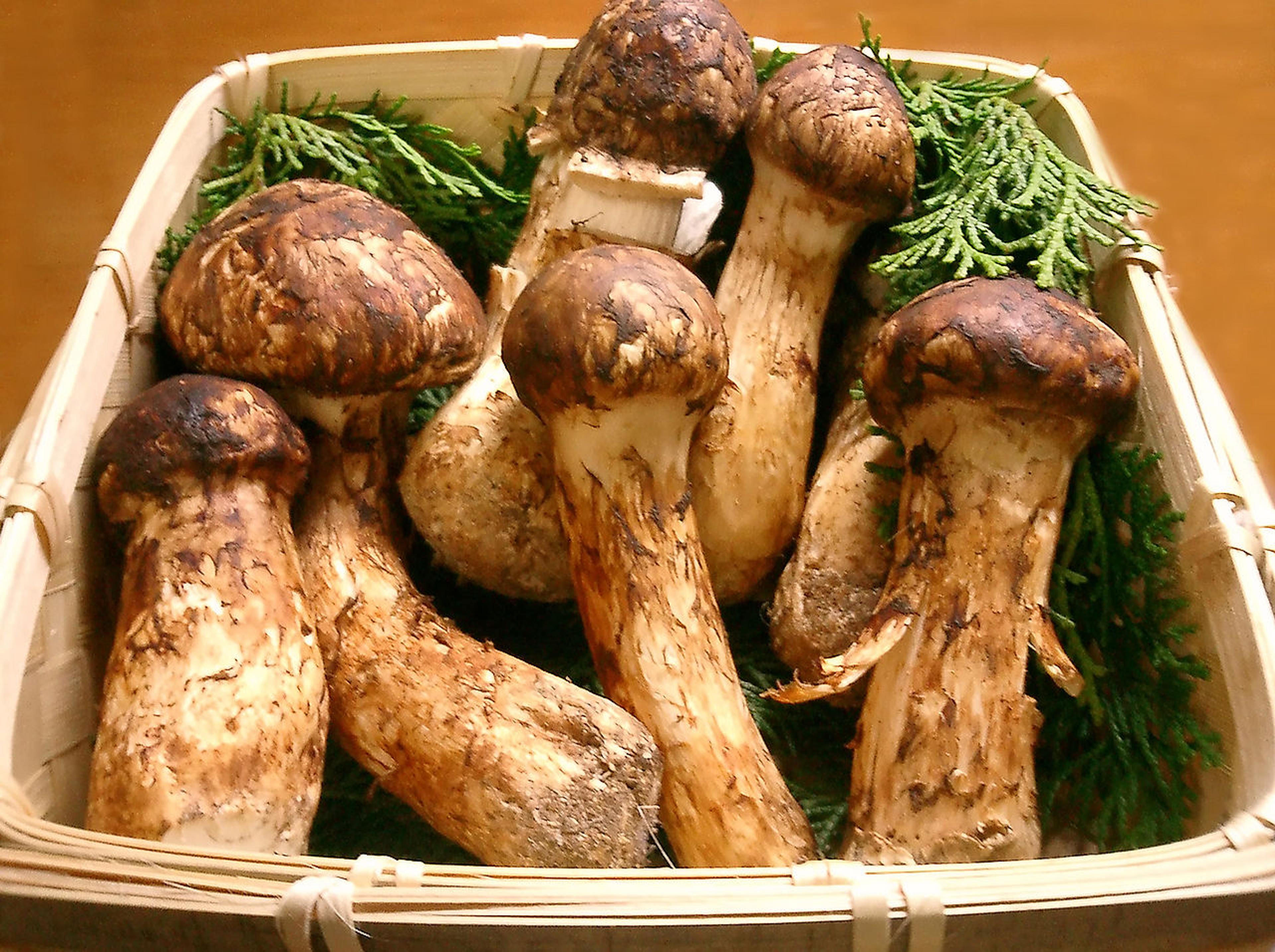
Matsutake, sanma, kuri, kaki, and shinmai run the autumn menu. What's still abundant, what's getting scarce, and where to find each.
Yuku Japan · May 4, 2026
Autumn is the harvest table. Matsutake mushrooms appear briefly in September and October, sanma fishing peaks then collapses by November, new rice arrives, persimmons hang on bare branches. Some of these run on tighter windows than they used to.
Matsutake (pine mushrooms)
The most expensive mushroom in Japan, available September and October. Domestic harvest has dropped under 1,000 tons annually; most matsutake on supermarket shelves now is imported from China, Korea, or the Pacific Northwest, with weaker aroma and a fraction of the price. Tanba matsutake from northern Kyoto is the celebrated domestic variety. Order matsutake gohan (rice with mushroom and dashi), or dobin mushi (matsutake steamed in a clay teapot). Specialty kaiseki restaurants in Kyoto put matsutake on tasting menus through October.
Sanma (Pacific saury)
The autumn fish, salt-grilled whole and eaten with grated daikon. Genuinely declining: catches have dropped from around 100,000 tons annually before 2018 to under 50,000 tons since, with Japan pushing for further quota cuts in 2026. Restaurants in Kesennuma (Miyagi) and Ofunato (Iwate), the two main saury ports, still feature sanma in September. Expect higher prices than a decade ago, smaller fish, and shorter availability windows.
Kuri (chestnuts)
September and October. The rural wagashi tradition turns kuri into kuri kinton (chestnut paste with sweet glaze) and kuri-kanoko (chestnut clusters bound with bean paste). Tanba kuri from Hyogo is the high-end name; Obuse in Nagano is the chestnut destination through autumn, with multiple specialty shops and cafes along its old merchant street.
Kaki (persimmons)
Late October through November on the tree, dried hoshigaki through winter. Wakayama and Nara prefectures lead fresh kaki production. The two main types: amagaki (sweet, ready to eat) and shibugaki (astringent, needs drying or alcohol curing). Hoshigaki are made by peeling shibugaki and hanging them under farmhouse eaves for weeks; the result is concentrated and dense.
Shinmai (new rice)
September and October. Newly harvested rice, sticky, sweet, almost sake-toned. Restaurants advertise shinmai on signs from mid-September; ryokan dinners pair it with seasonal tsukemono and grilled fish. Niigata, Akita, and Yamagata prefectures are the celebrated rice belts.