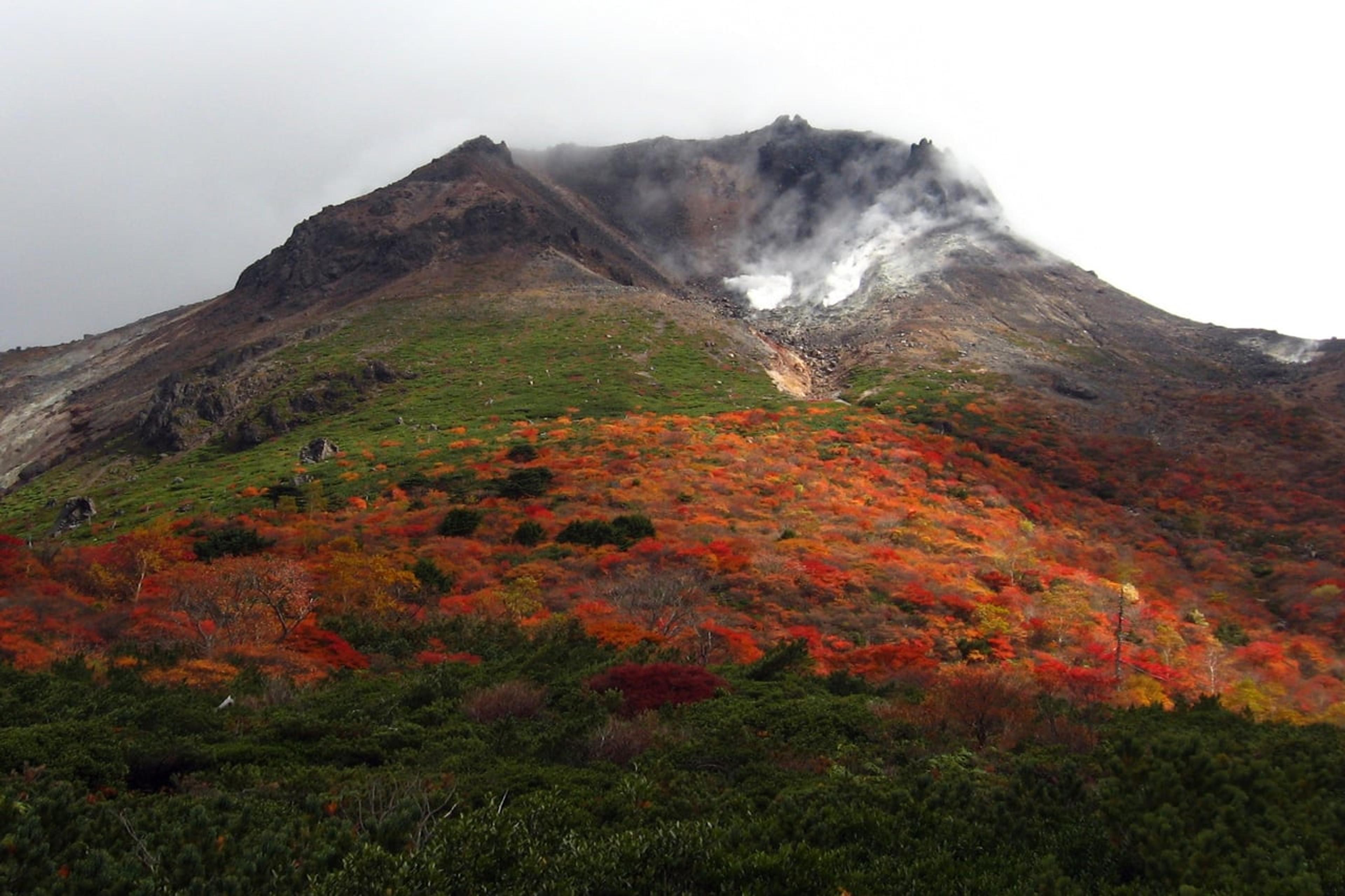
Nikko's famous shrine is only the entrance. Beyond it lie the ghostly jizo of Kanmangafuchi, Kirifuri's falls, Senjogahara's marshland trails, and Yumoto's onsen.
Koku Travel · February 16, 2026
12 places in this guide
The Other Nikko
Everyone goes to Nikko for Toshogu. The Tokugawa mausoleum is magnificent, over-the-top gilded, carved, and lacquered within an inch of its life, and it deserves its UNESCO World Heritage status and its two million annual visitors. But most of those visitors arrive on morning buses from Tokyo, tour Toshogu for two hours, and leave by early afternoon. They miss the Nikko that lies beyond the shrine precinct: a mountain landscape of waterfalls, volcanic plateaus, ancient forests, and hot spring villages that constitutes one of the best hiking and nature destinations in the Kanto region.
The geography steps upward from the shrine town. Nikko sits at about 600 meters elevation. The Irohazaka switchback road climbs to Lake Chuzenji at 1,269 meters. Above the lake, the Senjogahara plateau stretches at 1,400 meters. And at 1,500 meters, Yumoto Onsen sits at the head of its own volcanic lake, wreathed in sulfurous steam. Each elevation change shifts the ecology and the atmosphere, from temple-town tourism to genuine mountain wilderness.
Kanmangafuchi Abyss
A 20-minute walk from Toshogu, downstream along the Daiya River, past the Shinkyo sacred bridge and through quiet residential streets, leads to Kanmangafuchi Abyss, a volcanic gorge formed 7,000 years ago when lava from Mount Nantai dammed the river. The gorge walls are columnar basalt, dark and geometric, and the river runs deep and green through the narrow channel.
The path along the gorge rim is lined with 70 stone jizo statues, moss-covered and weathered, wearing red knitted caps and bibs placed by devotees. These are the Narabi Jizo (Ghostly Jizo), said to be uncountable, legend claims you will get a different number each time you count them. The statues were carved in the Edo period and range from intact to nearly formless, dissolved by centuries of rain into soft, abstract shapes. The path is quiet, shaded by massive cedar trees, and virtually empty even when Toshogu is packed. It is the single best place in Nikko to experience atmosphere without crowds.
Jizo is the bodhisattva who protects children and travelers. The red caps and bibs on the Kanmangafuchi statues are placed by parents mourning lost children or praying for their children's safety. The offerings are deeply personal. Photograph the statues respectfully and do not touch or rearrange the clothing.
Kirifuri Falls and the Hidden Waterfalls
Nikko has over 40 named waterfalls, but most visitors see only Kegon Falls, the 97-meter drop from Lake Chuzenji that is Nikko's most famous natural feature. Kegon is impressive but heavily developed: an elevator shaft (¥570) descends to a viewing platform, and the area around the falls is commercialized. The lesser-known waterfalls reward the curious with better atmosphere and fewer people.
Kirifuri Falls, a 15-minute drive from central Nikko, drops 75 meters in two stages through dense forest. A short trail from the parking lot leads to an observation platform where the falls emerge from the canopy like a curtain of white thread. The name means 'falling mist,' and in spring snowmelt the spray fills the gorge with a fine, cold fog. Urami Falls, accessible by a short walk from the Arasawa bus stop, was once famous for a path that passed behind the water curtain, the path has been closed for safety, but the front view of the falls dropping over a mossy overhang into a dark pool remains evocative. Ryuzu Falls, near Lake Chuzenji, is a wide cascade that splits around a rock formation said to resemble a dragon's head, the autumn colors here are Nikko's best.
Visit Kirifuri Falls early in the morning when mist fills the gorge and the forest light is soft and directional. The parking lot is free and rarely more than half full. Combine with a visit to Kirifuri Highland, a few kilometers further up the road, where open meadows offer views of Mount Nantai and the Nikko mountain range without the tree cover that blocks views at lower elevations.
Senjogahara Marshland Hike
The Senjogahara Plateau is a highland marsh formed in the caldera of an extinct volcano, sitting at 1,400 meters above sea level. A well-maintained boardwalk trail crosses the marshland for about 6 kilometers, connecting Ryuzu Falls on the south to Yutaki Falls on the north. The walk takes two to three hours and passes through an ecosystem that shifts from birch woodland to open wetland to dense spruce forest.
The marshland is at its most spectacular in autumn (late September to mid-October), when the grasses turn gold and the surrounding mountains blaze with color. In spring, alpine wildflowers bloom across the meadows. In summer, the birdsong is extraordinary, bush warblers, cuckoos, and flycatchers fill the silence between footsteps. At any season, the vast openness of the plateau, unusual in Japan's densely forested mountain landscapes, creates a sense of space and sky that feels almost northern European.
Senjogahara's autumn colors peak around October 1-10, roughly three weeks before central Nikko. The boardwalk can be icy in early morning from October onward, wear shoes with grip. Summer is the most comfortable season but brings afternoon thunderstorms; start early. The marshland is closed in winter when snow covers the boardwalk.
Yumoto Onsen
Yumoto Onsen sits at the head of Lake Yunoko, a small volcanic lake at the highest point of the Nikko road system. The village is small, a dozen ryokan and a few shops, and the sulfurous hot spring water feeds every bathhouse. The water emerges from the source at 78°C and is milky white with dissolved sulfur, turning the air sharp and the wooden bath tubs a distinctive gray-green. The public onsen at Onsen-ji temple costs just ¥500 and provides the full Yumoto experience in an unpretentious stone bath.
The village's setting is its other appeal. Lake Yunoko is surrounded by dense forest and backed by Mount Oku-Shirane, and the early morning mist rising from the hot lake surface creates an atmosphere of mountain isolation. In autumn, the lakeside trail through the Kotoku pastureland is a photographer's pilgrimage, the combination of golden grass, red maples, and mist makes every frame look composed. In winter, Yumoto operates a small, uncrowded ski area (day pass ¥4,100) and the outdoor onsen become even more appealing with snow falling on the water.
Yumoto ryokan range from ¥8,000 (basic room, shared bath) to ¥25,000 (kaiseki dinner, private rotenburo). For budget travelers, the Yumoto Rest House offers simple Japanese rooms for ¥6,500 with access to the communal hot spring bath. The village store sells onigiri and cup noodles, not gourmet, but sufficient for a night focused on onsen rather than cuisine.
Featured in this guide
Places to Visit

Turn this guide into a trip
We'll prioritize these 12 places when building your itinerary.