A Day in Nikko
Itinerary · Nikko · 6 min
A morning-to-evening route through Nikko's UNESCO shrines, Lake Chuzenji, Kegon Falls, and the town's signature yuba cuisine.
Koku Travel · April 8, 2026
4 places in this guide
Nikko sits 125 kilometers north of Tokyo in the mountains of Tochigi Prefecture. The Tokugawa shoguns built their most elaborate mausolea here. A volcanic lake fills the caldera above. And the town wraps all of it in yuba, the silky tofu skin that is Nikko's defining ingredient.
One day is tight but possible. Start early.
Morning: The Shrines
Arrive by 8:30 to walk the shrine complex before tour buses. Shinkyo Bridge spans the Daiya River at the entrance, its deep red lacquer and gilt fittings reflected in the water below. It is photogenic and brief. Cross it, then continue uphill.
Rinnoji Temple comes first. The three gilded Buddha statues in the Sanbutsudo Hall are 7.5 to 8 meters tall. The scale registers physically. You feel small, which is the point.
The main shrine complex holds thousands of carvings. The famous three monkeys (see no evil, hear no evil, speak no evil) and the sleeping cat are the ones everyone photographs, but the entire surface of every building is covered in painted woodwork. Gold leaf, vermillion lacquer, mythical creatures layered three deep. Nikko's aesthetic is maximalism as devotion.
Midday: The Lake
Take the bus up Irohazaka Road, 48 hairpin curves named for the 48 syllables of the Japanese alphabet. The road climbs from the shrine town to the volcanic plateau above.
Lake Chuzenji formed roughly 20,000 years ago when lava from Mount Nantai blocked the valley's drainage. In the 19th century, European diplomats built summer retreats on its shores to escape Tokyo's heat. The lake is still cold, still quiet, still ringed by mountains.
Afternoon: The Falls
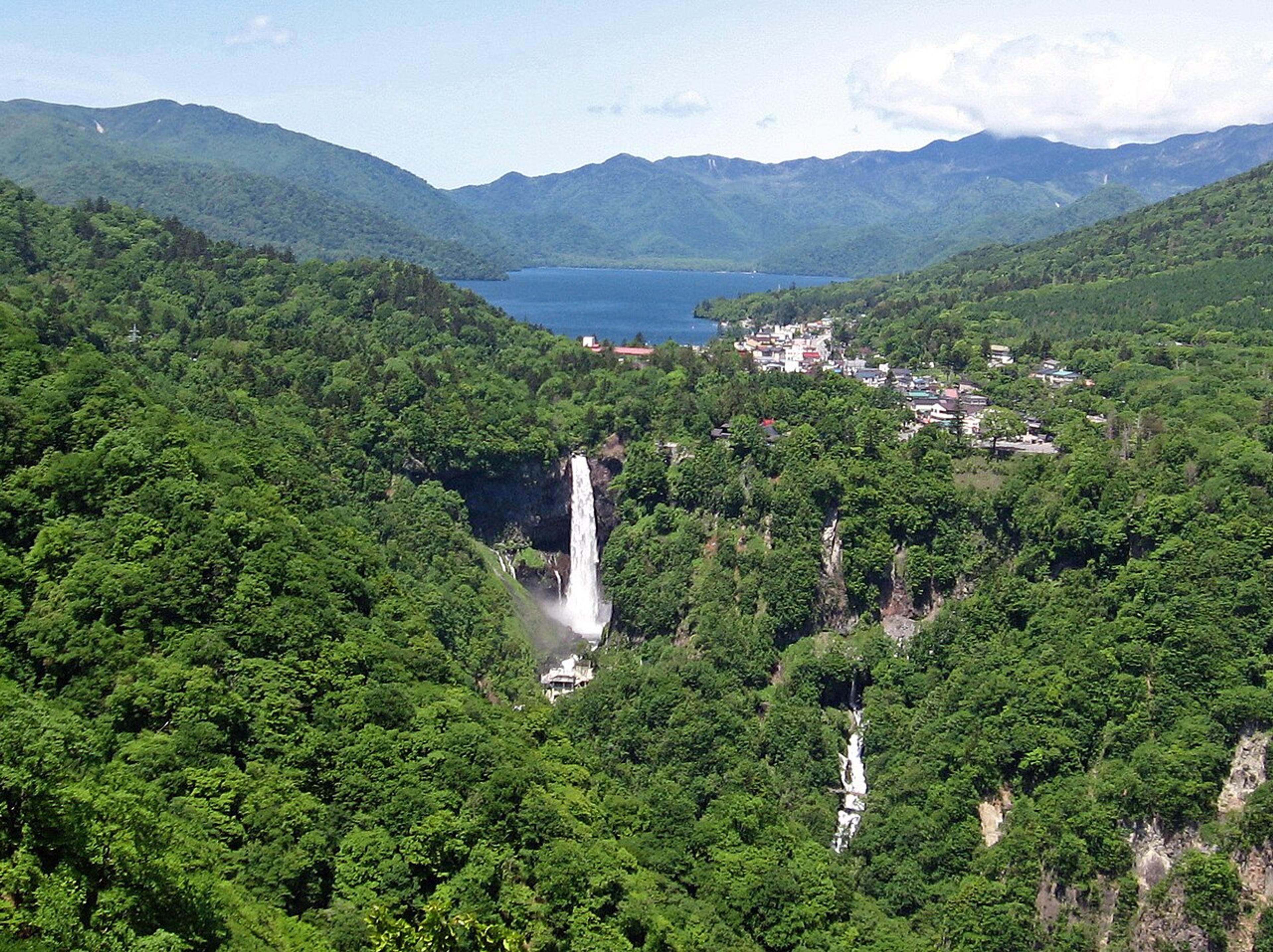
Kegon Falls drops 97 meters from the lake's outlet. An elevator descends to the observation platform at the base, where the spray reaches you on windy days. In winter, the falls partially freeze into blue-white columns. In autumn, the surrounding forest turns the gorge into a corridor of red and gold.
Evening: Yuba
Nikko-style yuba is distinctively thick and rich compared to Kyoto's delicate version. The town has made it for centuries, originally to feed the monks and shrine attendants. Today, restaurants serve it in every form: fresh sheets, fried pockets, simmered rolls, and draped over rice.
Eat yuba before catching the train back. The last limited express to Tokyo (Asakusa) departs at 18:41 from Tobu-Nikko Station.
Getting There
Tobu Railway from Asakusa Station: 1 hour 50 minutes by limited express (reserve seats). Or JR from Tokyo/Ueno to JR Nikko Station: about 2 hours. Buses connect the station to the shrine area and up to Lake Chuzenji. A World Heritage bus pass covers the main route.
Featured in this guide
Places to Visit
Turn this guide into a trip
We'll prioritize these 4 places when building your itinerary.