Hidden Gems of Kyushu: Volcanoes, Hot Springs, and Slow Living
Blog · Kyushu · 9 min
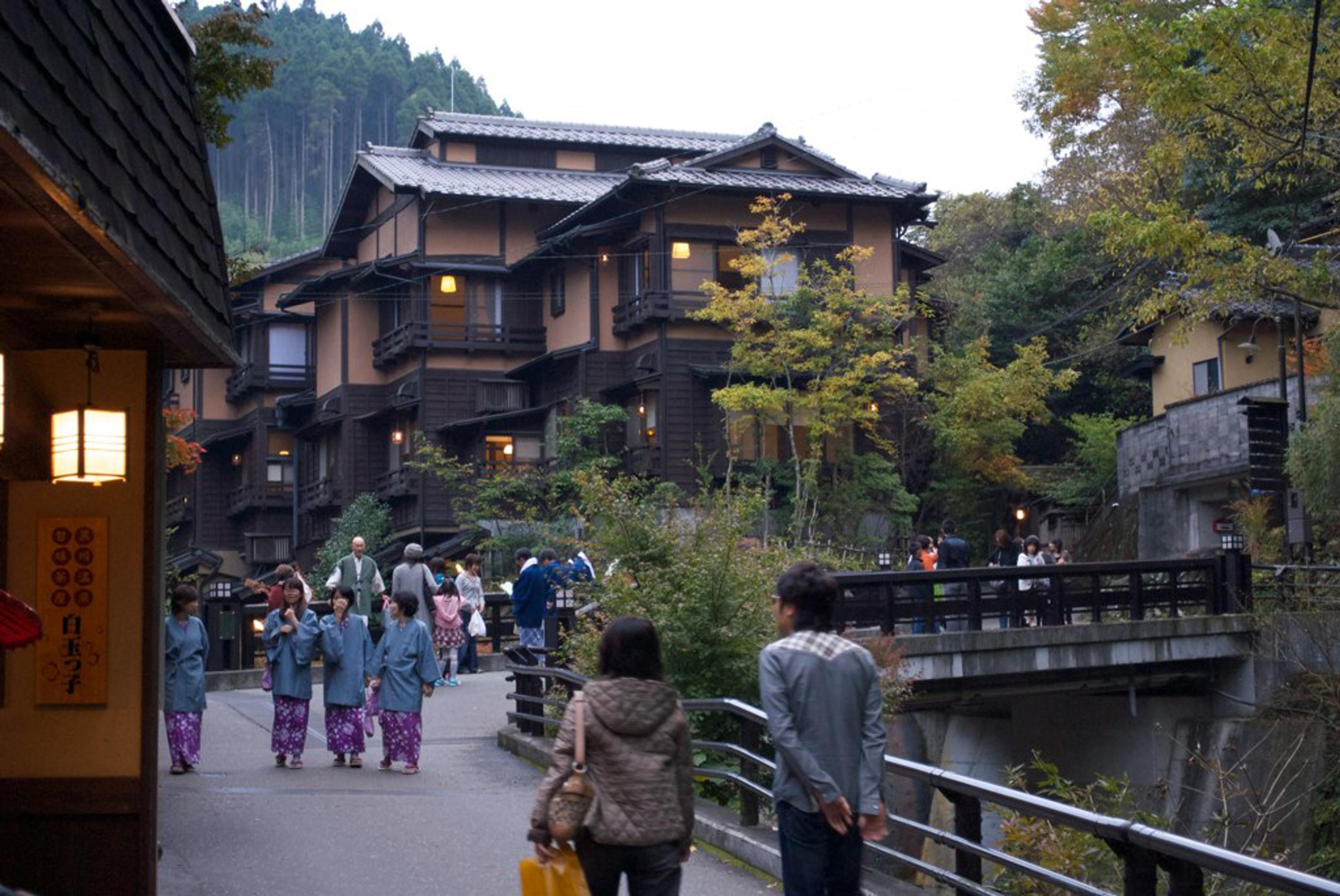
Photo: hiroooooki from Tokyo, Japan, CC BY 2.0.
Japan's southern island has 87 hidden gems, from canal towns to dolphin watching. Kyushu rewards the traveler who slows down.
Koku Editorial · March 7, 2026
11 places in this guide
Japan's Warmest Welcome
Kyushu is the southernmost of Japan's four main islands, and it has a reputation among Japanese travelers as the most laid-back. The pace is slower, the food is richer, the hot springs are more plentiful, and the people are famously friendly. International tourists are catching on to Fukuoka and Beppu, but beyond those two cities, Kyushu is wide open.
Yanagawa Canal Town
An hour south of Fukuoka by Nishitetsu train, Yanagawa is a castle town built on a network of canals. The main activity: a donko-bune boat ride, where a boatman in traditional dress poles you through narrow waterways lined with willows, seasonal flowers, and Edo-period storehouses. The ride takes about 70 minutes and costs ¥1,200-1,800.
After the boat ride, eat unagi, Yanagawa's grilled eel is legendary. Ganso Motoyoshiya has been serving seiro-mushi (steamed eel over rice) since 1681. The portions are generous and the preparation is distinctly Kyushu, sweeter and lighter than Tokyo-style kabayaki.
If you've been to Arashiyama in Kyoto and rode the Sagano boat, Yanagawa is the quieter, more authentic version. Fewer tourists, lower prices, better food at the end.
Mifuneyama Rakuen Garden (Takeo)
In Saga Prefecture, Mifuneyama Rakuen is a 500,000-square-meter garden backed by dramatic rock cliffs. TeamLab has done permanent installations here, at night, the garden transforms into a digital art landscape projected onto trees, ponds, and cliff faces. But even without the night installation, the daytime garden is exceptional: 2,000 azalea bushes bloom in April-May, and the autumn foliage burns red against the gray rock face.
Nearby, Takeo Onsen has a gorgeous 1,600-year-old public bathhouse with a distinctive Chinese-style gate. Pair the garden and the onsen for a full day. ¥400 for garden entry; ¥500 for Takeo Onsen.
Amakusa Dolphin Watching
Off the western coast of Kumamoto, the Amakusa Islands sit where the East China Sea meets Ariake Bay. The waters here are home to a year-round population of Indo-Pacific bottlenose dolphins, roughly 200 of them. Dolphin watching boats depart daily from Amakusa's Gosho-maru harbor, and the sighting rate is above 90%.
The boat ride (¥4,800/adult) runs about two hours. The dolphins swim freely, no captive encounters, and they frequently approach the boats. The setting, with the Amakusa coastline and distant islands behind, is beautiful. Amakusa itself is worth exploring: the Christian heritage sites, the fresh sashimi, and the unhurried island atmosphere.
Myoban Onsen (Beppu)
Beppu is famous for the Jigoku (Hells), the technicolor hot spring vents that draw tour buses. But the actual bathing in Beppu is best at Myoban Onsen, a district on the hillside above town where sulfurous steam rises from thatched-roof huts. These huts produce yunohana, natural bath salt crystals collected from the steam.
Myoban has several public baths, the best being Myoban Onsen (¥600) with its milky blue-white sulfur water. The views over Beppu Bay from the outdoor baths are excellent. Unlike the polished onsen resorts, Myoban is rough-edged and real, locals soaking alongside travelers, steam drifting across the hillside.
Obi Castle Town (Nichinan)
On the southern coast of Miyazaki Prefecture, Obi is a former castle town so well-preserved it's called "Little Kyoto of Kyushu." The comparison is generous, Obi is smaller, quieter, and less manicured than Kyoto. That's what makes it good. Stone walls, samurai residences, merchant houses, and a reconstructed castle gate line streets where you can walk for 20 minutes without seeing another tourist.
The local specialty is obi-ten (fish cake) and Nichinan's cold-pressed citrus juice. A walking pass (¥800) gets you into multiple historical buildings. Allow a half day. Reach Obi by JR Nichinan Line from Miyazaki city, the coastal train ride is worth taking in daylight.
Obi's old town streets have open water channels along the edges. Koi carp swim in them. It's not decorative, the channels have been there for centuries, originally for fire prevention. The fish are a bonus.
Yobuko Morning Market (Karatsu)
On the northern coast of Saga Prefecture, the fishing port of Yobuko has held a morning market since the Meiji era. The star product: ika (squid), served raw as sashimi so fresh the tentacles still move. This sounds like a tourist gimmick, but it's how the catch is eaten here, the flesh of just-caught squid turns clear, almost glass.
The market runs from 7:30am along the harbor front. Beyond squid, there's dried fish, seaweed, mochi, and seasonal fruit. The town is small and windswept and unpolished. This is fishing-village Japan at its most honest.
The Kyushu Mindset
Kyushu's hidden gems aren't hidden because they're remote (though some are). They're hidden because Kyushu, as a whole, is overlooked by the Tokyo-Kyoto-Osaka circuit. The island rewards a different kind of travel, slower, more food-focused, more open to serendipity. Build in extra time. Talk to locals. Eat everything.
Featured in this guide
Places to Visit

Turn this guide into a trip
We'll prioritize these 11 places when building your itinerary.