Tono Monogatari: Japan's Folklore Valley
Deep Dive · tono · 8 min
Tono is where Japan's folk tales live: kappa-haunted streams, thatched magariya farmhouses, and countryside cycling through the valley Kunio Yanagita immortalized.
Yuku Japan · February 16, 2026
10 places in this guide
The Valley of Legends
In 1910, folklorist Kunio Yanagita published Tono Monogatari (The Legends of Tono), a collection of folk tales gathered from this secluded basin in central Iwate Prefecture. The stories, of kappa water spirits, zashiki-warashi child ghosts, and oshirasama horse-headed deities, were already old when Yanagita transcribed them. What made the book revolutionary was its argument that these were not quaint fairy tales but living beliefs, embedded in the daily life and landscape of a real place.
More than a century later, Tono remains that place. The valley sits inland from the Sanriku coast, ringed by low mountains that historically isolated it from the modernizing currents of coastal Japan. Rice paddies fill the flat valley floor. Thatched-roof farmhouses dot the hillsides. The Sarugaishi River, where kappa were said to dwell, still winds through the town. Tono has changed, of course, convenience stores, cell towers, aging population, but the landscape that generated the legends is recognizably intact.
Kappa-buchi and the River Spirits
Kappa-buchi is a shallow pool on a stream behind the Joken-ji temple, shaded by old trees and draped with moss. This is the site most associated with kappa legends in Tono, the water sprites described as child-sized, turtle-shelled, bowl-headed creatures that inhabit rivers and ponds. A small shrine to the kappa sits beside the pool, and the temple sells kappa-catching licenses (¥220) as a humorous souvenir that doubles as a genuine folk artifact.
The kappa legends were not purely whimsical. In a farming community dependent on irrigation, water spirits served as a way to personify and manage the relationship with rivers, their unpredictability, their danger to children, their essential role in agriculture. The offerings left at kappa shrines (cucumbers, their supposed favorite food) were rituals of negotiation with forces that could bring either abundance or disaster. At Kappa-buchi, you can sense how the physical landscape, the dark water, the overhanging trees, the silence, generates the mythology.
Kappa legends share a practical element: parents told children about river-dwelling kappa to keep them away from dangerous waterways. The kappa's famous love of sumo wrestling was said to lure children into the water. If you visit Kappa-buchi with children, the temple staff will explain the legends with appropriate theatrical flair.
Magariya: The L-Shaped Farmhouses
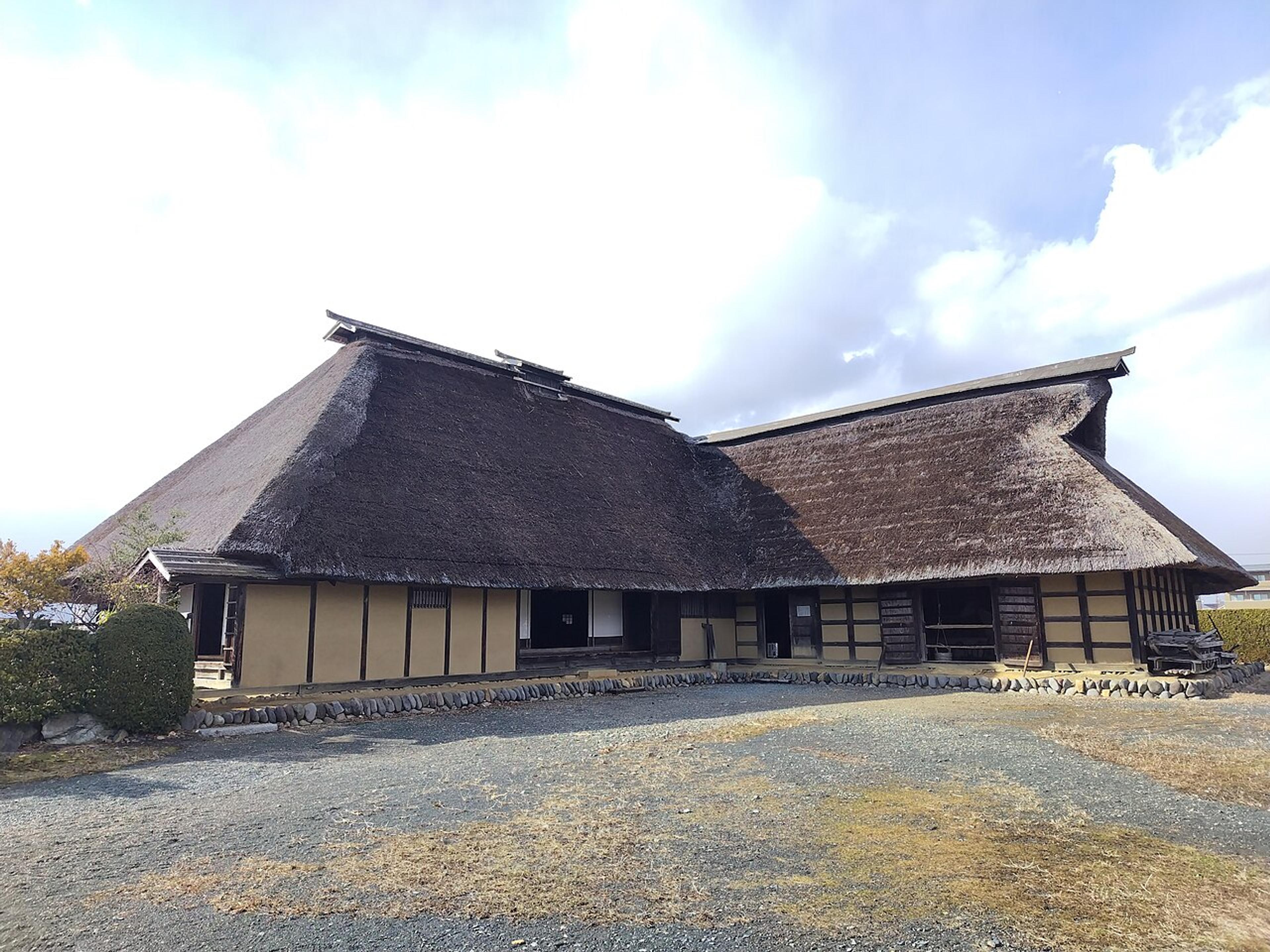
Tono's most distinctive architectural form is the magariya, an L-shaped farmhouse where the family's living quarters and the horse stable share a single roof, joined at a right angle. The design reflects the central role of horses in Tono's agricultural economy: the animals were family members, housed close for warmth and protection, their body heat contributing to heating the home in winter.
Several magariya survive in Tono, the best-preserved gathered at the Tono Furusato Village (Denshoen) on the outskirts of town. The village reassembled six magariya and other traditional structures into a working open-air museum where visitors can enter the houses, sit by the irori (sunken hearth), and understand the spatial logic of a life lived alongside animals. The farmhouses are dark, smoky, and beautiful, massive timber frames blackened by centuries of hearth fire, with small windows that frame the surrounding rice paddies.
Denshoen (Tono Furusato Village) is open 9 AM to 5 PM, admission ¥330. Visit in the late afternoon when tour groups have left and the low light enters the farmhouses at its warmest angle. The irori hearth in the main magariya is sometimes lit by staff, sitting beside it in a 200-year-old farmhouse while smoke curls toward the thatched roof is one of Tono's most atmospheric moments.
Cycling the Tono Valley
Tono's flat valley floor and compact distances make it ideal for cycling. The Tono Station tourist office rents bicycles (regular ¥500/day, electric-assist ¥1,000/day), and a network of marked cycling routes connects the major sites, Kappa-buchi, Denshoen, the Unedori Shrine, the Tono Municipal Museum, and the scattered magariya farmhouses in the countryside. The full circuit covers about 25 kilometers and takes four to five hours with stops.
The real reward of cycling Tono is not the designated sites but the landscape between them. The route passes through working rice paddies where farmers still plant and harvest by hand in some fields. Stone Jizo statues stand at crossroads, draped in red bibs. Abandoned farmhouses slowly return to the earth, their thatched roofs collapsing into the frames. Hawks circle above the fields. The silence, after Tokyo or Sendai, is enormous. This is the Japan that generated the folk tales, not a reconstructed theme park but a living, aging, quietly beautiful agricultural landscape.
Tono is most beautiful in late September and October when the rice paddies turn gold and the surrounding mountains shift to red and amber. The Tono Matsuri festival in mid-September features traditional deer dances (shishi-odori) and folk performances in the streets. Winter visits are quiet and cold but the snow-covered farmhouses are photogenic, and the valley's isolation feels most authentic.
The Tono Municipal Museum and Beyond
The Tono Municipal Museum provides essential context for everything you see in the valley. The exhibits trace the evolution of Tono's folk beliefs, display artifacts from daily farm life, and explain the relationship between landscape, livelihood, and legend that makes this place unique. A full-scale magariya interior reconstruction allows visitors to understand the spatial arrangement that photographs cannot convey, the way the house wraps around the stable, the storage lofts above, the dirt-floor work areas below.
Beyond the standard route, Tono rewards exploration. The Hayachine Shrine, on the slopes of Mount Hayachine west of the valley, preserves a tradition of kagura dance that is designated a UNESCO Intangible Cultural Heritage. The performances, featuring masked dancers enacting mythological stories, occur during the shrine's festival in August. The road to Hayachine passes through forest and hamlet landscapes that feel centuries removed from modern Japan.
A full day in Tono costs remarkably little: bicycle rental ¥500-1,000, Denshoen admission ¥330, museum ¥310, lunch at a local soba shop ¥800-1,000. The total is well under ¥3,000, making Tono one of the most affordable cultural experiences in Tohoku. Reach Tono from Shin-Hanamaki Station (Tohoku Shinkansen) via the JR Kamaishi Line, about 55 minutes, ¥680.
Featured in this guide
Places to Visit

Turn this guide into a trip
We'll prioritize these 10 places when building your itinerary.