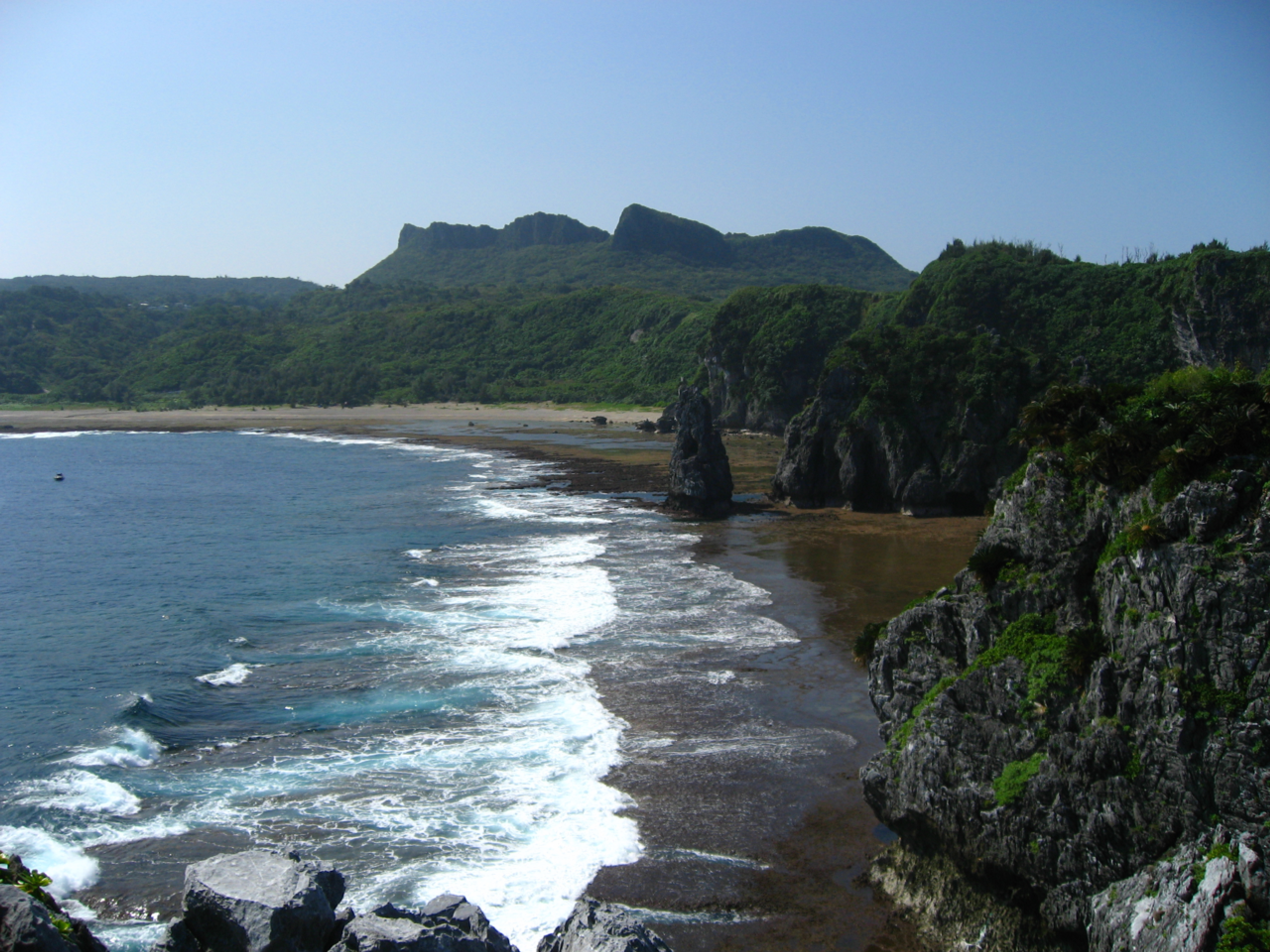
Northern Okinawa hides a UNESCO World Heritage rainforest, home to the flightless Yanbaru kuina, towering Hiji Falls, and kayak routes through silent mangrove corridors.
Yuku Japan · February 16, 2026
9 places in this guide
Where Okinawa Turns Wild
Most visitors to Okinawa never leave the resort belt that stretches north from Naha along the west coast, Chatan, Onna, Nago, the chain of American-influenced towns and beachfront hotels. The highway ends at Nago, and beyond it the island narrows, the limestone cliffs steepen, and the subtropical broadleaf forest closes in. This is Yanbaru, the wild north, 130 square kilometers of dense, mountainous rainforest that was inscribed as a UNESCO World Heritage Site in 2021.
Yanbaru is ecologically unique. The forest canopy supports species found nowhere else on earth: the Yanbaru kuina (Okinawa rail), a flightless bird discovered by science only in 1981; the Okinawa woodpecker; and the Yanbaru long-armed scarab beetle. The forest floor is a tangle of ferns, mosses, and cycads, plants that have grown here since before the Ryukyu Islands separated from the Asian mainland. Walking into Yanbaru feels like stepping backward through geological time.
Hiji Falls and the Ridge Trails
Hiji Falls (Hiji Otaki) is the largest waterfall on Okinawa's main island, dropping 25.7 meters into a pool surrounded by banyan trees and giant ferns. The trail from the Hiji Falls parking area is 1.5 kilometers each way, following the Hiji River upstream through dense canopy. The path is well-maintained with wooden boardwalks and stairs, but the humidity is relentless, even in winter, expect to sweat. Bring at least a liter of water per person.
The falls themselves are best visited after rainfall, when the volume of water transforms a gentle cascade into a thundering curtain. The pool at the base is off-limits for swimming, the rocks are slippery and the undercurrent is deceptive, but the mist that rises from the impact zone cools the air for fifty meters downstream. The surrounding forest is prime territory for birdwatching: listen for the distinctive 'kyo-kyo-kyo' call of the Yanbaru kuina, most active in the early morning hours.
Arrive at the Hiji Falls trailhead before 8 AM to beat the heat and the tour buses. The parking area opens at 9 AM officially, but the trail gate is accessible from dawn. Entry fee is ¥500 for adults. The trail closes at 4 PM (last entry 3 PM) and can be slippery after rain, wear proper hiking shoes, not sandals.
The Yanbaru Kuina and Wildlife Encounters
The Yanbaru kuina is Okinawa's most famous endemic species, a plump, reddish-brown bird with a distinctive red bill that cannot fly. Fewer than 1,500 individuals survive in the wild, all within the Yanbaru forest. The bird was unknown to science until 1981, making it one of the most recently discovered bird species in a developed country. Road kill from vehicles crossing the forest is the biggest threat, and speed-reduction zones throughout Yanbaru are strictly enforced.
The Yanbaru Wildlife Conservation Center (Ufugi Nature Museum) in Ada village is the best introduction to the forest's ecology. The museum is free, well-curated, and includes a rehabilitation facility where injured kuina are treated, you may see birds being cared for through observation windows. For guided forest walks with a naturalist who knows where the kuina feed and roost, book through the Kunigami Village tourism office. Half-day guided walks cost ¥4,000-6,000 per person, with groups capped at six.
Habu vipers live throughout Yanbaru and are most active from April to November, particularly after dusk. Stay on marked trails, watch where you place your hands and feet, and never walk forest paths after dark without a guide. The nearest habu antivenom clinic is in Nago, about 40 minutes south.
Mangrove Kayaking at Gesashi
The Gesashi River estuary on the east coast, near Higashi village, holds the largest mangrove forest on Okinawa's main island. Four species of mangrove grow here, Bruguiera, Kandelia, Rhizophora, and Lumnitzera, forming a dense, tangled waterway that is navigable only by kayak or SUP. The estuary was designated a national natural monument, and the mangrove coverage has actually expanded in recent decades as conservation efforts took hold.
Guided kayak tours depart from the Gesashi bridge area and last two to three hours, threading through narrow channels where the mangrove roots form arching tunnels above the water. At low tide, the exposed mud flats reveal fiddler crabs, mudskippers, and tiny gobies. At high tide, the waterline rises into the root systems and you paddle through a flooded forest. The silence is extraordinary, no road noise, no engine sound, just the dip of paddles and the calls of white-breasted waterhens.
Kayaking is possible year-round, but tides matter. Book tours timed to rising or high tide for the best experience, at low tide, you may need to drag your kayak over exposed mudflats. Most operators run morning and afternoon sessions keyed to the tide table. Expect ¥5,000-7,000 per person including equipment and guide. Reservations are essential in summer.
Okuma and the Northern Beaches
The beaches of northern Okinawa are different from the resort-lined strands further south. Okuma Beach, a long crescent of white sand backed by casuarina pines, faces the East China Sea and catches spectacular sunsets. The beach is technically part of a resort facility, but day access is available for ¥550 (April-October). Off-season, the beach is often deserted and access is informal.
For a wilder experience, the coastline north of Okuma is punctuated with small, unnamed coves accessible by short trails from Route 58. These beaches are rocky, unserviced, and magnificent, tide pools filled with sea cucumbers and spiny urchins, coral rubble in abstract colors, and views across to the uninhabited islands offshore. The northernmost tip of the island, Cape Hedo, offers windswept cliff views where the East China Sea meets the Pacific. The observation platform is free and usually empty.
Skip the resort-managed beaches and head to Cape Hedo for free coastal scenery that rivals anything on the island. The drive from Nago takes about 90 minutes on Route 58, one of the most scenic drives in Okinawa, with the forest on one side and the sea on the other. Pack a bento from a local supermarket (¥400-600) for a cliff-top picnic.
Indigenous Flora and the Subtropical Canopy
Yanbaru's botanical diversity is staggering for such a small area. The forest supports over 1,000 plant species, including the Yanbaru cycad (a living fossil dating back 200 million years), Okinawa's native cinnamon tree, giant tree ferns that reach 10 meters in height, and the itajii chinquapin, a broad-leaved evergreen whose acorns once formed a staple food for the indigenous population. The canopy is multi-layered: emergent trees poke above 20 meters, the main canopy sits at 12-15 meters, and the understory is a dense mesh of palms, ferns, and climbing vines.
The Yanbaru National Park visitor center in Kunigami village offers free guided botanical walks on weekends, led by rangers who can identify hundreds of species by leaf shape alone. The Okuni Forest Road, a 20-kilometer unpaved route through the forest interior, is accessible by car or bicycle and passes through the heart of the old-growth zone. The road is closed to vehicles on certain days to protect wildlife, check with the visitor center before driving.
Yanbaru's forests have deep significance in the indigenous belief system of the Ryukyuan people. Sacred groves (utaki) are scattered throughout the forest, marked by stone enclosures and shimenawa ropes. These are active places of worship, do not enter enclosed utaki areas, move boundary markers, or take stones or plants from marked sacred sites. Respect the signs, even if they are only in Japanese.
Featured in this guide
Places to Visit
Turn this guide into a trip
We'll prioritize these 9 places when building your itinerary.