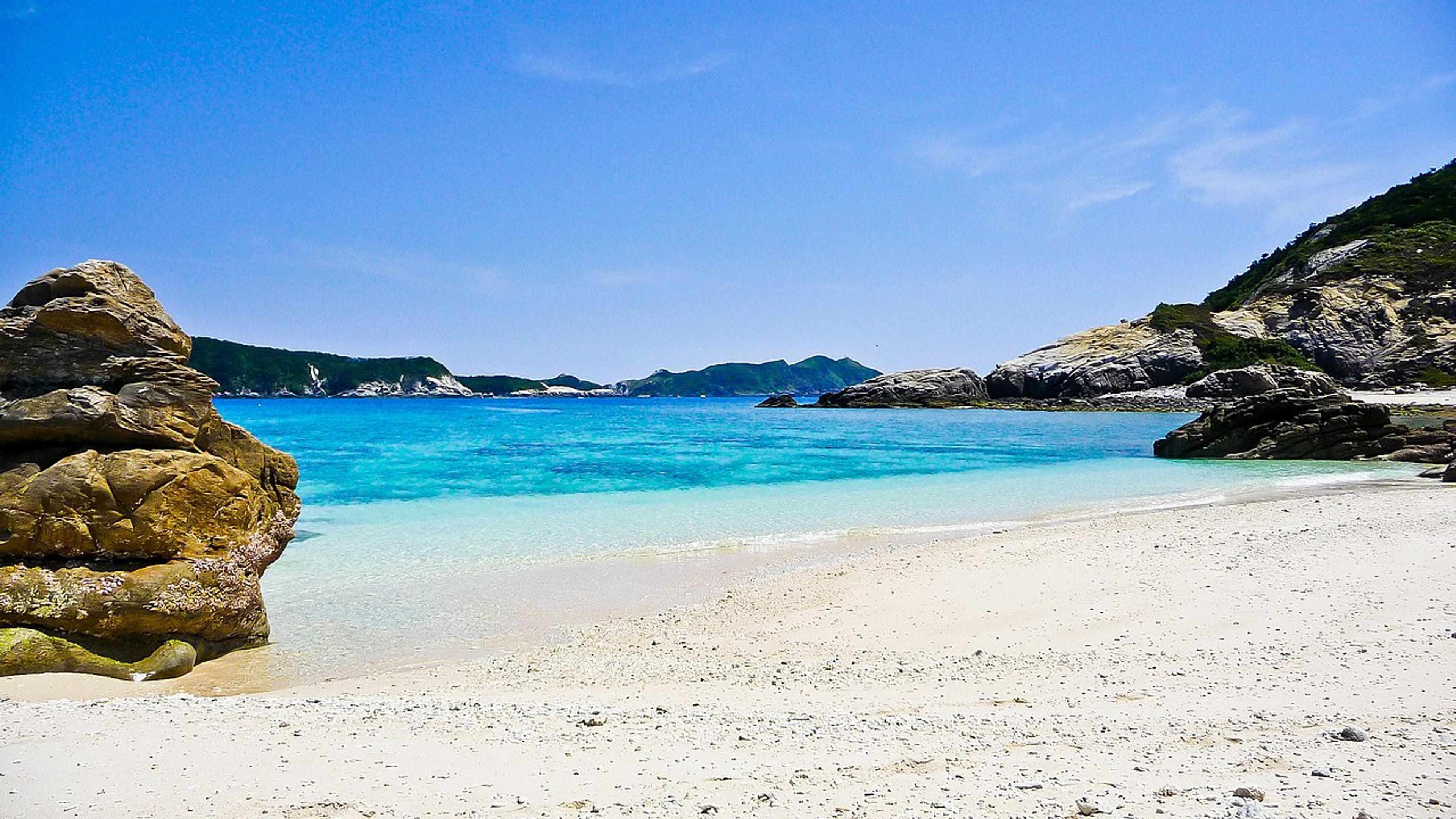
Beyond the Kerama and Yaeyama groups lie Okinawa's most remote islands: Tokashiki's dive walls, Kumejima's phantom sandbar, and the quiet life of Aguni and Tonaki.
Yuku Japan · February 16, 2026
9 places in this guide
The Islands Beyond the Islands
Everyone knows about Miyako and Ishigaki. The Kerama Islands, thirty minutes from Naha, have made it onto the radar of adventurous travelers. But Okinawa Prefecture encompasses 160 islands stretched across 1,000 kilometers of ocean, and most of them remain genuinely unknown to international visitors. These are places where the ferry arrives twice a day, where the grocery store doubles as the post office, and where the rhythm of life is dictated by the tide, not the clock.
This guide maps six islands that reward the effort of getting there, some with exceptional diving, others with nothing more than empty beaches and the kind of silence that city-dwellers have forgotten exists. None of them are easy to reach. All of them are worth it.
Tokashiki: The Diver's Wall
Tokashiki is the largest of the Kerama Islands and the closest major dive destination to Naha, 35 minutes by high-speed ferry from Tomari Port. While most Kerama visitors head to Zamami for snorkeling, Tokashiki draws serious divers for its underwater topography. The island's western coast drops steeply into the Kerama Gap, a deep channel between the islands where currents bring nutrients and visibility regularly exceeds 40 meters.
The signature dive sites are wall dives, vertical coral cliffs that plunge from five meters to beyond 40 meters, encrusted with soft corals in purple, orange, and electric blue. Manta rays cruise the deeper sections from September through November. Green sea turtles are year-round residents, so habituated to divers that they barely glance up from their coral meals. Tokashiki has three dive operators, all based in the main village, with two-dive morning trips running ¥12,000-14,000 including equipment rental.
Book the first ferry from Naha (Marine Liner Tokashiki, 10:00 AM, ¥1,690 one-way) and arrange a two-dive afternoon package with your operator in advance. For a day trip, take the last ferry back at 4:30 PM. Serious divers should stay overnight, the early morning dives before the day-trippers arrive have the best visibility and the calmest conditions.
Aka Island: Kerama Deer and Coral Gardens
Aka is tiny, just 3.8 square kilometers, but packs remarkable biodiversity into its compact frame. The island is home to the Kerama deer (Cervus nippon keramae), a subspecies of sika deer found only in the Kerama Islands. Roughly 200 deer live on Aka, and they are frequently seen on the roads at dawn and dusk, moving between the forest and the beach to feed on coastal vegetation. The deer are wild but habituated to human presence, they will watch you from a few meters away with calm, dark eyes.
The snorkeling off Aka's Nishibama Beach is among the finest in the Kerama group. The coral starts in knee-deep water and extends outward in a gentle slope of staghorn, brain, and table corals. Clownfish, parrotfish, and moray eels are common. The beach itself is a 700-meter arc of white sand with no development behind it, just forest and a single bathroom block. Bring your own food and water; there is nothing for sale at the beach.
The Kerama deer were once hunted nearly to extinction, but a community-led conservation program in the 1970s brought them back. Locals consider the deer an integral part of island identity. Feeding the deer human food is prohibited, it disrupts their natural foraging patterns and causes digestive illness. Observe from a respectful distance and let them approach you if they choose.
Kumejima: The Phantom Sandbar
Kumejima lies 100 kilometers west of Naha, a 30-minute flight on RAC (Ryukyu Air Commuter) or a 3.5-hour ferry ride. The island is mountainous by Okinawan standards, with forested peaks reaching 310 meters, and its coastline alternates between rocky headlands and sweeping white-sand beaches. Kumejima produces some of Okinawa's finest awamori, and the Kumesen distillery offers tours and tastings (¥500, reservations required).
The island's star attraction is Hate-no-Hama, a seven-kilometer sandbar that appears offshore at low tide and disappears again as the water rises. The sandbar is accessible only by boat (¥3,000-4,000 round trip from Eef Beach), and at its peak exposure, it forms a blindingly white crescent surrounded by water so clear you can count grains of sand through two meters of depth. There is nothing on the sandbar, no shade, no facilities, no sound except the wind and the lapping water. Bring sunscreen, water, a hat, and nothing else.
Hate-no-Hama has zero shade. Sunburn happens in 20 minutes on clear days, even in winter. Bring SPF 50+, a rash guard or long-sleeved UV shirt, a wide-brimmed hat, and at least two liters of water per person. The boat operators set a return pickup time, do not wander to the far ends of the sandbar or you may miss your ride back.
Aguni and Tonaki: Remote Island Life
Aguni and Tonaki are neighboring islands roughly 60 kilometers northwest of Naha, connected by a twice-daily ferry that takes about two hours. Together they have a combined population of fewer than 1,000 people. There are no convenience stores, no traffic lights, and no tourist infrastructure beyond a handful of minshuku (family guesthouses) and a single dive shop on Tonaki.
Aguni is famous for its salt production, the Aguni-no-Shio (Aguni Salt) brand is prized throughout Japan for its mineral complexity, produced by evaporating seawater in traditional clay pots over wood fires. The salt factory offers free tours, and the ¥500 tasting set lets you compare salts from different evaporation stages. The island's interior is a patchwork of sugarcane fields and low forest, crisscrossed by unpaved roads ideal for cycling. Bicycles rent for ¥1,000 per day from the port guesthouse.
Tonaki is smaller and wilder. The island's fringing reef creates a natural lagoon of turquoise water visible from the hilltop road that circles the island. Diving the outer reef wall reveals overhangs sheltering whitetip reef sharks and sea turtles. The single dive operator, based in the village, runs trips when there are enough customers, call ahead to confirm availability.
Aguni and Tonaki are among the cheapest islands in Okinawa. The ferry from Naha (Tomari Port) costs ¥3,470 one-way. Minshuku rooms run ¥4,000-5,500 per night with breakfast and dinner included, home-cooked meals using island-grown vegetables and fresh-caught fish. The entire cost of a two-night island stay, including transport, accommodation, and meals, comes to under ¥20,000.
Yoron Island: The Coral Island
Yoron sits at the very southern tip of Kagoshima Prefecture, technically not Okinawa, but culturally and geographically Ryukyuan. The island is just 23 kilometers north of the Okinawan main island, closer to Naha than to any Kagoshima city. The coral beaches here are among the whitest in Japan, the water is Caribbean-turquoise, and the population of 5,000 maintains a pace of life that makes even Okinawa's main island seem hectic.
Yurigahama, a sandbar beach on Yoron's southeast coast, appears only at spring low tides and is consistently ranked among Japan's most beautiful beaches. Like Kumejima's Hate-no-Hama, it vanishes with the rising water, a reminder that nothing here is permanent. The main island beaches, including Okaneku and Terasaki, offer excellent snorkeling straight from the shore, with coral starting in waist-deep water.
Yoron is accessible by RAC flights from Naha (40 minutes, ¥8,000-12,000) or by Marix Line ferry from Naha (overnight, ¥5,500 in second class). The Yurigahama sandbar is only fully exposed during spring tides, check the tide calendar and book boat access (¥1,500 round trip) through the Yoron tourism association. Best months are April through October; winter swells can make the crossing rough.
Featured in this guide
Places to Visit

Turn this guide into a trip
We'll prioritize these 9 places when building your itinerary.