Amakusa preserves Japan's most poignant history: hidden Christian villages, Sakitsu's waterfront church, wild dolphin pods, and five bridges spanning the sea.
Koku Travel · February 16, 2026
9 places in this guide
The Islands of Forbidden Faith
The Amakusa archipelago, 120 islands strung across the Yatsushiro Sea off the western coast of Kumamoto Prefecture, is one of the most historically layered places in Japan. Portuguese missionaries brought Christianity here in the 1560s, and by the early 1600s, nearly the entire population had converted. When the Tokugawa shogunate banned Christianity in 1614 and began systematic persecution, the Amakusa Christians faced a brutal choice: recant or die. Many died. Others went underground, practicing their faith in secret for over 250 years, the Kakure Kirishitan, or Hidden Christians, disguising prayers as Buddhist chants and hiding crosses inside Buddhist statues.
In 2018, UNESCO inscribed 'Hidden Christian Sites in the Nagasaki Region' as a World Heritage Site, and several Amakusa locations are included. But Amakusa is more than its Christian history. The islands are home to a year-round population of 200 Indo-Pacific bottlenose dolphins, connected to the mainland by the spectacular Amakusa Gokyo (Five Bridges), and rich with a ceramics tradition that predates the missionaries.
Day One: Gokyo Bridges to Amakusa City
The Amakusa Gokyo, five bridges linking the mainland to the islands across the Misumi Strait, are the dramatic gateway to the archipelago. Built between 1966 and the 1970s, each bridge is architecturally distinct, spanning turquoise channels where fishing boats and ferry traffic pass below. The drive across all five takes about 30 minutes and is one of the finest road crossings in Kyushu. Stop at Tenmon Bridge (Bridge No. 1) viewpoint for a panorama across the strait to the Unzen volcanic peninsula.
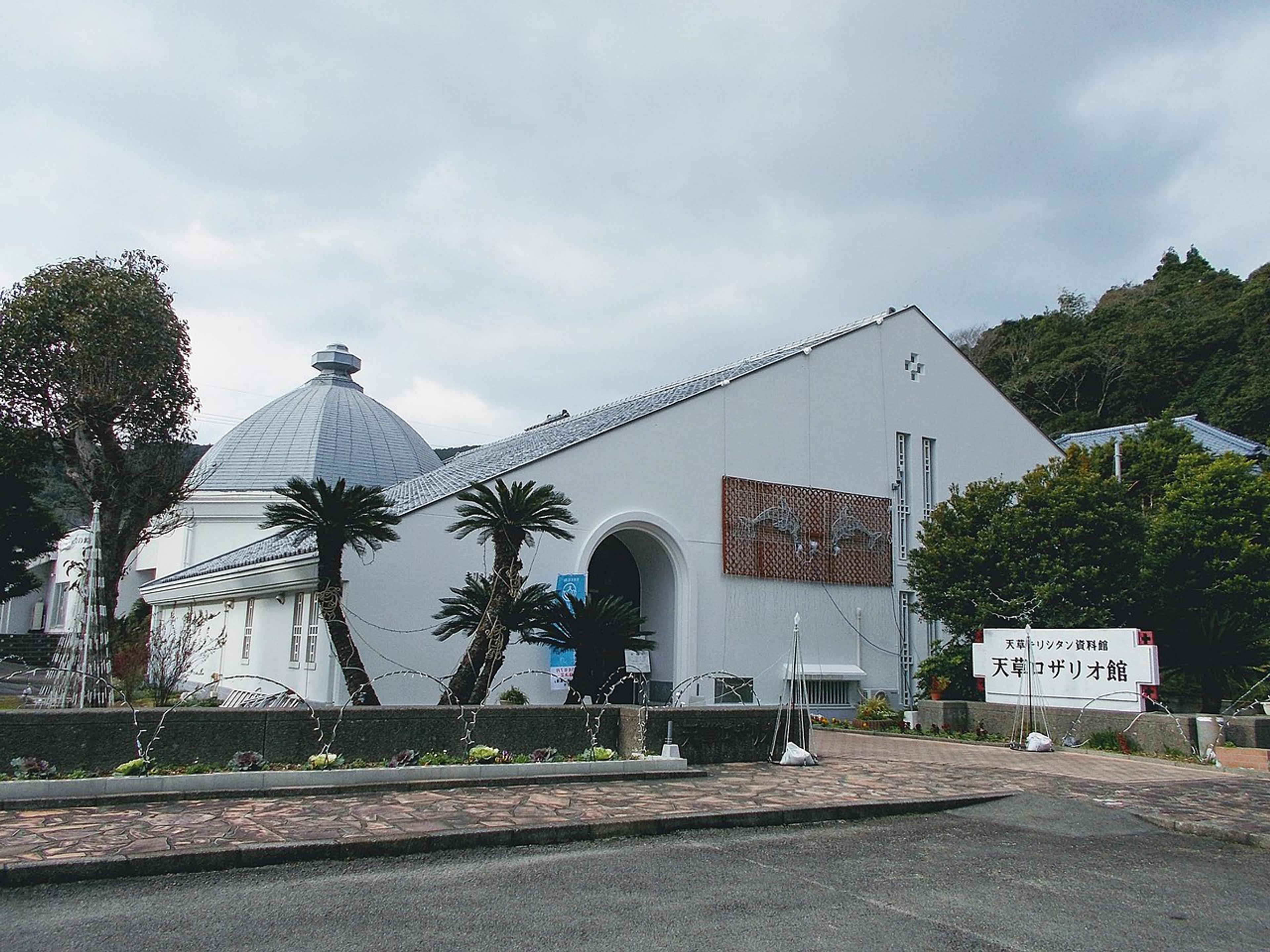
Amakusa City, on Kami-Amakusa (Upper Amakusa), is the logical base. The Amakusa Christian Museum (¥300) provides essential context for the Hidden Christian story, displaying confiscated artifacts, fumie (bronze images that suspected Christians were forced to step on to prove they had renounced their faith), and the handwritten prayers, garbled Latin mixed with Japanese, that the hidden communities preserved orally for generations. The emotional weight of these objects is considerable.
The fumie on display at the Amakusa Christian Museum are among the most emotionally charged objects in any Japanese museum. Christians who refused to step on the image of Christ or Mary were tortured and killed. Those who stepped on them, and many did, to survive, lived with the psychological burden for the rest of their lives. Handle the exhibition with the weight it deserves.
Day Two: Sakitsu and the Southern Coast
Sakitsu, on the southwestern coast of Shimo-Amakusa (Lower Amakusa), is the jewel of the Hidden Christian itinerary. The village sits at the head of a narrow inlet, its small gray church, Sakitsu Church, built in 1934 on the site where Christian villagers were once interrogated, rising directly from the waterfront among wooden fishing houses. The image of this Gothic church reflected in the harbor water, with fishing boats moored alongside, is one of the most quietly powerful scenes in Japan.
The church interior is modest, wooden pews, a simple altar, tatami-mat flooring (unique among Japanese churches), but the location tells the story. The altar sits on the exact spot where the fumie ceremony was conducted. Villagers who practiced hidden Christianity for 250 years built their church precisely where they had been forced to deny their faith. The drive south from Amakusa City to Sakitsu takes about 90 minutes along a winding coastal road that passes through fishing hamlets where the Hidden Christian legacy is marked by small monuments and roadside crosses.
Sakitsu Church is an active parish and not officially a tourist site. Visits are welcome but photography inside is prohibited, and the church may be closed during services. Check the Amakusa tourism office website for visiting hours. The village itself, the narrow lanes, the fishing harbor, the hilltop cemetery, is as important as the church. Allow 90 minutes to explore fully.
Day Three: Dolphins and Pottery
The waters between Amakusa and Shimoshima island host a year-round resident pod of approximately 200 bottlenose dolphins. Dolphin-watching boats depart from Futae and Ittsuka ports in the morning, and the encounter rate is remarkably high, operators claim over 99% success. The boats travel 15-20 minutes into the strait, where dolphins typically appear alongside the boat, surfing the bow wave and breaching within meters of the hull. Tours run about two hours and cost ¥2,500-3,000 per adult.
In the afternoon, visit the Amakusa Tojiki-kan (Ceramics Hall, ¥400) in Hondo for an introduction to Amakusa's pottery tradition. The islands sit on extensive deposits of amakusa-to, a high-quality porcelain stone that has been mined and exported since the 17th century, Arita, Hasami, and Seto all used Amakusa clay. Local potters produce distinctive ware in the amakusa-yaki style: clean white bodies with blue or iron-brown glazes. Several workshops in the Takahama area welcome visitors for pottery experiences (¥2,000-3,500, book ahead).
Dolphin watching operates year-round, but the calmest seas and best visibility are from April through October. Winter seas can be rough, causing occasional cancellations. The dolphins themselves are present in all seasons, calving peaks in summer, when mothers with newborn calves swim especially close to the boats.
Day Four: Oe Church and Return
Before leaving the islands, stop at Oe Church on the western coast, a white Romanesque church perched on a hilltop overlooking the East China Sea. Built in 1933 by French missionary Father Garnier, who spent 30 years on Amakusa, the church combines European architecture with a distinctly Japanese setting: terraced gardens, stone steps flanked by hydrangeas, and a view across fishing rooftops to open ocean. The adjacent museum (¥300) documents Father Garnier's life and the re-emergence of Christianity after the ban was lifted in 1873.
The return drive via the Gokyo bridges can detour through Misumi, where the Misumi West Port, a UNESCO World Heritage component, preserves a Meiji-era stone port built for coal export. The waterfront warehouses, stone drainage channels, and stepped quays are remarkably intact, and the port is usually empty of visitors. The entire Amakusa circuit, four days of history, wildlife, and coastal scenery, costs remarkably little beyond the rental car (¥5,000-7,000/day from Kumamoto) and accommodation (¥6,000-10,000/night at local minshuku).
Amakusa accommodation is significantly cheaper than mainland tourist areas. Minshuku (family-run inns) offering dinner and breakfast run ¥7,000-9,000 per person. The seafood dinners, tai (sea bream), uni (sea urchin), kuruma-ebi (tiger prawn), are exceptional and sourced from the morning catch. The entire four-day itinerary, including car rental, fuel, accommodation, meals, and admissions, runs about ¥60,000-70,000 per person.
Featured in this guide
Places to Visit

Turn this guide into a trip
We'll prioritize these 9 places when building your itinerary.