Onomichi & the Shimanami Kaido
Itinerary · onomichi · 8 min
Start in Onomichi's temple-stacked hillside, then cycle the Shimanami Kaido across six islands of lemon groves, island shrines, and Inland Sea panoramas.
Yuku Japan · February 16, 2026
8 places in this guide
The Hill Town and the Bridge Road
Onomichi is a port town built vertically. The flat land along the waterfront is narrow, a single commercial street and the Sanyo rail line, and then the town climbs steeply up the hillside behind, layers of temples, shrines, and wooden houses stacked above each other like geological strata. Narrow stone staircases connect the levels, cats sleep on warm walls, and laundry hangs from balconies overlooking the Inland Sea. It is one of the most photogenic towns in Japan, and it knows it, film directors have shot here since the 1950s.
From Onomichi, the Shimanami Kaido begins. This is a 70-kilometer cycling and pedestrian route that crosses the Inland Sea via six islands, connected by a series of soaring suspension bridges. It is widely considered the greatest cycling route in Japan and one of the finest in the world. The route runs from Onomichi in Hiroshima Prefecture to Imabari in Ehime Prefecture on Shikoku, and the combination of island scenery, engineering spectacle, and physical effort makes it a ride you remember.
Onomichi: The Temple Walk
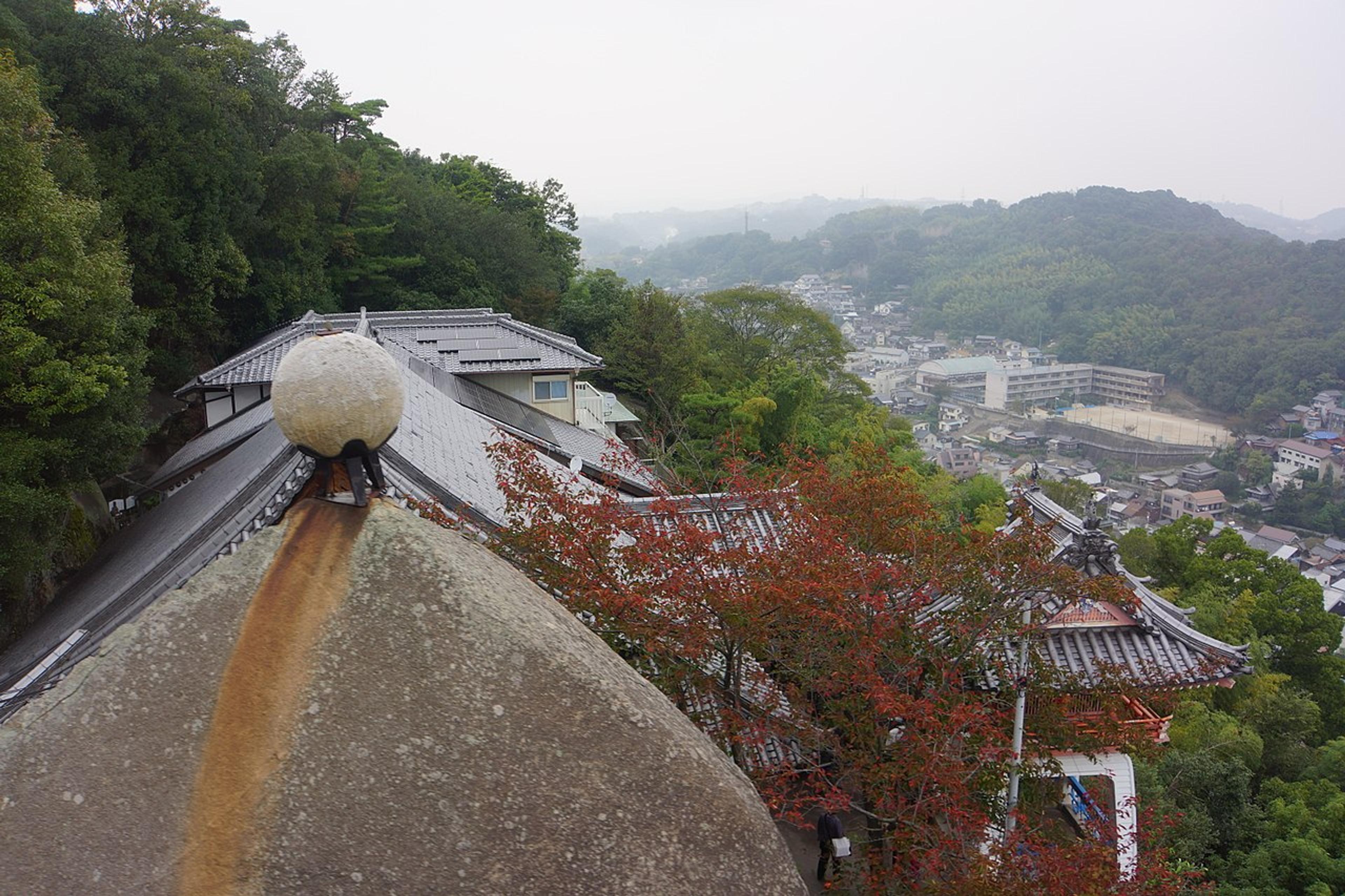
The Onomichi Temple Walk (Furudera Meguri) connects 25 temples along a 2.5-kilometer hillside path. The route begins near the ropeway station and winds through the upper town, passing through temple gates, across stone bridges, and along narrow lanes where wooden houses lean against each other at improbable angles. Senko-ji temple, at the hilltop, offers the defining view: Onomichi's rooftops cascading down to the waterfront, the Inland Sea glittering beyond, and the islands of the Shimanami Kaido stretching into the distance.
The cat population of Onomichi has become a secondary attraction. Stray and semi-feral cats populate the hillside lanes, particularly around Neko no Hosomichi (Cat Alley), where small cat-themed art installations, painted stones, and a Cat Museum mark the route. The cats are well-fed by residents and largely indifferent to visitors, which makes them excellent photographic subjects, they hold still because they genuinely do not care.
Take the Senko-ji ropeway up (¥320 one way) and walk the Temple Walk downhill. The path is steep and the stone steps can be uneven, descending is easier on the knees and gives you gravity's assistance with the 25-temple circuit. Allow two to three hours for the full walk with temple stops.
Shimanami Kaido: The Crossing
The full Shimanami Kaido route is 70 kilometers, which experienced cyclists can complete in four to five hours of riding. But the route is better savored over two days, with an overnight stop on one of the islands. The cycling infrastructure is excellent: a dedicated blue line painted on the road marks the route, rental bikes are available at terminals on both ends and on several islands, and the bridge approach ramps are graded gently enough for casual cyclists.
Each island has its own character. Innoshima is the most developed, with historical sites related to the Murakami pirates who controlled the Inland Sea for centuries. Ikuchijima is the lemon island, terraced groves of citrus cover the hillsides, and every shop, cafe, and restaurant offers something lemon-flavored. Omishima has a concentration of museums and shrines, including Oyamazumi Shrine, one of the oldest in the Inland Sea region, whose treasure hall contains the largest collection of samurai armor and weapons in Japan.
Rent a bicycle at the Onomichi terminal for ¥1,100-2,200 per day depending on the bike type (city, cross, or e-assist). A ¥1,100 deposit is refunded if you return the bike to the same terminal; one-way returns to Imabari forfeit the deposit. E-assist bikes are worth the premium if you are not a regular cyclist, the bridge approaches are long inclines.
Island Stops: Ikuchijima and Omishima
Ikuchijima deserves at least a half-day stop. The Setoda district, on the island's northwest coast, is a small port town with a surprisingly rich collection of temples and a wild architectural folly: Kosanji Temple, built in the early 20th century by a wealthy businessman as a memorial to his mother. The temple complex recreates famous buildings from across Japan, a miniature Nikko Toshogu, a scaled-down Byodo-in Phoenix Hall, in a riot of color and ornamentation. The Hill of Hope marble garden above the temple, designed by sculptor Kazuto Kuetani, offers panoramic views across the Inland Sea.
Omishima is the spiritual center of the Shimanami route. Oyamazumi Shrine, set in a grove of ancient camphor trees, has been a pilgrimage site for warriors since the Heian period. The treasure hall displays helmets, swords, and armor donated by victorious samurai over a thousand years, roughly 80% of all nationally designated armor and helmets in Japan are held here. The adjacent Marine Museum documents the Murakami naval clan, whose pirate fleets enforced tolls on every ship passing through the Inland Sea.
Oyamazumi Shrine's collection is staggering, it includes armor worn by Minamoto Yoshitsune, one of the most famous warriors in Japanese history. The museum is small and uncrowded, and the proximity to these artifacts is startling. Admission is ¥1,000. Allow at least an hour, more if you have any interest in samurai history.
Imabari and the Final Bridge
The final crossing, the Kurushima-Kaikyo Bridge, actually three consecutive suspension bridges spanning 4 kilometers, is the longest of the route and the most dramatic. The bridge passes directly over the Kurushima Strait, where tidal currents create visible whirlpools in the water below. On a clear day, the views from the bridge deck extend across the entire Inland Sea. Reaching Imabari on the Shikoku side delivers the satisfaction of having cycled across an ocean.
Imabari itself is a working port city known primarily for towel manufacturing, it produces 60% of Japan's towels, and the Imabari Towel Museum is a surprisingly engaging destination. More relevantly, Imabari is connected to Matsuyama by train (about 40 minutes), providing easy onward access to Dogo Onsen and the broader Shikoku circuit.
Spring (late March to mid-April) is the ideal season for the Shimanami Kaido, cherry blossoms line many of the island roads, temperatures are comfortable for cycling, and the Inland Sea haze is minimal. Autumn (October-November) is equally good. Summer is hot and humid, and winter winds on the bridge decks can be fierce. Avoid Golden Week (late April-early May) when the route is crowded.
Featured in this guide
Places to Visit


Turn this guide into a trip
We'll prioritize these 8 places when building your itinerary.