Naoshima gets the attention, but the Setouchi islands of Teshima, Inujima, Megijima, and Ogijima offer art experiences that are equally powerful and far less crowded.
Koku Travel · February 16, 2026
6 places in this guide
Beyond the Yellow Pumpkin
Naoshima has become shorthand for the Setouchi art island experience, Yayoi Kusama's yellow pumpkin, the Chichu Art Museum, the Benesse House complex. It is extraordinary, and it deserves its reputation. But the wider Setouchi island network encompasses over a dozen islands with permanent and seasonal art installations, and several of these offer experiences that equal or surpass Naoshima in emotional impact while receiving a fraction of its visitor traffic.
The Setouchi Triennale, held every three years (next edition 2028), installs temporary works across these islands, but the permanent collections and site-specific installations are the real draw. These are not gallery experiences transplanted to islands, they are works created for and inseparable from their specific island locations, responding to the light, the water, the abandoned buildings, and the aging communities that define the Inland Sea.
Teshima Art Museum
The Teshima Art Museum is a single work of art housed in a single building, and it is one of the most profound gallery experiences in the world. The building, designed by architect Ryue Nishizawa, is a thin concrete shell, no columns, no walls, no windows in the conventional sense, with two elliptical openings in the roof that let in sky, wind, rain, and sound. The floor is polished white concrete, and across it, small springs of water emerge, form droplets, and slowly migrate in patterns influenced by temperature, humidity, and vibration.
The work, 'Matrix' by artist Rei Naito, is these water droplets. That is it. Visitors remove their shoes, enter the space, sit on the floor, and watch water move. The experience sounds minimal to the point of absurdity, but in practice it is mesmerizing. The droplets merge, split, accelerate, and pause in ways that seem sentient. Birdsong and wind enter through the roof openings. The light shifts with passing clouds. An hour passes without effort. Many visitors leave in tears, though none can quite explain why.
Visit Teshima Art Museum on a weekday morning. Weekend queues can exceed 90 minutes, and the museum limits the number of visitors inside at any time to preserve the contemplative atmosphere. Admission is ¥1,570. There is no time limit once inside, stay as long as the space holds you. The adjacent cafe serves excellent coffee with a view across the terraced rice paddies to the Inland Sea.
Inujima Seirensho Art Museum
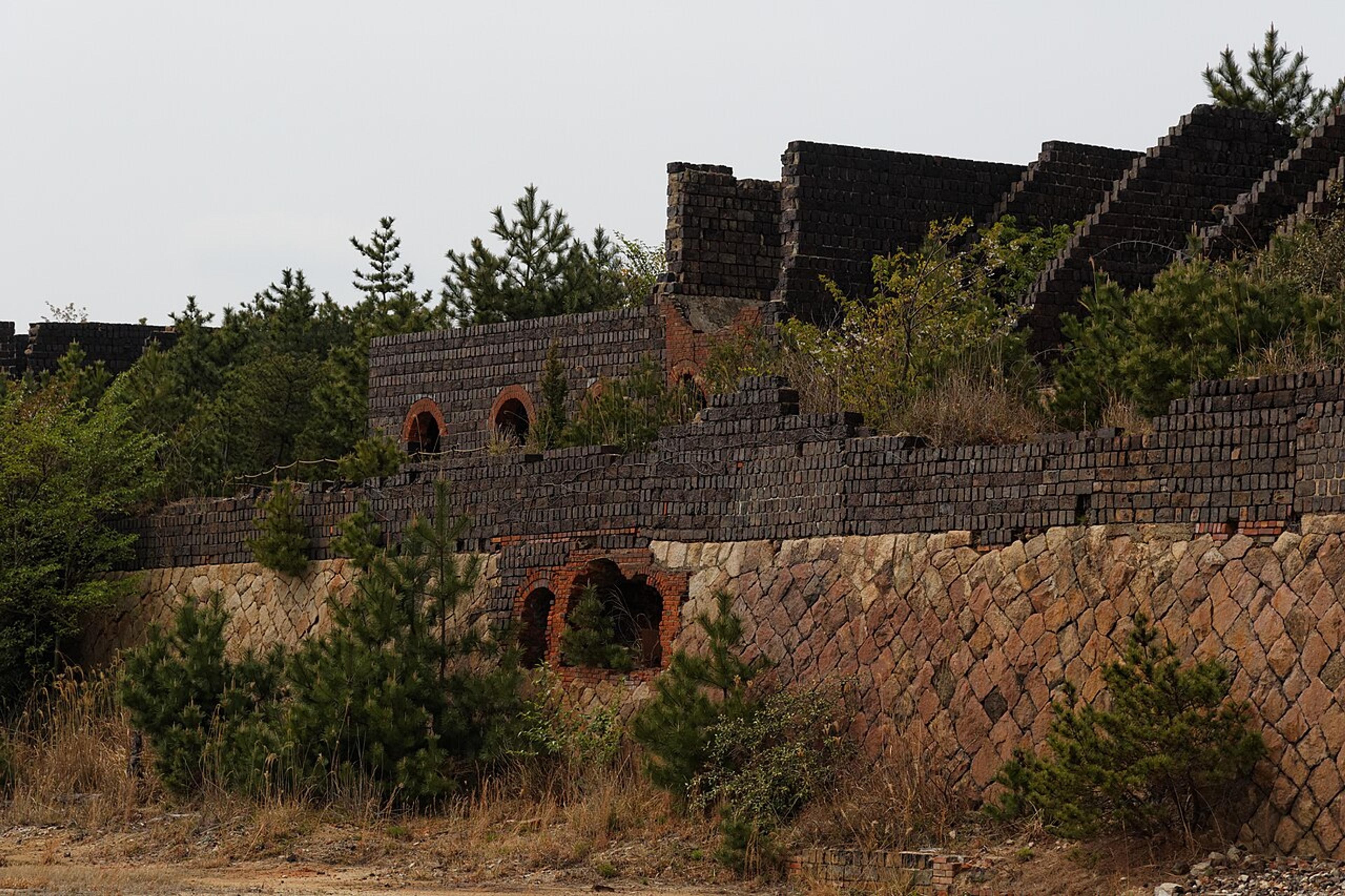
Inujima is a tiny island (population: about 30) dominated by the ruins of a copper smelter that operated for just ten years (1909-1919) before the price of copper collapsed. The Inujima Seirensho Art Museum, designed by architect Hiroshi Sambuichi, repurposes the smelter ruins, the towering brick chimney, the refining halls, the slag heaps, into a gallery space that uses no electrical lighting or air conditioning. Instead, the building harnesses the chimney's natural draft to ventilate and cool the interior, and skylights and reflected light illuminate the galleries.
Inside, the artist Yukinori Yanagi has installed works that reference the writer Yukio Mishima and themes of Japanese modernization, industrial ambition, and cultural loss. The combination of the ruined industrial architecture, the ecological design of the museum, and the politically charged art creates a layered experience unlike any other gallery in Japan. Outside, scattered across the island's tiny village, the Inujima Art House Project transforms abandoned houses into intimate installation spaces, you peer through windows, step into genkan entryways, and find art where domestic life once was.
Inujima's permanent population has declined from over 3,000 in the smelter's heyday to roughly 30 today. The art project is partly an attempt to reverse this decline by attracting visitors and seasonal residents. The tension between preservation and gentrification, between art-world attention and genuine community survival, is part of the island's meaning. Engage with it thoughtfully.
Megijima: The Ogre Island
Megijima, a 20-minute ferry ride from Takamatsu, is traditionally identified as Onigashima, the Island of Ogres from the Momotaro folk tale, one of Japan's most beloved children's stories. Caves near the summit of the island's central peak are said to have been the ogres' lair, and concrete ogre statues guard the approach trail with more enthusiasm than artistic refinement.
During the Setouchi Triennale and as permanent installations, artists have transformed abandoned houses in Megijima's port village into site-specific works. The most striking is Leandro Erlich's 'Oirase Stream,' which uses mirrors and lighting to create an illusion of flowing water inside a dark warehouse. Other installations occupy former schools, fishing sheds, and private homes, the art embedded in the fabric of a community that is simultaneously welcoming visitors and watching its own population age and diminish. The walk from the port to the ogre caves takes about 40 minutes through terraced gardens reverting to forest, offering views across the Inland Sea to Takamatsu's skyline.
Megijima ferry from Takamatsu costs ¥370 each way (20 minutes). The ogre caves are ¥600. Triennale art sites charge ¥300-500 individually or are included in the Setouchi Triennale passport (¥5,000 for all islands, all works). Outside triennale years, permanent installations are accessible at reduced rates. Pack a lunch, the island has very limited food options.
Ogijima: Art Village on a Hill
Ogijima is a steep island with a fishing village that climbs from the harbor to the hilltop shrine in narrow, winding lanes. The village architecture is dense and vertical, houses stacked above each other, connected by stone stairways barely wide enough for two people to pass. Into this warren, artists have inserted permanent installations that play with the village's spatial intimacy: a mirrored room that multiplies the view of the harbor, a painted pathway that transforms an alley into a flowing river, walls embedded with seashells and colored glass.
The Ogijima Soul, by artist Jaume Plensa, is the island's landmark, a large mesh sculpture crowning the harbor's old ferry terminal. But the real experience is the wandering. Ogijima's pleasure is getting lost in its lanes, turning a corner to find an unexpected installation, then emerging at a viewpoint where the Inland Sea stretches out in every direction. The island has a few small cafes run by artist-residents who relocated here, and the conversations at these spots, about island life, art, community, decline, hope, are as valuable as the installations.
Combine Megijima and Ogijima in a single day trip from Takamatsu. The ferry route connects both islands (Takamatsu → Megijima → Ogijima → Takamatsu). Allow 2-3 hours per island. Start with Ogijima in the morning for better light on the south-facing village, then cross to Megijima for the afternoon. Last ferry to Takamatsu departs around 5:30 PM, check schedules on arrival.
Planning for the Setouchi Triennale
The Setouchi Triennale runs in three sessions (spring, summer, autumn) with different works and events in each session. The passport (¥5,000) grants access to all art sites across all islands for the entire triennale. Accommodation on the islands is extremely limited during the triennale, most visitors base themselves in Takamatsu (for the eastern islands) or Okayama/Uno Port (for Naoshima, Teshima, and Inujima) and take day ferries.
The autumn session (September-November) is generally considered the best for the triennale, lower humidity than summer, comfortable temperatures, and the light across the Inland Sea is at its most photogenic. Spring (April-May) is less crowded. Summer is beautiful but brutally hot on shadeless island paths. Book Takamatsu accommodation months ahead during triennale years, the city's hotels fill completely.
Turn this guide into a trip
We'll prioritize these 6 places when building your itinerary.