Iwami Ginzan once supplied a third of the world's silver. Today its mine shafts, Edo-period streets, and hidden onsen port town reward travelers who make the detour.
Koku Travel · February 16, 2026
11 places in this guide
Silver That Shaped the World
Between the 16th and 17th centuries, Iwami Ginzan produced roughly a third of the world's silver output. The metal flowed from these mountains to Osaka, to Nagasaki, and onward to Portuguese, Dutch, and Chinese traders who carried it across the globe. Iwami silver financed the expansion of European empires and destabilized Ming Dynasty currency markets. For a few decades, this remote corner of Shimane Prefecture was one of the most economically significant places on earth.
Today, Iwami Ginzan is a UNESCO World Heritage Site, designated in 2007 not just for its mining history but for the environmental philosophy behind it. Unlike European and South American colonial mines that stripped landscapes bare, Iwami's operators practiced a form of sustainable extraction that preserved the surrounding forests. The trees were essential: timber for mine shafts, charcoal for smelting, and root systems to prevent erosion. The result is a mine site that nature has quietly reclaimed, shafts hidden in forested hillsides, smelting sites buried under moss, and a landscape that looks pristine despite centuries of industrial activity.
The Mine Shafts: Ryugenji and Okubo
Two mine shafts are open to visitors. Ryugenji Mabu is the more accessible, a 600-meter horizontal tunnel carved through solid rock, with informational displays showing the hand-chiseled marks left by Edo-period miners. The tunnel is narrow, cool (a constant 12°C year-round), and atmospherically lit. Chisel grooves in the walls testify to the labor: miners worked in shifts of four hours, advancing about 30 centimeters per day through the granite.
Okubo Mabu, longer at 900 meters, is the more dramatic of the two. This was a drainage tunnel, dug to remove groundwater that flooded the deeper silver veins. The engineering is remarkable for its era: a perfectly graded channel that slopes just enough to carry water out by gravity, dug entirely by hand over decades. Inside, you walk along the original drainage channel, the ceiling dripping with mineral-laden water, the darkness ahead broken only by the lights installed for visitors.
Ryugenji Mabu is free to enter. Okubo Mabu charges ¥400 and requires a short guided walk from the parking area. Visit Okubo first while your legs are fresh, the approach trail climbs through forest for about 15 minutes. Bring a light jacket even in summer; the tunnels stay at 12°C regardless of outside temperature.
Omori: The Silver Town
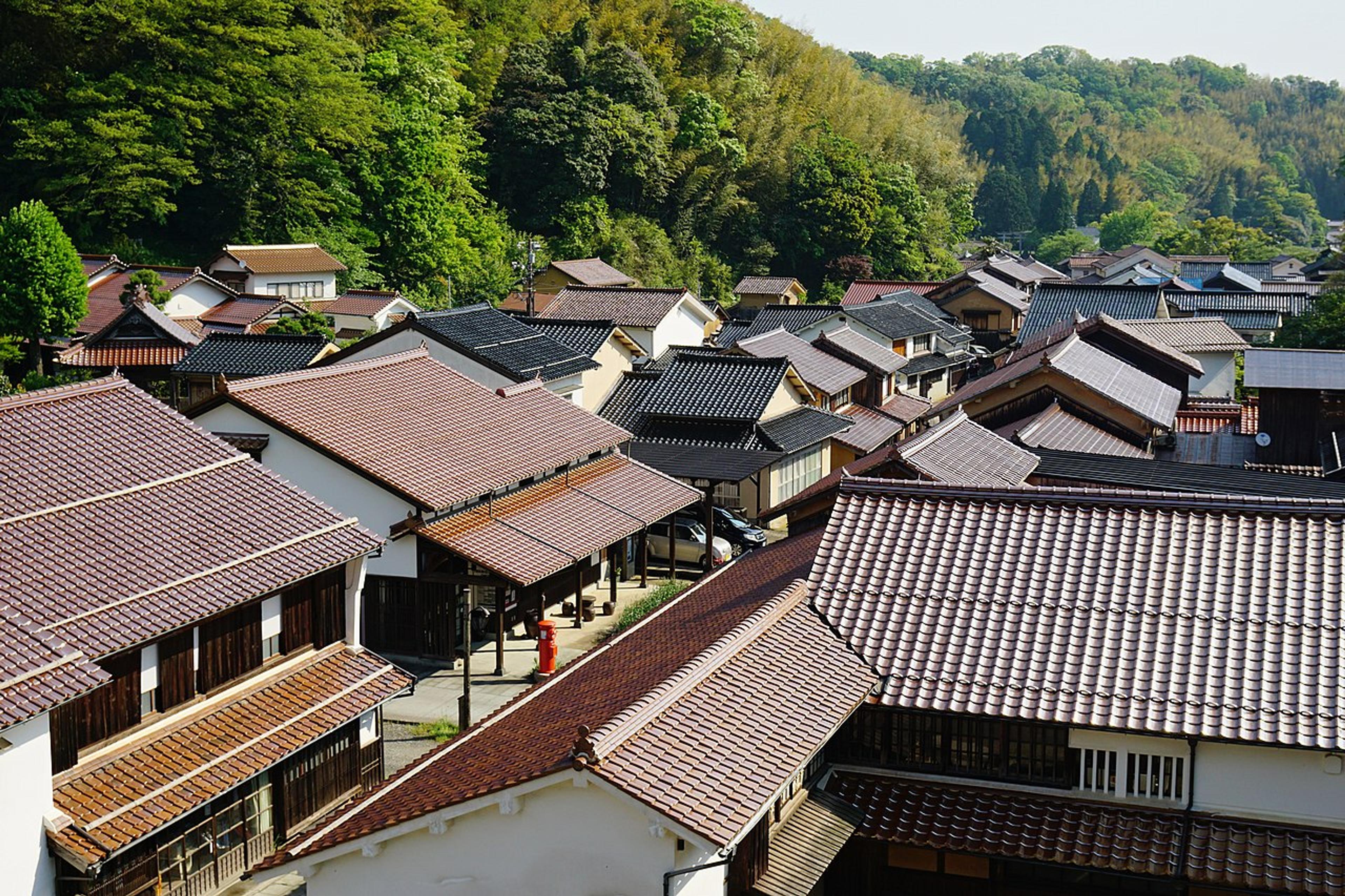
The town of Omori stretches along a single road at the base of the mining mountains. During the peak silver years, this was an administrative and merchant center with a population of 200,000, larger than most European cities of the time. Today, about 400 people live here, and the town's Edo-period architecture has been preserved with remarkable care. Dark-wood merchant houses with latticed windows line the road, interspersed with samurai residences, a magistrate's office, and small temples tucked into the hillside.
The Kumagai Family Residence, the largest merchant house, is open as a museum. The Kumagai were silver merchants who amassed enormous wealth, and their residence, with its multiple storehouses, garden, and elaborate interior, reflects that prosperity. The kitchen still has the original kamado cooking stoves, and the upstairs rooms display merchant-class furnishings: lacquerware, ceramics, textiles, and the account ledgers that record centuries of silver transactions. The Cafe Junkei, housed in a converted residence, serves coffee and handmade sweets in a tatami room overlooking a garden, the kind of quiet, civilized pause that defines Omori's atmosphere.
Omori has a strict no-car policy for visitors. The town is explored on foot or by rented bicycle (¥500 for three hours from the Iwami Ginzan World Heritage Center). The absence of traffic is transformative, the only sounds are birdsong, the creak of old wood, and the distant chime of a temple bell. This is intentional: the community chose preservation over convenience.
Rakanji: The Temple of 500 Disciples
Rakanji temple, perched on a cliff face above the Takatsuyama gorge, houses over 500 carved wooden rakan (disciples of the Buddha). The statues were carved in the early Edo period by a monk named Gessho, who spent decades creating individual figures, each with a distinct facial expression, posture, and character. Some are laughing, some weeping, some meditating, some arguing. The effect is less devotional art than a gallery of human emotion rendered in cypress wood.
The temple is accessed via a steep staircase and a covered bridge that spans the gorge. The approach is theatrical, the bridge frames the cliff-mounted prayer hall ahead, with the forested valley dropping away below. Inside the main hall, the rakan crowd the walls in tiers, their expressions shifting in the changing light from the narrow windows. Visitors often say that one of the statues resembles someone they know. The monks claim this always happens, the 500 faces are said to contain every human expression.
Rakanji's access staircase is steep and can be slippery when wet. The temple is a 20-minute drive from Omori, and the last section of road is narrow. If you are visiting by bicycle from Omori, allow 45 minutes each way and be prepared for a significant hill climb. The temple closes at 4:30 PM.
Yunotsu Onsen: The Port at the End of Silver
Silver mined at Iwami was shipped from the tiny port of Yunotsu, a coastal town that time has largely forgotten. Today, Yunotsu has a population of about 700 and two public bathhouses fed by hot springs discovered in the Muromachi period. The Yakushi-yu bathhouse (¥500) is the older and more characterful, a small wooden building with a single stone bath where the water emerges at 48°C, slightly too hot for comfort, exactly right for the aching muscles of a day spent exploring mine shafts and temple stairs.
The town's few streets climb from the harbor into a narrow valley, past shuttered fish processing plants and homes with corrugated tin roofs. It is melancholy and beautiful in equal measure, a place that once mattered enormously to global trade and now exists in the deep quiet of irrelevance. On the 27th of each month, the town holds a night market along the harbor street, with lanterns, grilled fish, and local sake. The atmosphere on these evenings, warm light against dark water, the smell of charcoal and salt air, is worth timing a visit around.
Yunotsu has a handful of minshuku (family-run inns) charging ¥6,000-8,000 per night with two meals included. The seafood served at these inns, caught that morning from Yunotsu harbor, is exceptional and would cost three times as much at a coastal ryokan in a more touristed area. The public baths are ¥500 each, or ¥800 for a combined ticket.
Featured in this guide
Places to Visit

Turn this guide into a trip
We'll prioritize these 11 places when building your itinerary.