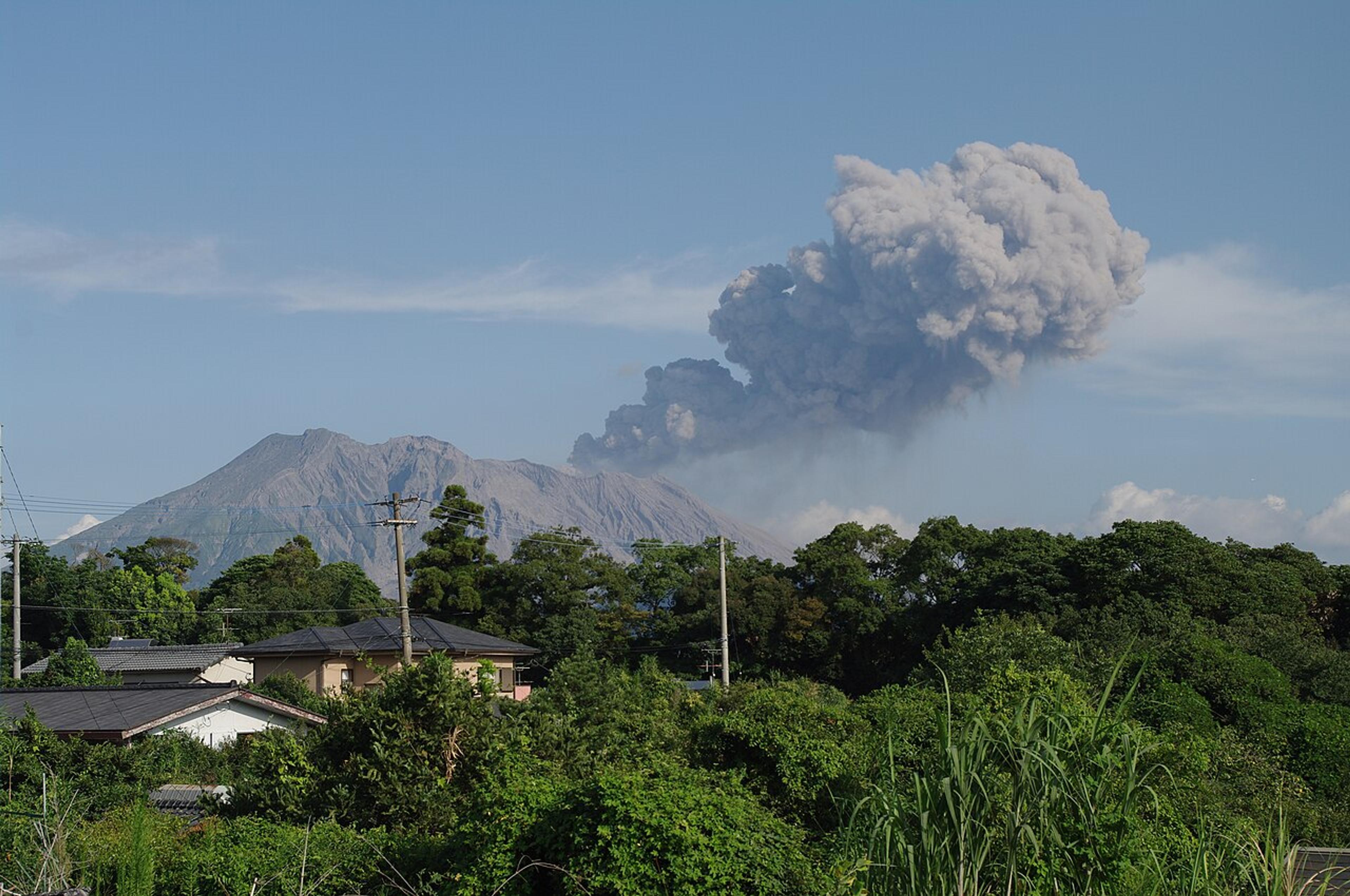
Kyushu lives on volcanic fire: Sakurajima's daily eruptions, Yakushima's ancient cedar forests, Takachiho's mythological gorge, and Ibusuki's hot sand baths.
Koku Travel · February 15, 2026
12 places in this guide
The Volcanic Island
Kyushu is Japan's southernmost main island and its most geologically active. The island sits on the junction of the Philippine Sea Plate and the Eurasian Plate, and the resulting volcanic activity has shaped everything, the landscape, the hot springs, the soil, the food, and the cultural temperament. Kyushu people describe themselves as nekketsu (hot-blooded), and the island's geography suggests they come by it honestly.
This guide follows the volcanic thread through Kyushu's most dramatic landscapes: an active volcano visible from a major city, a subtropical island of thousand-year-old trees, a gorge said to be where the gods descended to earth, and a beach where you are buried in naturally heated sand.
Sakurajima
Sakurajima is one of the most active volcanoes in the world, erupting hundreds of times per year, small eruptions, mostly ash plumes, but constant enough that Kagoshima, the city directly across the bay, has learned to live with volcanic fallout as a daily reality. Residents carry umbrellas for ash as readily as for rain. Schools have reinforced shelters. The city distributes ash collection bags the way other cities distribute recycling bins.
The volcano is accessible by a 15-minute ferry from Kagoshima's waterfront, one of the most dramatic municipal ferry rides in the world, crossing a bay with an active volcano growing larger through the windshield. On the island, driving routes circle the base and observation points offer views of the crater rim, which periodically sends gray plumes skyward.
The Kurokami Buried Torii, on the eastern side of the island, shows just how much the volcano has grown. A Shinto torii gate that once stood three meters tall is now buried to its crossbar, only the top meter is visible above the volcanic debris deposited by a massive 1914 eruption. The gate was deliberately left unexcavated as a memorial to the eruption's power.
Take the ferry at sunset for the most dramatic view. The volcano's silhouette against the evening sky, often with a thin plume of ash catching the last light, is Kagoshima's defining image. The ferry runs every 15 minutes and costs ¥200. You can return the same evening.
Yakushima
Yakushima is a small, mountainous island south of Kagoshima that receives more rainfall than almost anywhere in Japan, the locals say it rains '35 days a month.' This extreme moisture, combined with the island's subtropical latitude and mountainous terrain (the highest peak reaches 1,936 meters), creates a vertical ecosystem that ranges from coastal tropical forest to alpine moorland.
The island's most famous residents are its yakusugi, ancient Japanese cedar trees, some over 1,000 years old. The most celebrated, Jomon Sugi, is estimated at 2,000-7,000 years old (the age is disputed because the heartwood is too decayed to core-sample). Reaching Jomon Sugi requires a 10-hour round-trip hike through mossy, root-tangled forest, the trail that inspired the forest landscapes in Miyazaki's Princess Mononoke.
The Shiratani Unsuikyo ravine offers a shorter introduction to the yakusugi forest. A network of trails (one to five hours, depending on the route) winds through moss-covered cedar groves, past clear streams, and over root bridges that seem to grow from the forest floor. The moss coverage is extraordinary, every surface is green, creating an atmosphere of verdant, dripping stillness.
Yakushima is accessible year-round but the best hiking conditions are May-June (before typhoon season) and October-November (dry, cool). Summer is intensely hot and humid at low elevations. Winter brings snow above 1,500 meters, closing the Jomon Sugi trail.
Takachiho Gorge
Takachiho Gorge is a narrow ravine carved by the Gokase River through columnar basalt, geometric columns of volcanic rock that look machine-cut but are entirely natural. The gorge is 80-100 meters deep, and the Manai Waterfall drops 17 meters from the cliff face directly into the river. Rental rowboats navigate the base of the gorge, passing beneath the waterfall and between the basalt columns.
Takachiho holds deep significance in Japanese mythology. According to the Kojiki (Japan's oldest written chronicle), this is where the grandson of the sun goddess Amaterasu descended from heaven to rule the earth. The Takachiho Shrine, one of the oldest in Kyushu, performs nightly kagura, sacred dances that dramatize the myths. The evening kagura performances (8 PM, ¥700) are performed for visitors in a small wooden hall and maintain a raw, intimate quality that large-scale shrine performances have lost.
The kagura at Takachiho Shrine is a condensed version of the 33-act yokagura performed overnight during the November festival. Even the shortened tourist version conveys the power of the mythological drama. The dance depicting Amaterasu's emergence from the cave, where another deity performs a bawdy dance to lure the sun goddess out, is both sacred and genuinely funny.
Ibusuki Sand Baths
At Ibusuki, on the southern tip of the Satsuma Peninsula, geothermal heat warms the black volcanic sand of the beach to approximately 50-55°C. The local onsen tradition involves being buried in this naturally heated sand. You lie in a shallow trench, attendants shovel hot sand over your body (leaving only your face exposed), and you bake for ten to fifteen minutes as the weight and warmth of the sand produces an effect like a full-body compress.
The Saraku Sand Bath facility on Surigahama beach is the most established operation. Changing rooms provide a yukata (cotton robe) worn into the sand, and the burial process is quick and practiced. The sensation is initially claustrophobic, the sand is heavy and hot, but within minutes, the heat penetrates to the muscles and joints, and the experience becomes deeply relaxing. An indoor onsen bath follows, washing off the sand and extending the warmth.
The Saraku sand bath experience costs ¥1,100 including yukata rental and the post-sand onsen bath. For a completely unique hot spring experience with no equivalent anywhere else in Japan, this is exceptional value.
Featured in this guide
Places to Visit

Turn this guide into a trip
We'll prioritize these 12 places when building your itinerary.