When Japan opened to trade in the 1850s, port cities filled with Western buildings. Where to walk the treaty-port heritage, from Kobe's Kitano to Nagasaki's Glover Garden.
Koku Editorial · May 25, 2026
5 places in this guide
When Japan opened to foreign trade in the 1850s and 1860s, a handful of port cities filled with Western buildings: consulates, churches, merchant houses, banks, and brick warehouses. Much of it survives, concentrated in a few districts, and it is some of the most walkable architecture in the country. Here is where to find the treaty-port heritage.
What the treaty ports were
The 1858 treaties opened ports including Yokohama, Kobe, Nagasaki, and Hakodate to foreign residence and trade. Foreign merchants built hillside neighborhoods in imported styles, and the surviving houses, churches, and trading halls now form preserved districts. Read them as a record of the moment Japan turned outward.
Kobe: the Kitano ijinkan
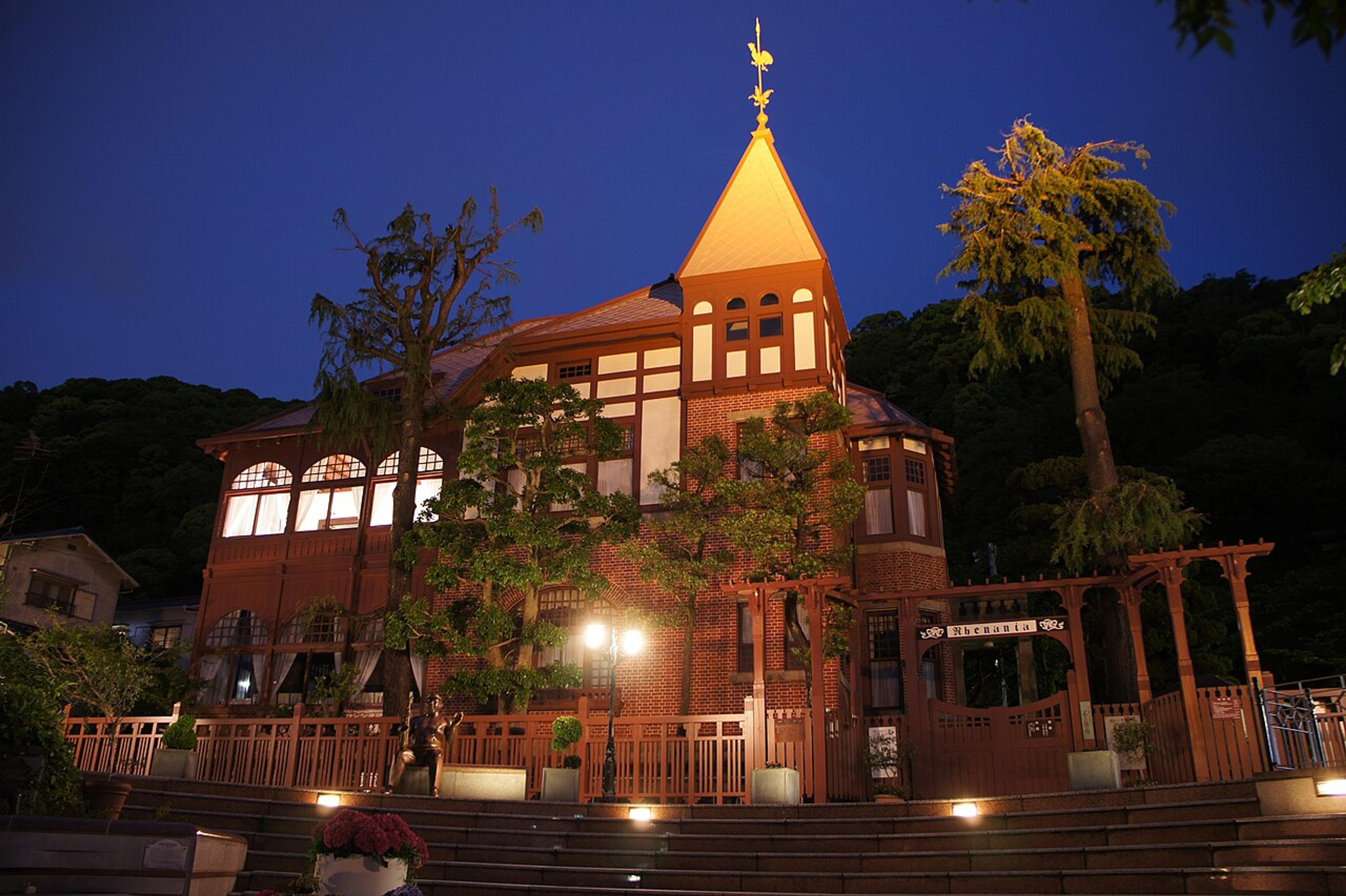
Kobe's Kitano district climbs a slope behind the port in a cluster of ijinkan, the former foreign merchants' houses, now open to visitors. Among them, Patisserie Tooth Tooth Maison 15th occupies a registered Western building from the 1880s and serves cakes and afternoon tea inside the period rooms. The walk past the weathervane house and the other ijinkan is the draw.
Nagasaki: Glover Garden and Dejima
Nagasaki held the only window to the West during the closed-country centuries, at the Dutch trading post of Dejima, and reopened as a treaty port after. Glover Garden gathers the surviving Western residences on a hillside above the harbor, including Japan's oldest standing Western-style wooden house, while Dejima has been reconstructed as a walkable fan-shaped island. Together they hold the longest foreign-contact history in Japan.
Hakodate: the Motomachi slope
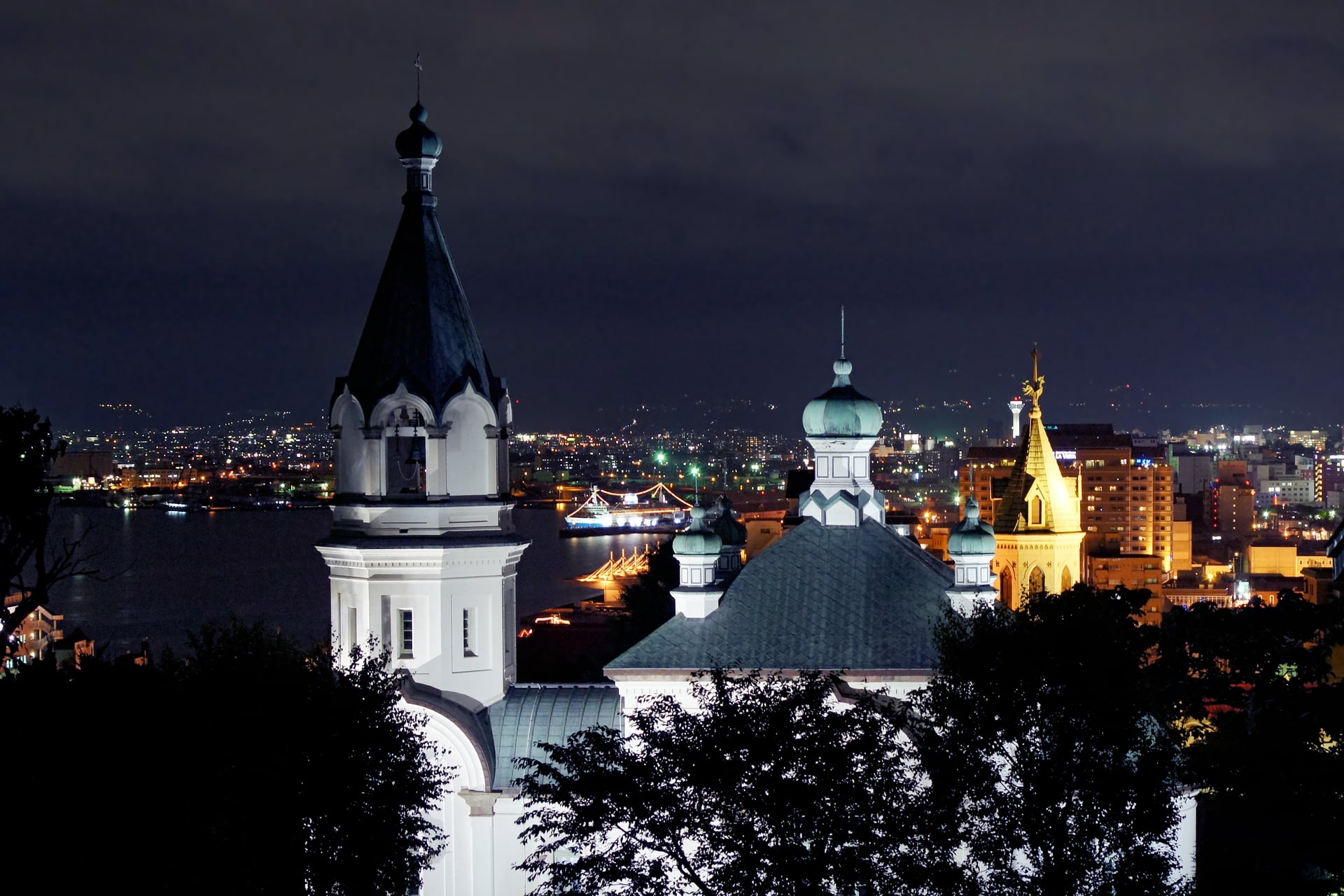
In Hakodate, the Motomachi district below the ropeway holds the port's Western heritage: the former British consulate, the Old Public Hall in pale blue and yellow, and Orthodox, Catholic, and Protestant churches within a few blocks. The slope down to the bay frames the buildings against the water. It is among the most photogenic of the port districts.
Hiroshima: the Andersen building
Not a treaty port, but in the same imported-architecture vein: Hiroshima Andersen occupies a 1925 former bank on Hondori, a Renaissance-style building that survived close to the 1945 atomic blast and reopened after a careful restoration as a flagship bakery. It is one of the few prewar buildings left in the city center.
Planning a heritage-architecture walk
Each district is compact and walkable, which is the appeal: Kitano in Kobe, Motomachi in Hakodate, and the Glover-Dejima pair in Nagasaki can each fill a half-day on foot. Many individual houses charge small admissions and keep museum hours; the churches are working churches, so respect service times. Pair each with the harbor view that the foreign residents built above.
Turn this guide into a trip
We'll prioritize these 5 places when building your itinerary.