Tokyo hides a gorge in suburbia, an Edo-era neighborhood that survived the war, and an abandoned fortress island in the bay.
Yuku Japan · February 15, 2026
11 places in this guide
The Kanto plain is the most densely populated region in Japan, but density creates contrast. A ravine survives in the middle of residential Setagaya. An entire neighborhood escaped WWII firebombing and kept its Edo-era wooden architecture. A fortress island in Tokyo Bay is being swallowed by forest. And within 90 minutes by train, you reach pottery villages and river gorges that feel like a different century.
Tokyo's hidden side is not about finding secret neighborhoods that nobody knows about. It is about recognizing that a city of 14 million has layers that most visitors never peel back.
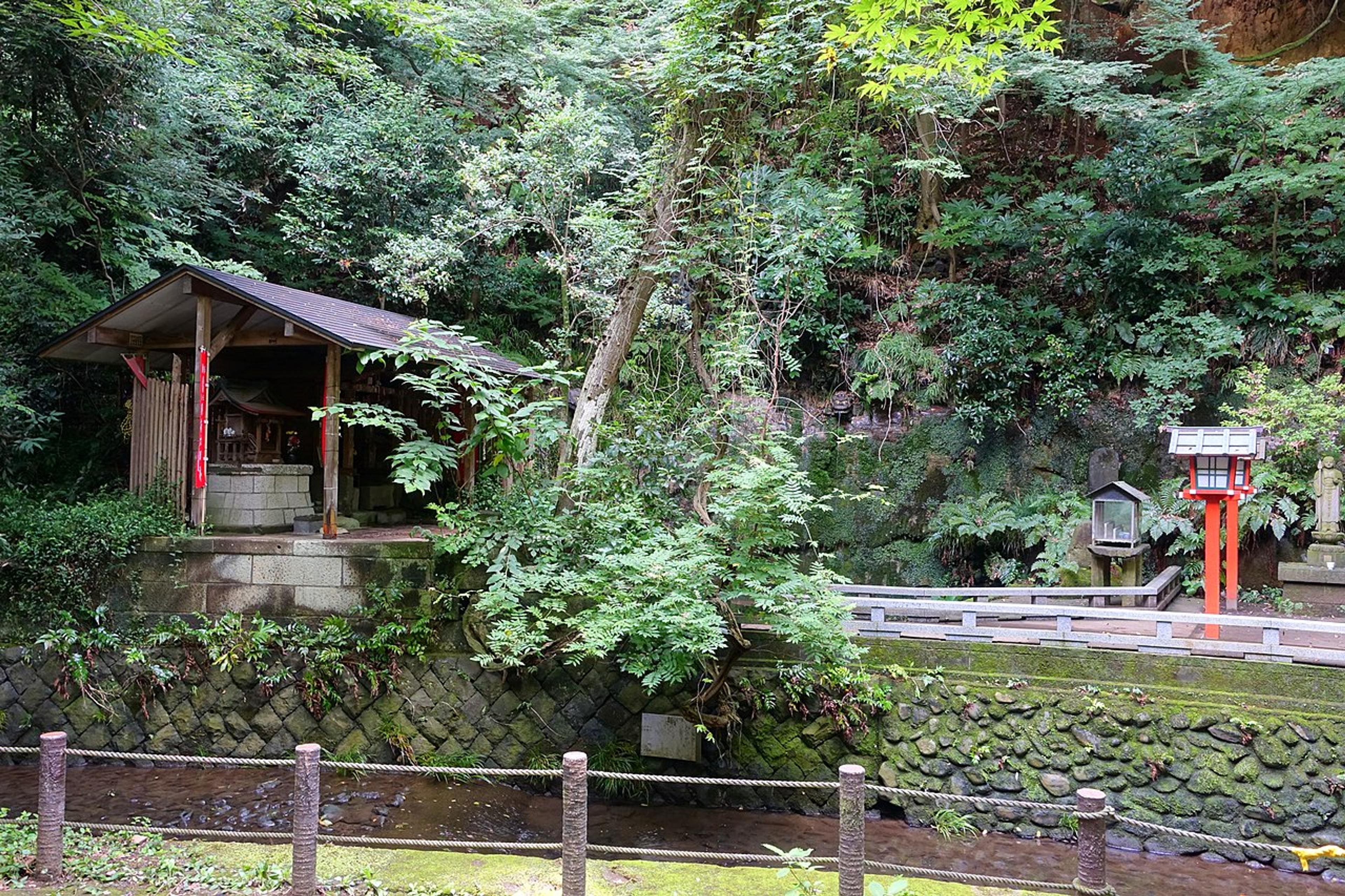
Todoroki Valley
Tokyo's only natural ravine stretches about one kilometer along the Yazawa River in residential Setagaya ward. You enter from a nondescript staircase next to a golf course and descend into a boardwalk path winding past moss-covered stone walls, Kofun-period cave tombs (roughly 3rd to 6th century), and a hidden Japanese garden with a teahouse. The temperature drops noticeably. Traffic noise vanishes.
The ravine was carved by the Yazawa River through the Musashino plateau, the same geological layer that underlies most of western Tokyo. A small waterfall feeds into the stream at the northern end. At the southern end, Todoroki Fudoson temple sits above the valley with views down into the canopy. The entire walk takes about 30 minutes. It is 5 minutes from Todoroki Station on the Tokyu Oimachi Line, a suburban stop where nothing about the surrounding apartment blocks suggests a gorge below.
Yanaka
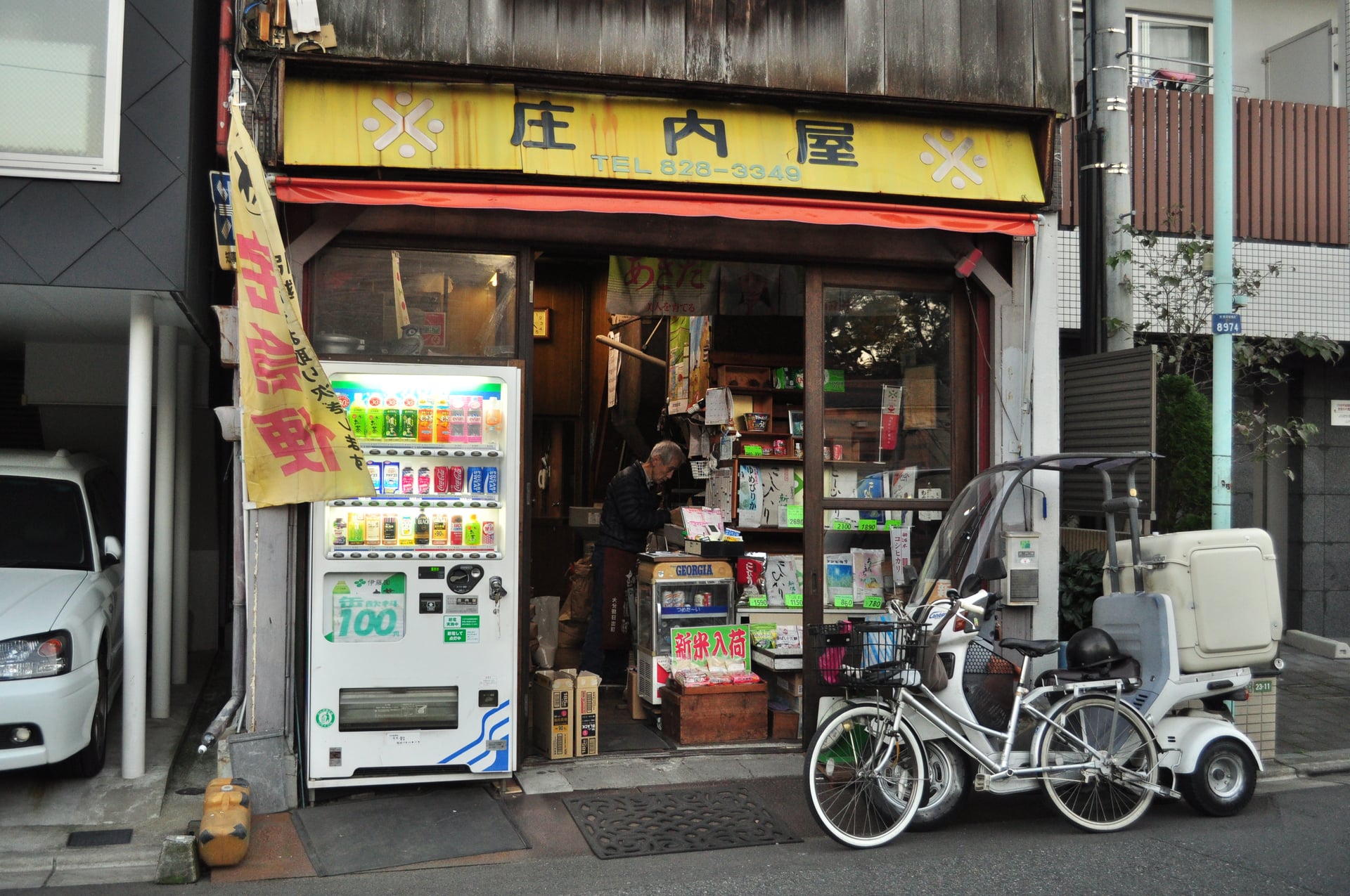
One of the few Tokyo neighborhoods that survived the 1945 firebombing, Yanaka preserves Edo-era wooden architecture, over 70 historic temples, and family-run craft shops. The survival was partly luck, the area sits on slightly higher ground and the fire lines broke before reaching it, and partly the density of temple grounds that acted as firebreaks.
Yanaka Ginza, the main shopping street, is a narrow lane of old-school street food stalls, menchi-katsu, senbei, and sweet potato soft serve. The neighborhood cemetery, Yanaka Reien, is one of Tokyo's finest cherry blossom spots and the final resting place of Tokugawa Yoshinobu, the last shogun. Scai the Bathhouse, a contemporary art gallery in a converted Edo-era public bath, represents the area's evolving identity. The area around Nippori Station (JR Yamanote Line) feels like 1960s Tokyo. No chain stores. No neon. Just cats, temples, and grandmothers sweeping storefronts.
Sarushima Island
The only naturally formed island in Tokyo Bay, Sarushima is an uninhabited fortress 10 minutes by ferry from Yokosuka. The island spans about 5.6 hectares and served as a military installation from the Edo period through World War II. The remains, brick tunnels built with French engineering techniques, abandoned barracks, ammunition depots, are now being slowly reclaimed by dense forest. Vines crawl over fortifications. Trees push through concrete.
The atmosphere sits somewhere between historical site and post-apocalyptic film set. A loop trail covers the island in about 90 minutes. In summer, a designated beach area opens for swimming. The ferry runs from Mikasa Park pier in Yokosuka, which is a 30-minute train ride from Yokohama on the Keikyu Line. The island closes from November through February.
Nagatoro
A riverside town in Saitama where the Arakawa River has carved dramatic rock formations called Iwadatami, "rock tatami mats", flat, layered geological formations stretching along the riverbank like giant stepping stones. The rocks are about 100 million years old, formed from metamorphic crystalline schist. Traditional wooden boats navigate the rapids through the gorge, with a boatman steering through class II whitewater. In November, autumn foliage frames the ride.
The town itself has soba shops specializing in handmade buckwheat noodles, a small ropeway up Mount Hodosan, and quiet hiking trails along the river. The Chichibu area beyond Nagatoro holds the 34-temple Chichibu Pilgrimage Circuit and the spectacular Chichibu Night Festival each December. Nagatoro Station is 90 minutes from Ikebukuro on the Seibu and Chichibu Railway lines.
Mashiko
A pottery town of about 20,000 people in Tochigi prefecture, Mashiko was home to Shoji Hamada, the legendary ceramicist who led the mingei (folk craft) movement alongside philosopher Yanagi Soetsu and British potter Bernard Leach. Hamada settled here in 1924, drawn by the local clay and the town's tradition of utilitarian pottery.
Hundreds of active kilns and workshops operate today, producing the earthy, natural-glaze Mashiko-yaki that Hamada championed. You can take pottery classes, visit climbing kilns, and buy directly from artisans. Twice yearly, in spring (Golden Week) and autumn (early November), the town hosts a pottery fair where over 500 potters sell directly from tents along the main road. The Hamada Sankokan museum displays his personal collection alongside Okinawan, English, and Korean folk pottery. Mashiko is about 90 minutes from Ueno by JR and the Moka Railway.
Getting Around
Todoroki and Yanaka are standard Tokyo transit trips, IC card, done. Sarushima requires the Keikyu Line to Yokosuka plus a short ferry. Nagatoro and Mashiko are proper day trips at 90 minutes each from central Tokyo, both on local rail lines not covered by the JR Pass. A Suica card works everywhere. All five can be done without a car. Combine Todoroki with a visit to nearby Futako-Tamagawa for the contrast of Tokyo's sleekest modern development sitting directly above a hidden gorge.
Featured in this guide
Places to Visit
Turn this guide into a trip
We'll prioritize these 11 places when building your itinerary.