Okinawa's war history is carved into the landscape: Peace Memorial Park, the Himeyuri caves, the Navy tunnels, Hacksaw Ridge, and Shuri Castle's rebirth.
Yuku Japan · February 16, 2026
5 places in this guide
The Weight of This Ground
The Battle of Okinawa, fought from April to June 1945, was the bloodiest engagement of the Pacific War. Over 200,000 people died, roughly half of them Okinawan civilians, one-quarter of the island's population. Every family on Okinawa carries this loss. Every village has its monuments. The landscape is pockmarked with cave entrances where civilians sheltered and, often, died. Visiting these sites is not tourism in any casual sense, it is an encounter with the consequences of war on a scale that resists comprehension.
This trail follows the battle's geography from north to south, ending where the fighting was most desperate. The sites are well-maintained and deeply moving. English signage is comprehensive at the major memorials. Give yourself a full day, and be prepared for an emotionally demanding experience.
Hacksaw Ridge: The Maeda Escarpment
The Maeda Escarpment, in the town of Urasoe, is a 150-meter limestone cliff that formed a natural defensive barrier across the island's midsection. In April 1945, American forces had to scale this cliff under fire, the events dramatized in the 2016 film Hacksaw Ridge. Medic Desmond Doss, a conscientious objector who refused to carry a weapon, lowered 75 wounded men down the cliff face with a rope, earning the Medal of Honor.
Today, the escarpment is a public park with walking trails along the clifftop. The Urasoe Castle ruins, dating from the 13th century Ryukyu Kingdom, sit at the highest point, a reminder that this was contested ground long before 1945. Interpretive panels along the trail describe the battle positions. The cliff face itself, scarred with blast marks and cave openings, needs no interpretation. A small museum near the parking area displays artifacts, photographs, and testimonies from both sides.
The Maeda Escarpment trail is free and open dawn to dusk. Begin at the Urasoe Castle ruins parking area (free) and follow the ridgeline south for the best vantage of the cliff face. Allow 90 minutes for the full loop including the museum. The site receives far fewer visitors than the southern memorials, so you may have the trail to yourself.
The Former Japanese Navy Underground Headquarters
Beneath the hills of Tomigusuku, just south of Naha, lies a network of hand-dug tunnels that served as the headquarters for the Japanese Navy during the final weeks of the battle. The tunnels extend 450 meters at depths of up to 20 meters below the surface, carved through limestone by Japanese soldiers and conscripted Okinawan laborers using hand tools. The work took four months.
Approximately 300 meters of the tunnel complex is open to visitors. The rooms are cramped, low-ceilinged, and cold, the temperature underground is a constant 18 degrees Celsius regardless of season. Shrapnel damage is visible on the walls of the command room, where Admiral Ota Minoru and his staff took their own lives on June 13, 1945. Before his death, Ota sent a telegram to Tokyo describing the suffering and loyalty of Okinawan civilians, a document now displayed at the site's museum. The telegram is considered one of the most important wartime documents in Okinawan history.
The tunnels are a place of mourning. Visitors are expected to maintain silence in the command room where the officers died. Photography is permitted but flash is not. The ¥450 entry fee includes a detailed English pamphlet. The museum above ground provides essential context, visit it before entering the tunnels.
Himeyuri Monument and the Student Nurses
The Himeyuri Memorial Tower stands above a cave entrance in Itoman where 222 schoolgirls and their teachers, conscripted as battlefield nurses, sheltered during the final days of the battle. The girls, students at Okinawa's first women's high school, were mobilized in March 1945 to treat wounded Japanese soldiers in the underground military hospitals. They were between 15 and 19 years old.
When the Japanese military ordered the students disbanded on June 18, with no provisions and no plan for their safety, they fled south into the caves around Itoman. Many were killed by American artillery and gas attacks directed at the caves. Of the 240 Himeyuri students and teachers, 136 died, most in the final week of the battle. The Himeyuri Peace Museum, adjacent to the monument, displays photographs, personal belongings, and testimonies from the surviving students. Their accounts of treating amputations without anesthesia, carrying water under fire, and watching classmates die are among the most harrowing documents in the war's history.
The Himeyuri Peace Museum (¥450) includes an English audio guide that provides essential context for the exhibits. Allow at least one hour. The testimonial room at the end of the exhibition, where surviving students recorded their memories on video in the 1990s, is the emotional center of the museum. Most visitors find it difficult to leave dry-eyed.
Peace Memorial Park
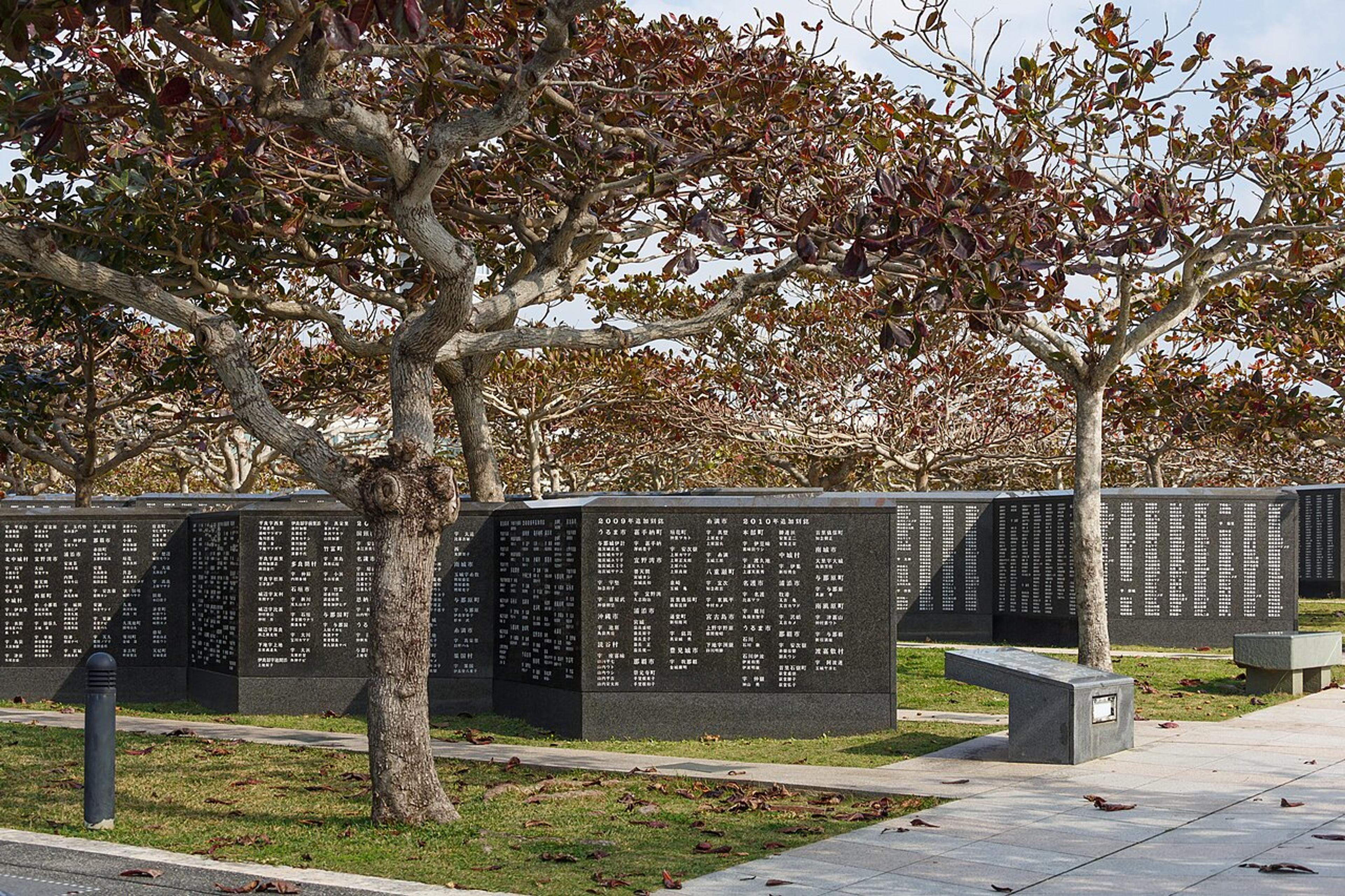
The Okinawa Prefectural Peace Memorial Park occupies the clifftops of Mabuni, the southernmost point of the main island, where the battle ended in June 1945. The park is vast, 40 hectares of manicured lawns, monuments, and memorial walls overlooking the sea where thousands of civilians and soldiers jumped to their deaths rather than surrender. The Cornerstone of Peace, a series of low granite walls arranged in concentric arcs, lists the names of every person killed in the battle, 241,686 names, including Okinawan, Japanese, American, Korean, and Taiwanese dead, without distinction by nationality.
The Okinawa Prefectural Peace Memorial Museum, at the park's center, is one of the finest war museums in the world. Its permanent exhibition traces the battle chronologically but centers the Okinawan civilian experience, the forced evacuations, the cave shelters, the mass suicides ordered by Japanese military commanders, and the slow, agonizing recovery of the postwar decades. The museum does not flinch from Japan's own responsibility for the suffering of its citizens and colonial subjects. It is honest in a way that many national war museums are not.
June 23 is Irei no Hi (Memorial Day) in Okinawa, the anniversary of the battle's end. A ceremony is held at Peace Memorial Park attended by the Japanese Prime Minister and thousands of Okinawans. Schools close, businesses shut, and the entire island observes a moment of silence at noon. Visiting on or near this date provides the deepest understanding of how the battle shapes Okinawan identity to this day.
Shuri Castle: Destruction and Rebirth
Shuri Castle stands at the end of this trail not as a memorial to war but as a statement of survival. The castle, seat of the Ryukyu Kingdom for 450 years, was completely destroyed in the battle, the Japanese military had placed its headquarters inside the castle walls, making it a primary American artillery target. The castle was rebuilt between 1992 and 2019, then devastated again by an accidental fire in October 2019 that destroyed the main hall.
Reconstruction is underway again, with completion expected by 2026. Visitors can watch artisans at work, carving dragon pillars, lacquering columns, and firing the distinctive red roof tiles using traditional Ryukyuan techniques. The castle grounds, stone walls, and surrounding gardens remain open and offer views across Naha to the sea. Shuri Castle's recurring destruction and reconstruction has become, for many Okinawans, a metaphor for the island's own resilience, burned down, rebuilt, burned again, rebuilt again, refusing to disappear.
Shuri Castle grounds are free to enter. The paid exhibition areas (¥400) include the reconstruction viewing area and the underground royal tomb passages. Combine Shuri with the memorial trail by starting at Maeda Escarpment in the morning, moving south through the Navy HQ and Himeyuri, and ending at Peace Memorial Park by early afternoon. Shuri fits naturally as a final stop on the drive back to Naha.
Turn this guide into a trip
We'll prioritize these 5 places when building your itinerary.