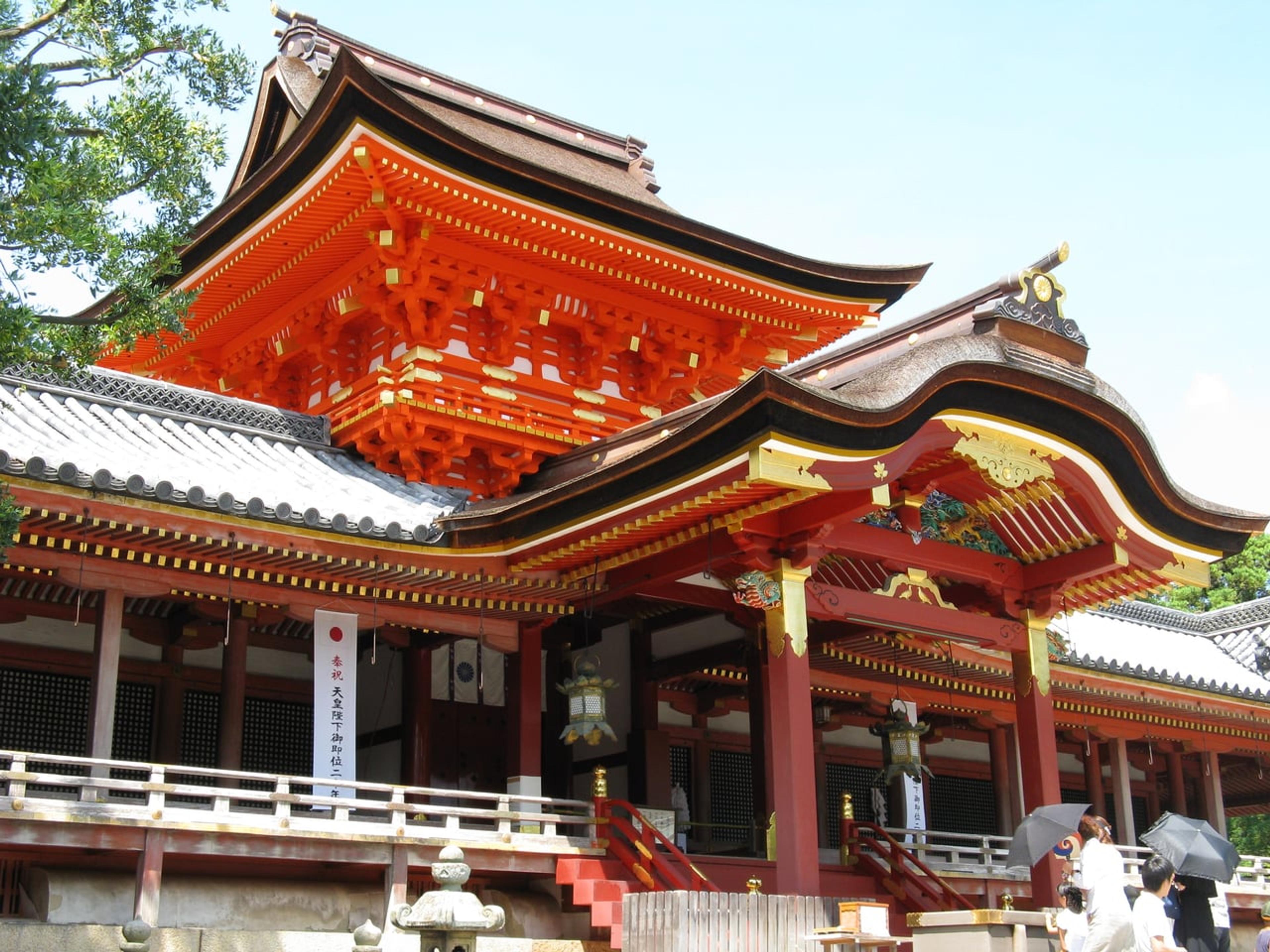
Leave Kyoto's crowds for its northern hinterland: hike Kurama to Kibune, walk Ohara's gardens, visit Miyama's thatched roofs, and cross Amanohashidate's sandbar.
Koku Travel · February 16, 2026
12 places in this guide
The Kyoto Nobody Sees
Kyoto draws 50 million visitors a year, nearly all of them concentrated in the same corridor: Kinkaku-ji to Kiyomizu-dera, Arashiyama to Fushimi Inari. The city's northern reaches, the mountainous terrain that rises within 30 minutes of Kyoto Station, receive almost none of this traffic. Here the urban grid dissolves into forested valleys, farming hamlets, and temple complexes where you might be the only visitor for hours. The landscape is wilder, the temples quieter, and the pace belongs to a Kyoto that existed before the tour buses.
This route moves north in stages, from the mountain temples just outside the city to the remote thatched villages of the Miyama highlands and the coastal sandbar of Amanohashidate. Each stage takes you further from the Kyoto that guidebooks describe and deeper into the Kyoto that residents actually love.
The Eizan Railway from Demachiyanagi Station is the gateway to northern Kyoto. The line splits at Takaragaike, the left fork goes to Kurama (30 min, ¥430), the right to Yase and the mountains beyond. A one-day Eizan pass (¥1,000) covers unlimited rides on both branches and the Kurama-Kibune shuttle bus.
Kurama to Kibune: The Mountain Walk
The hike from Kurama-dera to Kibune Shrine is Kyoto's finest mountain walk, a 90-minute trail through dense cedar forest that connects two ancient sacred sites. Kurama-dera, reached by cable car (¥200) or a steep 30-minute climb from the village, is a Tendai Buddhist temple founded in 770 AD and associated with the childhood of Minamoto no Yoshitsune, one of Japan's legendary samurai. The main hall sits on a mountain ledge with views across a sea of treetops to the peaks beyond.
The trail from Kurama descends through the forest to Kibune, crossing the mountain ridge through groves of enormous cedar where tengu, the long-nosed mountain spirits of Japanese folklore, are said to dwell. The forest floor is carpeted with moss and fern, and the only sounds are birdsong and the creak of branches. Kibune Shrine, at the trail's end, is dedicated to the deity of water. In summer, the restaurants along the Kibune River build dining platforms (kawadoko) directly over the rushing water, where guests eat kaiseki meals cooled by the spray, a luxury that costs ¥5,000-8,000 per person but is one of Kyoto's most memorable dining experiences.
Kibune's kawadoko river dining operates from May through September. Reserve at least a week ahead for weekends. In autumn (mid-November), the Eizan Railway runs a 'Maple Tunnel', the train slows and dims its interior lights as it passes through a corridor of illuminated maple trees between Ichihara and Ninose stations. The effect is spectacular.
Ohara: Temple Gardens and Countryside
Ohara is a farming valley 45 minutes north of central Kyoto by bus (Kyoto Bus #17 from Kyoto Station, ¥580). The valley is home to two exceptional temple complexes, Sanzen-in and Jakko-in, set among rice paddies and vegetable gardens with mountains rising on three sides. The atmosphere is rural and unhurried in a way that feels impossible given the proximity to Kyoto's urban center.
Sanzen-in is the headliner: a Tendai temple with one of Kyoto's finest moss gardens. The Ojo Gokuraku-in hall houses a gilt Amida Buddha flanked by two attendants in a composition of extraordinary grace. The surrounding Yusei-en garden is a carpet of moss dotted with small stone jizo statues partially hidden in the green, finding them all is a quiet game that slows visitors to a contemplative pace. Jakko-in, a smaller nunnery on the opposite hillside, is associated with the tragic Empress Kenreimon'in, the sole survivor of the Heike clan's destruction. The garden here is austere and moving.
Sanzen-in admission is ¥700, Jakko-in is ¥600. Both are worth the entry. The walk between the two temples (about 25 minutes) passes through Ohara's farming neighborhood, shiso fields, pickle shops, and small cafes serving yuba (tofu skin) dishes that are an Ohara specialty. A yuba lunch set at a local restaurant runs ¥1,200-1,800.
Miyama: Thatched Roofs in the Highlands
Miyama (officially Nantan City) is a highland region 90 minutes north of Kyoto by car, where the village of Kayabuki no Sato preserves a cluster of 39 thatched-roof farmhouses (kayabuki) that have been maintained for over 200 years. The village is a Nationally Designated Important Preservation District, often called 'the Shirakawa-go of Kansai', though with a fraction of the visitors. On a weekday morning in spring or autumn, you may have the entire village to yourself.
The thatched roofs are not museum exhibits, they are functioning homes. Residents live in the farmhouses, tend the surrounding rice paddies, and participate in the communal roof-rethatching that happens on a rotating cycle every 20-30 years. A small folk museum in one of the houses shows the construction technique: wooden frames tied with rope (no nails), layered miscanthus grass roofing 40 centimeters thick, and smoke holes that allow the irori (sunken hearth) to cure the thatch from below, extending its life.
Miyama holds a fire prevention drill twice a year (January and May) where all 62 water cannons hidden around the village fire simultaneously, creating a dome of water over the thatched roofs. The January drill, set against snow-covered roofs, has become a famous photographic event. Arrive by 1 PM on the designated day (check Nantan tourism website) to secure a viewing spot.
Amanohashidate: Heaven's Bridge
Amanohashidate is a 3.6-kilometer sandbar covered with 5,000 pine trees that stretches across Miyazu Bay on the Sea of Japan coast. It is ranked as one of Japan's three views (Nihon Sankei), a designation that dates to 1643. The customary way to view it is to stand at the observation deck on the southern hill, turn your back to the bay, bend over, and look at the sandbar upside down through your legs, in this inverted view, the pine-covered bar appears to float in the sky like a bridge to heaven.
Beyond the famous viewpoint, Amanohashidate rewards exploration on foot or by bicycle (rentals ¥400 for two hours at the sandbar entrance). The pine-shaded path runs the full length of the bar, with sandy beaches on both sides. Chion-ji temple at the southern end houses an Important Cultural Property statue of Monju Bosatsu (the bodhisattva of wisdom), and the area is associated with the Tango region's deep textile heritage, the indigo-dyed Tango chirimen silk crepe has been produced here for three centuries.
Take the chairlift (¥680 round trip) to the Amanohashidate View Land on the southern hill for the classic panorama. The competing viewpoint, Kasamatsu Park on the northern hill (cable car ¥680), offers a different angle and is less crowded. To visit both, rent a bicycle and ride across the sandbar between the two hills, the full loop takes about two hours and is flat except for the hill approaches.
Featured in this guide
Places to Visit

Turn this guide into a trip
We'll prioritize these 12 places when building your itinerary.