Five Kyoto temples that rival the famous ones in beauty but see a fraction of the visitors. Moss gardens, raked sand, and total silence.
Koku Travel · February 15, 2026
12 places in this guide
Kyoto has over 2,000 temples and shrines. Visitors see about ten of them, Kinkaku-ji, Fushimi Inari, Kiyomizu-dera, and leave thinking they have experienced the city. They have experienced the crowd management. The temples below are equally beautiful, architecturally significant, and in some cases older than the famous ones. The difference is that you might be the only person there.
These are not obscure temples hidden behind unmarked doors. They are simply the ones that sit outside the tour bus routes, requiring an extra 20 minutes of walking or a single train stop beyond the typical itinerary.
Gio-ji
A small thatched-roof nunnery in the Sagano district of western Kyoto with a moss garden of over 120 species under a maple canopy. The temple is connected to a tragic love story from the Tale of the Heike, Gio, a shirabyoshi dancer beloved by the warlord Taira no Kiyomori, was cast aside when a younger dancer caught his eye. Gio retreated here to take Buddhist vows. The abandoned dancer and the dancer who replaced her eventually reconciled at this temple, both choosing religious life over court intrigue.
The moss garden rivals the famous Saiho-ji (Kokedera) in quality but requires no reservation, no postcard application, and no 3,000-yen entry fee. Entry is 300 yen. The ground cover shifts from vivid emerald green in the rainy season (June) to dappled gold under autumn maples (late November). The garden is small, you can see the whole thing in 20 minutes, but the density of moss species and the quality of light through the canopy make it worth lingering. Best visited early morning before noon.
Otagi Nenbutsu-ji
Located beyond the main Arashiyama tourist zone, past the bamboo grove, past the Togetsukyo Bridge crowds, past Adashino Nenbutsu-ji, up the hill, Otagi Nenbutsu-ji features over 1,200 rakan (disciples of Buddha) stone statues. Each was carved by a different amateur artist between 1981 and 1991 as part of a community restoration project led by sculptor Kocho Nishimura. Every statue has a completely unique expression: some laughing, some meditating, some holding tennis rackets, cameras, or sake bottles.
Many are now beautifully moss-covered, their features softening into the landscape. The effect is joyful and strange in equal measure, somewhere between sacred art and folk humor. The temple itself has ancient origins, founded in the 8th century and relocated here after repeated flood damage. The walk from Arashiyama's main strip takes about 25 minutes, which is enough to thin the crowds to zero. Entry is 300 yen.
Honen-in
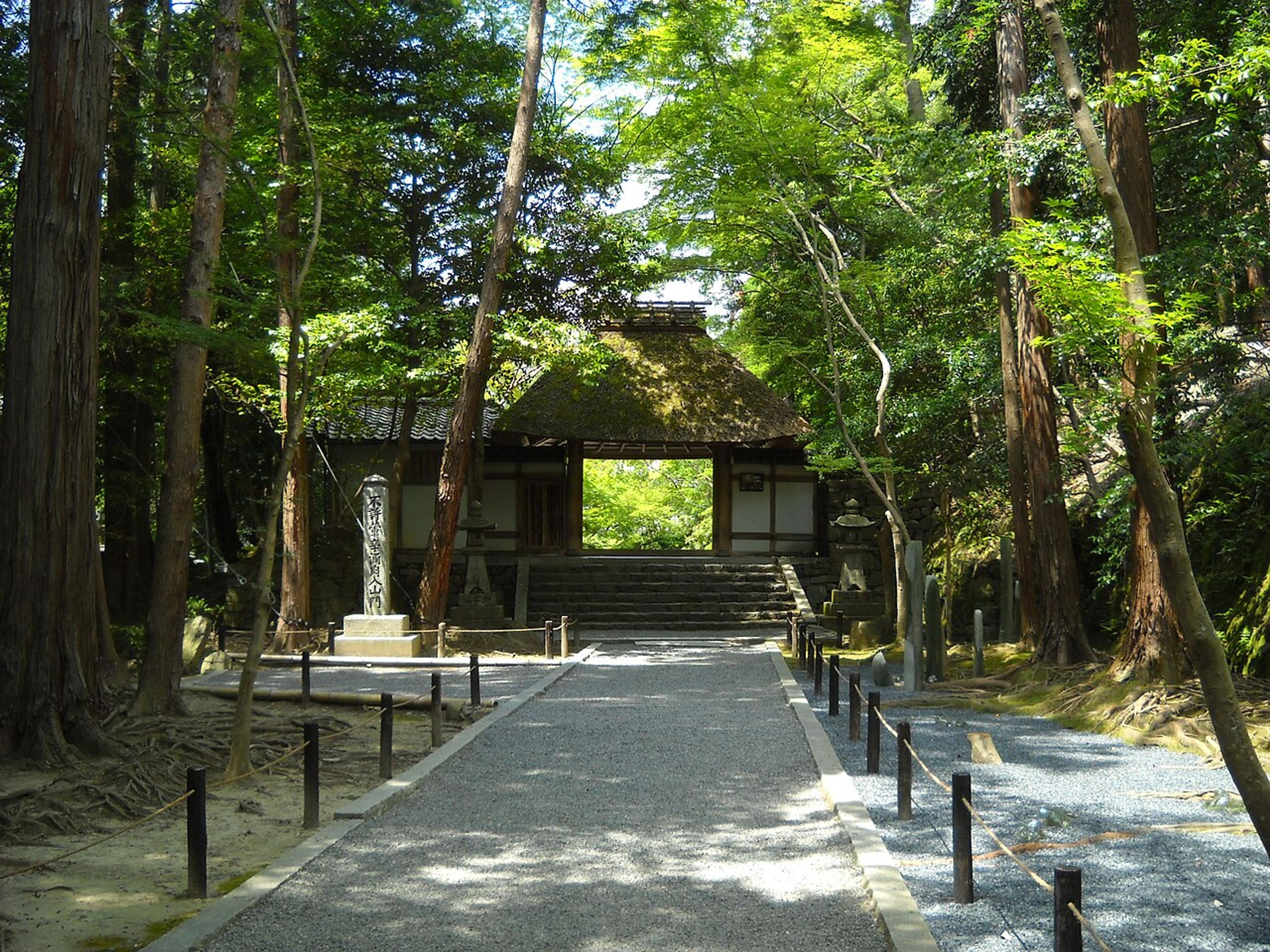
A small temple near the Philosopher's Path with a rustic thatched gate, one of the most photographed gates in Kyoto, its weathered wood framing a view of the garden beyond. Between the gate and the main hall, two raised sand platforms called byakusadan display seasonal patterns raked fresh by the monks. In spring, cherry blossom motifs. In summer, water ripples. In autumn, maple leaves. Walking between them is a ritual purification, the sand represents water, and passing through symbolically cleanses the visitor.
The temple was founded in 1680 to honor Honen, the founder of Jodo Buddhism. The novelist Junichiro Tanizaki, who wrote "In Praise of Shadows," is buried in the quiet cemetery, a fitting resting place for the man who argued that Japanese beauty depends on shadow, patina, and the passage of time. Honen-in is free to enter, open daily from 6:00 to 16:00, and typically has fewer than ten visitors at any given time. Special exhibitions in the main hall open twice yearly (spring and autumn).
Shisen-do
A 17th-century hermitage built by Jozan Ishikawa, a retired samurai who served under Tokugawa Ieyasu at the Battle of Sekigahara in 1600. After falling from favor, Jozan traded his sword for poetry and garden design, spending 30 years perfecting this retreat. The main hall, the "Hall of Poet Immortals" that gives the temple its name, displays portraits of 36 Chinese poets painted by Kano Tan'yu, one of the Edo period's greatest artists.
But the real draw is the garden: a meticulously designed composition of clipped azalea bushes, white sand, and layered greenery, viewed from the veranda while sitting on tatami. The rhythmic knock of a shishi-odoshi bamboo water knocker punctuates the silence. Jozan is traditionally credited with popularising the device as a garden feature here, though it originated as a deer-scaring tool for farmers. The temple is in the Ichijoji area of northeastern Kyoto, near several excellent ramen shops, including the famous Ichijoji ramen district. It is a 5-minute walk from Ichijoji Station on the Eizan Railway. Entry is 500 yen.
Komyo-in
A tiny sub-temple of Tofuku-ji housing the Hashin-tei garden, designed in 1939 by Shigemori Mirei, arguably the 20th century's most important Japanese garden designer. Where most Zen gardens aim for austerity and stillness, Shigemori's work is dynamic: raked gravel flows around three moss mounds in sweeping curves that feel almost kinetic, like a frozen moment of motion. The garden name, Hashin-tei, means "garden of the waves of the heart."
Interconnected rooms offer different perspectives on the same landscape, each framing a different composition, a technique Shigemori borrowed from the sukiya tea house tradition. Sit on the tatami, slide open a different screen, and the garden reorganizes itself. The temple charges a small donation (typically 300 yen) and receives perhaps a dozen visitors on a busy day. It sits just south of Tofuku-ji's main complex, which itself draws crowds for autumn foliage, walk past the crowds, turn left, and find Komyo-in in near silence.
Planning Tips
All five temples are in Kyoto proper and reachable by bus or train. Gio-ji and Otagi Nenbutsu-ji pair naturally for a morning in western Kyoto, start at Otagi, walk downhill through Sagano. Honen-in sits on the Philosopher's Path, combinable with Nanzen-ji and Ginkaku-ji. Shisen-do stands alone in the northeast, best combined with Enkoji (autumn foliage) or Manshu-in (imperial architecture). Komyo-in is a 2-minute detour from Tofuku-ji. Visit on weekday mornings for the best chance of solitude. None require advance booking. Combined entry fees total under 2,000 yen.
Featured in this guide
Places to Visit

Turn this guide into a trip
We'll prioritize these 12 places when building your itinerary.