A Kengo Kuma roastery, a Tadao Ando museum cafe, a Fujimori grass-roofed campus, treaty-port heritage rooms. Where Japan's coffee comes with architecture worth the trip.
Koku Editorial · May 25, 2026
7 places in this guide
Some of Japan's best coffee comes with a building attached. Architects have designed coffee houses, and coffee has moved into buildings worth visiting in their own right: a Kengo Kuma roastery, a Tadao Ando museum cafe, a Fujimori grass-roofed campus, heritage rooms from the treaty-port era. Here is where the cup and the architecture are both the draw.
Tokyo: Starbucks Reserve Roastery, by Kengo Kuma
The Starbucks Reserve Roastery in Nakameguro is a four-story coffee building designed by Kengo Kuma, the architect of the new National Stadium. His signature wood and flowing forms wrap a working roaster, with a cherry-tree terrace over the Meguro River. Go for the building and the roastery floor as much as the coffee; the riverside setting peaks in cherry-blossom season.
Matsuyama: Saka no Ue no Kumo Museum, by Tadao Ando
The Saka no Ue no Kumo Museum is a Tadao Ando work in Matsuyama, exposed concrete and angular volumes, and the cafe inside serves coffee and light meals with the museum's modernist lines and a view over Matsuyama Castle. Pair the cafe with the museum and the adjacent Bansui-so villa; the hilltop walk ties them together.
Omihachiman: La Collina, by Terunobu Fujimori
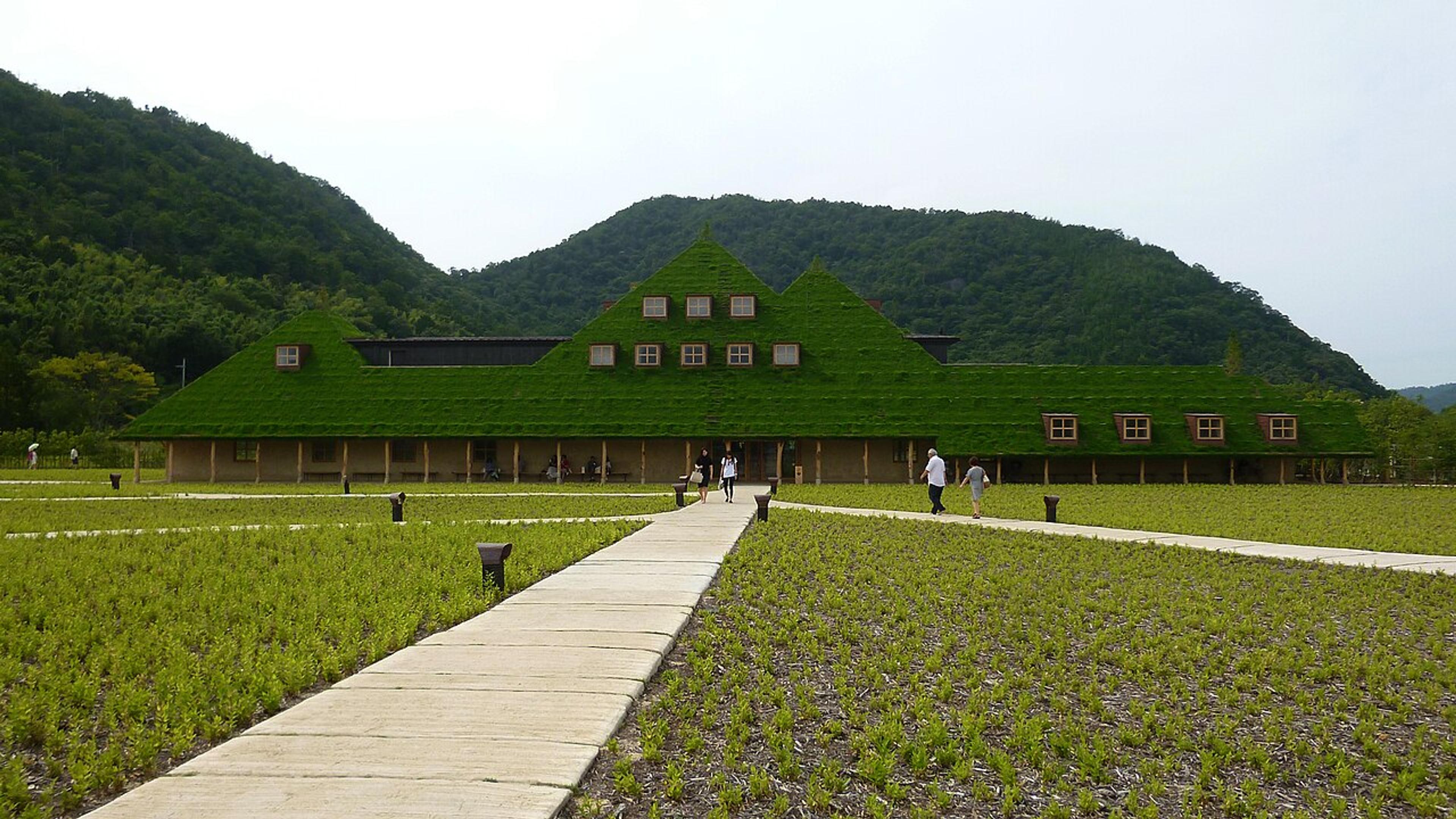
La Collina is the flagship campus of the Taneya and Club Harie confectioners in Omihachiman, designed by the maverick architect Terunobu Fujimori. The main building carries a living grass roof that reads as a hill, and the grounds pair Fujimori's earthy, hand-built style with a cafe and the makers' sweets. It is part bakery, part building you walk through, and an easy detour from the Omihachiman canal district.
Kobe: Patisserie Tooth Tooth Maison 15th
Patisserie Tooth Tooth Maison 15th occupies a colonial-style heritage building in Kobe dating to the 1880s, one of the Western houses that give the Kitano district its character. The setting is the point: refined cakes and afternoon tea in a registered period room. Combine it with a Kitano walk past the ijinkan, the foreign merchants' houses.
Hiroshima: Andersen, a 1925 bank turned bakery
Hiroshima Andersen occupies a 1925 former bank building on Hondori, a Renaissance-style survivor with a story tied to the 1945 atomic bombing. Reopened after a careful restoration, it runs as a flagship bakery and cafe in one of the city's few prewar buildings. A coffee here sits inside Hiroshima's architectural memory rather than beside it.
Nara: Miyake, a samurai residence near Sarusawa Pond
Miyake Kyukonoiketei serves coffee, matcha, and wagashi inside a former samurai residence near Sarusawa Pond in Nara, the kind of room that carries the feudal city in its joinery and garden views. It is a short walk from the pond and the Naramachi lanes, a quieter coffee stop than the park edge.
Isehara: Afuri Shrine's glass terrace
Partway up sacred Mount Oyama, the lower hall of Afuri Shrine has a glass-walled terrace cafe looking out over Sagami Bay, one of the more dramatic coffee views in the Kanto region. It rewards the climb (or the cable car), and pairs the shrine visit with a coffee at altitude.
How to plan a coffee-and-architecture day
These pair naturally with what is around them. The Kuma roastery sits in Nakameguro's walkable river district; La Collina anchors an Omihachiman day; the Kobe and Nara rooms drop into existing heritage walks. Check the building's own hours rather than the cafe's, which sometimes close earlier, and treat the architecture as the reason to go and the coffee as the reward for arriving.
Featured in this guide
Places to Visit
Turn this guide into a trip
We'll prioritize these 7 places when building your itinerary.