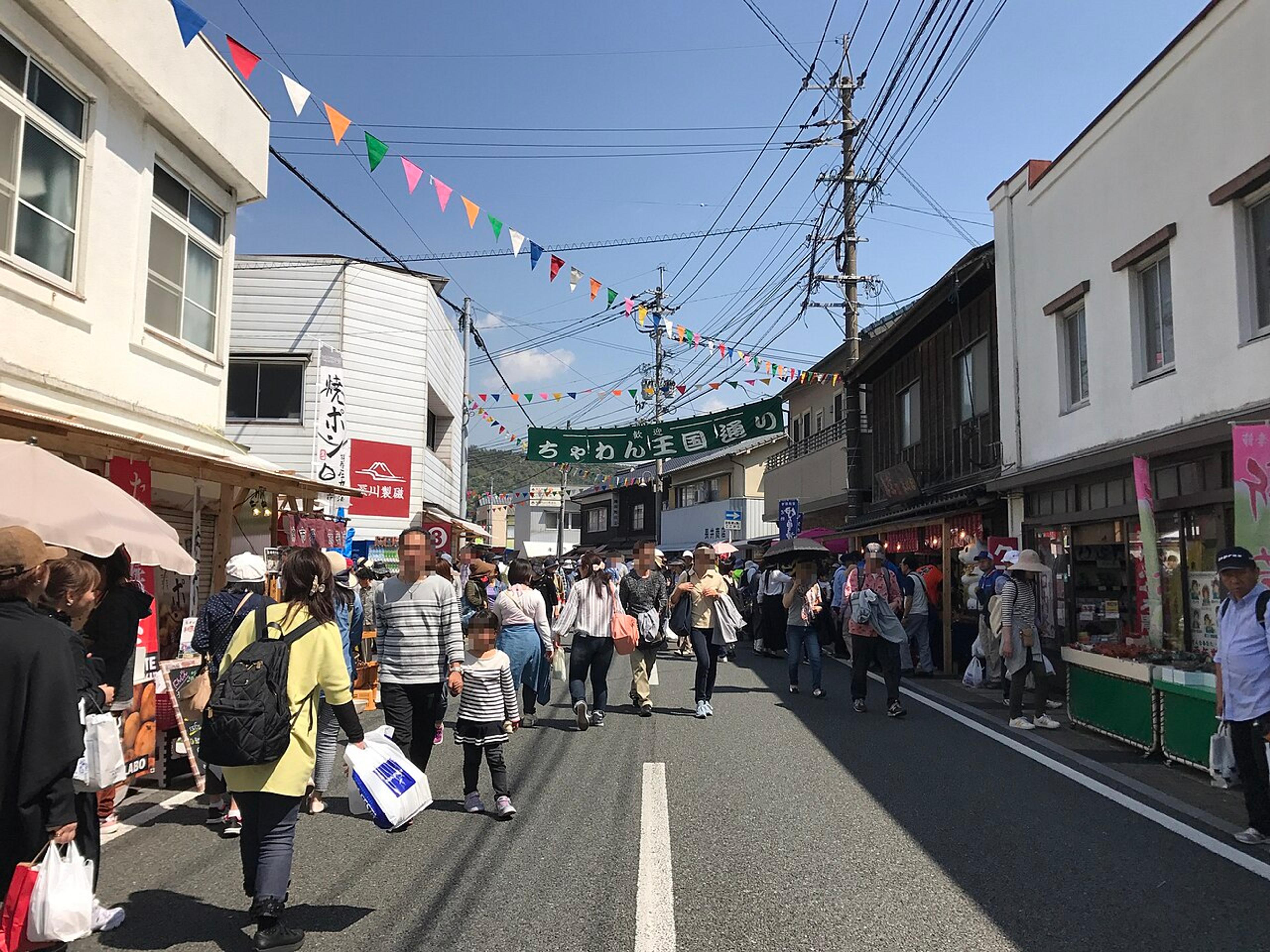
Japanese porcelain began in Arita when Korean potter Yi Sam-pyeong discovered porcelain stone at Izumiyama Quarry in the early 1600s. Four centuries later the Kakiemon, Imaemon, Gen-emon, and Fukagawa-Seiji kilns are still firing, the Tonbai walls hide their workshops behind kiln-brick alleys, and Tozan Shrine guards the kiln-god with a torii made of white porcelain. The annual Ceramic Fair runs Golden Week and turns the whole town into a kilometer-long market.
What Arita is known for
Top-rated in Arita
The Kyushu Ceramic Museum
4.4museum
Museum in world-famous Arita showcasing Kyushu ceramics and porcelain with focus on local Hizen pieces.
Fukagawa-Seiji Kiln and Museum
4.4museum
Since Fukagawa Chūji (1871–1934) founded Fukagawa-Seiji in 1894, the kiln’s workshops and factory remain mostly unchanged.
Kakiemon Kiln
4.4landmark
The Kakiemon kiln is among the oldest family-owned kilns in Arita, with a history documented to the 1640s.
Imaemon Kiln and Museum
4.4museum
Imaemon family is known for its long history of producing Nabeshima ware.
Imari Nabeshima Kiln Visit
4.4craft
Secluded mountain porcelain village with 30 active kilns and intimate painting workshops.
Arita Ceramic Fair
4.3culture
Massive Golden Week market in the birthplace of Japanese porcelain.
Arita Porcelain Park
4.0shopping
German village-styled park with a Zwinger palace replica, celebrating Arita's 400-year porcelain-making heritage.
Izumiyama Quarry
4.1nature
According to local tradition, the Izumiyama quarry was discovered in the first decades of the 1600s by a Korean potter whose name is recorded as Kanagae Sambe’e (d.