Climb the three sacred mountains of Dewa, Haguro, Gassan, and Yudono, where yamabushi ascetics have practiced rebirth rituals for 1,400 years.
Koku Travel · February 16, 2026
9 places in this guide
The Mountains Where You Die and Are Born Again
Dewa Sanzan, the Three Mountains of Dewa, is one of Japan's most sacred mountain complexes and the spiritual center of Shugendo, a syncretic religion that blends Shinto animism, esoteric Buddhism, and mountain asceticism. The three peaks represent birth (Haguro-san), death (Gassan), and rebirth (Yudono-san). To climb all three is to complete a symbolic cycle of spiritual renewal that yamabushi mountain ascetics have practiced since the 7th century.
The mountains rise from the Shonai Plain in Yamagata Prefecture, southwest of Tsuruoka city. Unlike most sacred mountains in Japan, Dewa Sanzan has never been reduced to a tourist attraction. The yamabushi still train here, fasting, meditating under waterfalls, sleeping rough on mountain slopes. Pilgrims still walk the routes in white robes. The mountain lodges still serve shojin ryori, the refined vegetarian cuisine of Buddhist monasteries. This is living spiritual practice, not heritage display.
Haguro-san: The Mountain of the Present
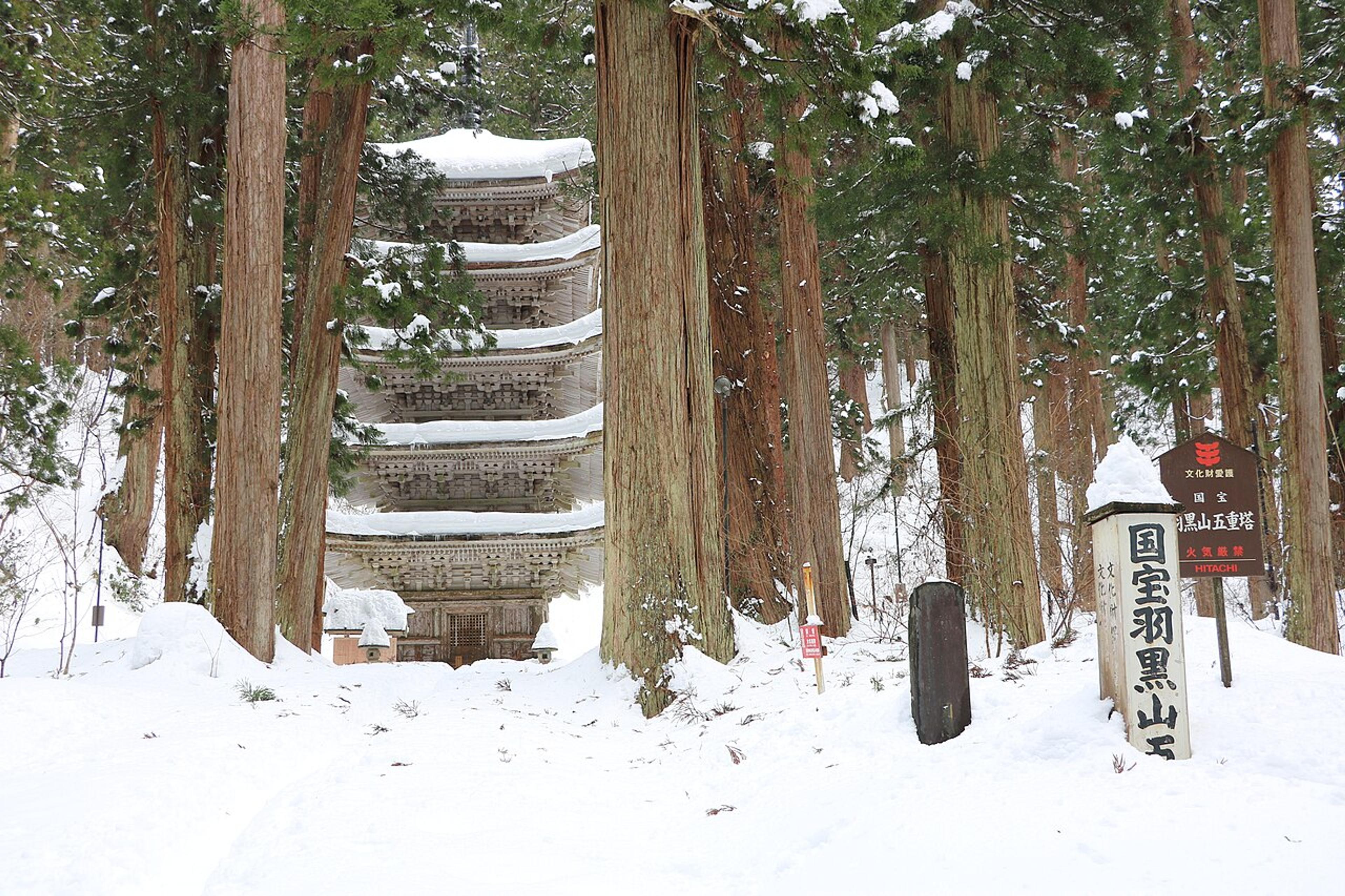
Haguro-san is the most accessible of the three peaks and the only one open year-round. The approach begins at the Zuishin Gate and descends through ancient cedar forest to the Goju-no-to, a five-story pagoda designated a National Treasure. Built in the 10th century, it stands alone in the forest, no precinct wall, no surrounding buildings, its dark cypress wood almost invisible against the cedar trunks. The effect is less architecture than apparition.
From the pagoda, 2,446 stone steps climb through the cedar forest to the summit shrine. The stairway is one of the finest mountain approaches in Japan, worn stone risers set into the forest floor, flanked by cedars that are 300 to 600 years old, with filtered light creating shifting patterns on the moss-covered ground. The climb takes 60 to 90 minutes at a steady pace. At the summit, the Sanjin Gosaiden shrine enshrines the deities of all three mountains, allowing winter pilgrims to pay respects to Gassan and Yudono when those peaks are closed by snow.
Start the climb early, by 7 AM the morning light through the cedars is extraordinary, and you will have the stairway nearly to yourself. The teahouse at the halfway point (Ninosaka) serves amazake (sweet rice drink) for ¥300 and provides a welcome rest. The summit lodge Saikan serves excellent shojin ryori lunches for ¥1,800 without requiring an overnight stay.
Gassan: The Mountain of Death
Gassan is the highest of the three peaks at 1,984 meters, and its summit is open only from July 1 to mid-October. The standard approach takes the Gassan ski lift (¥580 one way) from the eighth station to the upper plateau, then follows a boardwalk trail across alpine marshland before the final rocky ascent to the summit shrine. The total hike from the lift station to the summit takes about two and a half hours.
The upper reaches of Gassan are genuinely otherworldly. The alpine marshland, called Midagahara, is dotted with small ponds that reflect the sky, surrounded by low alpine flowers in summer and buried under meters of snow well into June. Gassan receives some of the heaviest snowfall in Japan, and the ski season extends from April to July on lingering snowfields. The summit shrine is attended by a priest who performs a purification ritual on each arriving pilgrim, a brief ceremony involving waved paper streamers and chanted prayers that marks the symbolic passage through death.
The purification ritual at Gassan's summit shrine is not optional, it is offered to all who reach the top, and declining would be unusual. The priest will ask your name and hometown before performing the rite. A small offering (¥500) is customary. Photography of the inner shrine is not permitted.
Yudono-san: The Mountain of Rebirth
Yudono-san is the most mysterious of the three peaks. The sacred object at its core is not a building but a natural formation, a large, reddish-brown boulder from which hot spring water flows continuously, staining the rock with mineral deposits. Pilgrims remove their shoes and walk barefoot across the warm, wet stone surface in a ritual that is both tactile and intensely personal. The experience is considered so sacred that visitors are instructed: 'Do not speak of what you see at Yudono.'
The descent from Gassan to Yudono takes about three hours on a steep, sometimes technical trail that drops through alpine meadow into subalpine forest. The trail is well-maintained but demanding, metal ladders and chains assist on the steepest sections. Those who prefer to visit Yudono independently can drive to the trailhead and walk 30 minutes up a gentle path from the bus stop. Either way, the barefoot walk across the sacred stone and the hot water flowing over your feet is an experience unlike any other in Japanese religion.
The Gassan-to-Yudono traverse involves steep, exposed sections with chains and ladders. Proper hiking boots, rain gear, and at least one liter of water per person are essential. The trail can be dangerously slippery when wet. Do not attempt this route in poor visibility, the upper sections are exposed and unmarked in fog.
Shojin Ryori and Yamabushi Training
The mountain lodges (shukubo) on Haguro-san serve shojin ryori, Buddhist vegetarian cuisine, that rivals Kyoto's temple restaurants in refinement. The meals use mountain vegetables, wild mushrooms, locally made tofu, and seasonal preparations that change weekly. At Saikan, the main lodge, dinner is a multi-course affair served on lacquerware in a tatami hall overlooking the forest. Dishes like goma-dofu (sesame tofu), sansai tempura (wild mountain vegetable tempura), and tsukemono (pickled vegetables from the temple garden) demonstrate that vegetarian cuisine can be as complex and satisfying as any other tradition.
For deeper immersion, the Dewa Sanzan Shrine Office offers yamabushi training programs ranging from one day to one week. Even the one-day program includes meditation, waterfall purification (standing under a cold mountain waterfall while chanting), a guided hike, and a shojin ryori meal. The multi-day programs involve fasting, extended silence, and sleeping in mountain huts. These are not tourist experiences packaged for comfort, they are genuine ascetic training, adapted slightly for non-practitioners.
Overnight at Saikan with dinner and breakfast costs ¥9,500 per person. The one-day yamabushi experience costs ¥8,800 including lunch, guide, and all ritual fees. Both represent extraordinary value for the depth of experience offered. Book through the Dewa Sanzan Shrine Office at least two weeks ahead, English-language bookings are accepted by email.
Featured in this guide
Places to Visit

Turn this guide into a trip
We'll prioritize these 9 places when building your itinerary.