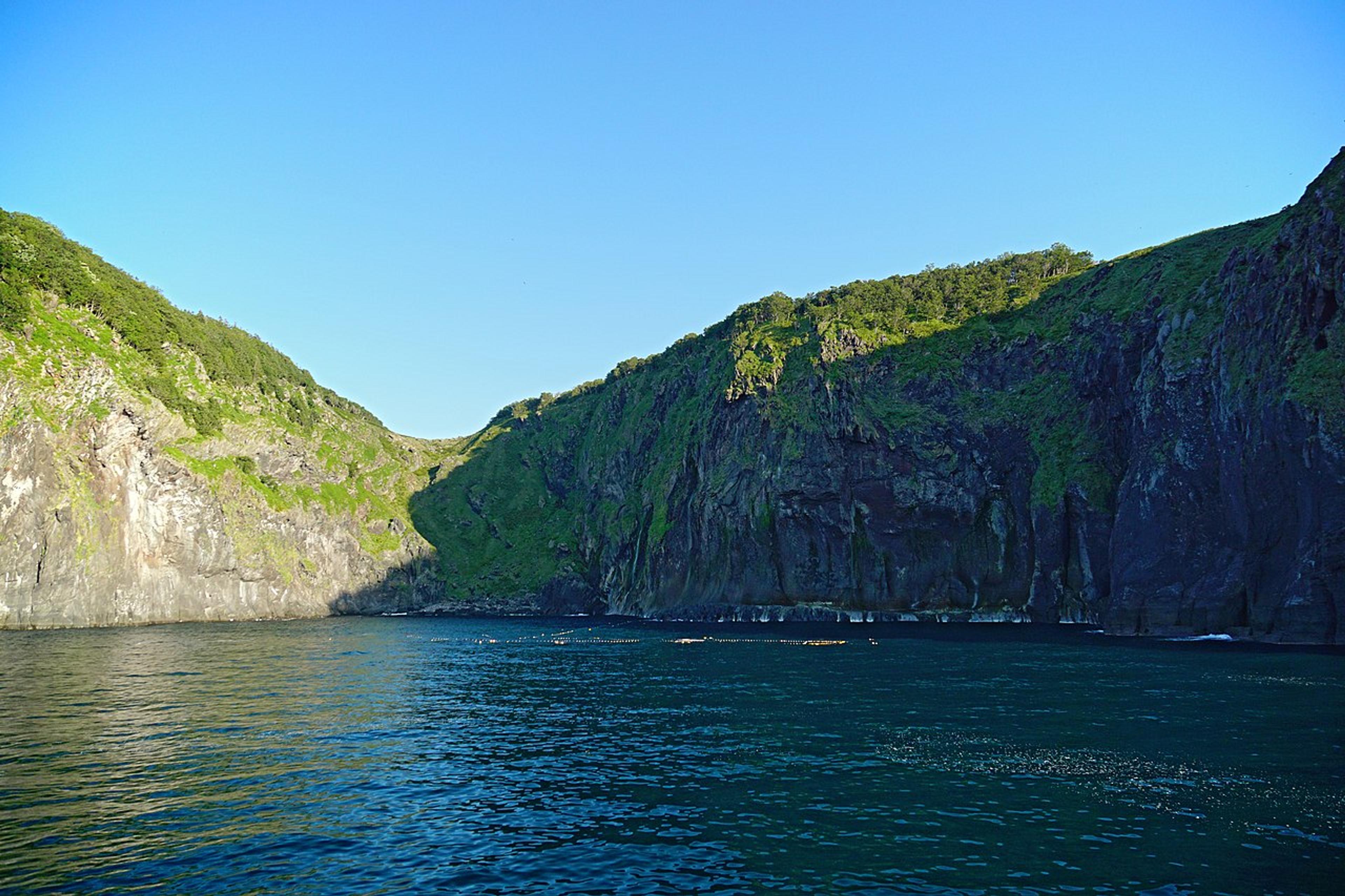
Shiretoko & Eastern Hokkaido Wilderness
Deep Dive · shari · 9 min
Eastern Hokkaido is Japan's last frontier: Shiretoko's untouched forests, drift ice from Siberia, Akan-Mashu's caldera lakes, and winter crane dances.
Yuku Japan · February 15, 2026
8 places in this guide
Japan's Last Frontier
Eastern Hokkaido is where Japan stops feeling like Japan. The population density drops to near-zero. Roads run straight through flat marshland or climb over volcanic ridges into forests that have never been logged. Brown bears outnumber people in some valleys. The air smells of sulfur from active volcanic vents, or of salt from the Sea of Okhotsk, or of the rich, organic decay of old-growth forest floor.
This is the most ecologically intact region in Japan, anchored by Shiretoko, a mountainous peninsula that juts into the Sea of Okhotsk and was designated a UNESCO World Heritage Site in 2005. The designation recognized not just the terrestrial ecosystem but the marine one: the southernmost point in the Northern Hemisphere where seasonal sea ice forms, creating a nutrient cycle that supports everything from plankton to orca.
Shiretoko Peninsula
Shiretoko means 'end of the earth' in Ainu, and the description is accurate. The peninsula is 70 kilometers long and largely roadless, the western coast road ends at the Kamuiwakka hot waterfall, and the eastern coast road ends at the Aidomari fishing port. Beyond these points, the peninsula is accessible only by boat or on foot.
The Shiretoko Five Lakes (Shiretoko Goko) are the most accessible highlight. A network of boardwalks and ground trails loops through five small lakes set in dense forest, with the Shiretoko mountain range reflected in their surfaces. In bear season (May-July), the ground trails require a guided group and a bear-safety lecture. The elevated boardwalk is open year-round and offers views across the forest canopy to the sea.
The Kamuiwakka Hot Falls cascade down a volcanic mountainside in a series of pools heated by underground thermal activity. The lowest pools are warm enough for bathing, with temperatures rising as you climb higher. Access is restricted in peak season to prevent erosion, but the lower falls remain open. The experience of sitting in a warm waterfall in the middle of raw wilderness is extraordinary.
Shiretoko has a significant brown bear population. Bears are regularly seen near the Five Lakes, on the Kamuiwakka road, and on the coast. Follow all ranger instructions, carry bear bells, never approach or feed bears, and store food in designated bear-proof containers.
Drift Ice on the Sea of Okhotsk
Every winter, pack ice forms in the northern Sea of Okhotsk and drifts south on currents until it reaches the Hokkaido coast. By February, the sea off Abashiri and Utoro is filled with floating ice sheets, a visual spectacle and an ecological engine. The ice carries nutrients that feed massive plankton blooms when it melts, supporting the entire marine food chain.
The Aurora icebreaker cruise from Abashiri is the classic drift ice experience. The ship pushes through the ice field for about an hour, with passengers watching from the deck as the hull cracks and displaces ice sheets. On clear days, the horizon is a flat white line where ice meets sky, with the Shiretoko mountains rising to the south.
For a more immersive experience, drift ice walking tours operate from Utoro on the Shiretoko coast. Wearing dry suits, participants walk, and sometimes swim, across the surface of the floating ice. Guides ensure safety, but the experience of standing on sea ice in the middle of the Pacific is genuinely otherworldly.
Drift ice typically arrives at the coast in late January and remains through mid-March. Peak coverage is usually mid-February. Ice conditions are tracked daily and icebreaker cruises only operate when sufficient ice is present. Check the Abashiri drift ice forecast before planning travel dates.
Akan-Mashu National Park
Southwest of Shiretoko, the Akan-Mashu National Park protects a cluster of volcanic caldera lakes surrounded by primeval forest. Lake Mashu is the most famous, a crater lake of extraordinary clarity (visibility to 40 meters) that is frequently hidden by fog, earning it the nickname 'Lake of Mystery.' On clear days, the water appears an intense sapphire blue.
Lake Akan is home to marimo, spherical colonies of freshwater algae that form naturally into green balls up to 15 centimeters in diameter. The marimo are designated a national natural treasure, and the Marimo Exhibition and Observation Center on the lake shore explains their unusual biology. The lake is also the center of the Ainu cultural area, with the Ainu Kotan village offering craft demonstrations and traditional performances.
The Lake Akan Ainu Kotan is one of the largest remaining Ainu communities in Hokkaido. The traditional dance performances (designated an Important Intangible Folk Cultural Property) are held several times daily. The community-run craft shops sell authentic woodcarving and textile work, prices are higher than tourist souvenirs, but the craftsmanship is genuine.
The Cranes of Tsurui
The tancho, or red-crowned crane, is one of the rarest cranes in the world and Japan's most sacred bird. The Tsurui-Ito Tancho Crane Sanctuary, near Kushiro, is the best place to observe them. In winter, the cranes gather at feeding stations where volunteers scatter grain on the snow. The birds perform elaborate courtship dances, bowing, leaping, and calling in unison, against a backdrop of snow-covered marshland and distant volcanic peaks.
About 1,800 red-crowned cranes live in eastern Hokkaido, up from as few as 33 in the 1950s when conservation efforts began. The recovery is one of Japan's great wildlife success stories. The feeding stations operate from November through March, and the sight of a hundred cranes dancing and calling in the cold morning air is one of the most stirring wildlife spectacles in Asia.
Arrive at the Tsurui feeding station before sunrise for the best photography conditions. The cranes are most active in the first hour of daylight, and the low winter sun behind them creates dramatic backlit silhouettes. Bring a long telephoto lens, 400mm minimum for frame-filling shots.
Featured in this guide
Places to Visit

Turn this guide into a trip
We'll prioritize these 10 places when building your itinerary.