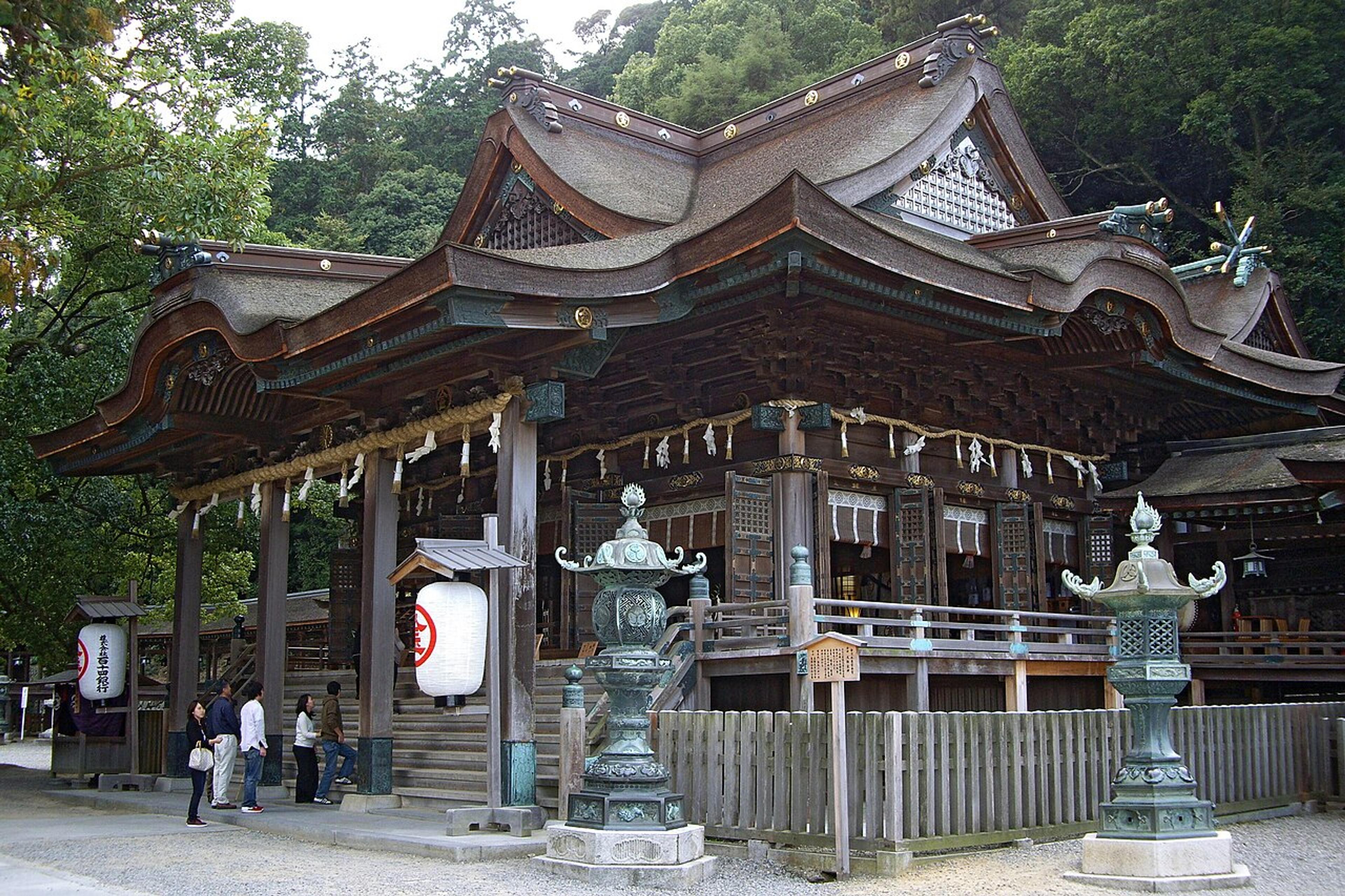
The Pilgrimage Island
Deep Dive · takamatsu · 9 min
Shikoku is Japan's spiritual island: walk the 88-temple pilgrimage, cross vine bridges in Iya Valley, bathe at Dogo Onsen, and eat the country's best udon.
Yuku Japan · February 15, 2026
11 places in this guide
The Fourth Island
Shikoku is the smallest of Japan's four main islands and the one most travelers skip. It has no Shinkansen, no mega-cities, no world-famous attractions on the scale of Kyoto's temples or Hokkaido's landscapes. What it has is depth. A 1,200-kilometer walking pilgrimage that circles the entire island. Mountain valleys so remote they sheltered defeated warriors for centuries. The oldest hot spring in Japan. And an udon noodle culture so intense that people queue for hours at shops that look like garden sheds.
The island's relative inaccessibility, bridges from Honshu were only completed in 1988, preserved a Japan that the mainland lost decades ago. Towns are quieter, temples are emptier, mountains are wilder, and the pace of life resists the mainland's urgency.
The 88-Temple Pilgrimage
The Shikoku Henro is a pilgrimage circuit of 88 Buddhist temples associated with the monk Kukai (Kobo Daishi), who founded the Shingon sect of Buddhism in the 9th century. The full circuit is approximately 1,200 kilometers and takes 30-60 days on foot, though modern pilgrims also complete it by bus, car, or bicycle.
Walking pilgrims (ohenro-san) are identifiable by their white vests, conical sedge hats, and wooden walking sticks, pilgrim's gear that has remained essentially unchanged for centuries. The route circles the island clockwise, beginning and ending at Temple 1 (Ryozen-ji) in Tokushima Prefecture. Along the way, it crosses mountain passes, descends to coastal fishing villages, and passes through small cities where pilgrims and daily life intersect.
Even walking a portion of the trail, a few days, covering ten or fifteen temples, provides a genuine experience of the pilgrimage. The rhythm of walking, stamp-collecting at each temple, and the hospitality of settai (the tradition of locals offering food, drink, or accommodation to pilgrims) creates a meditative quality that intensifies over time.
Settai, the custom of giving gifts to passing pilgrims, is deeply embedded in Shikoku culture. You may be offered tea, fruit, onigiri, or even overnight accommodation by strangers. Accepting settai is considered proper etiquette; declining can cause offense. The relationship between pilgrim and host is mutual: the pilgrim's journey generates merit that extends to the giver.
Iya Valley
The Iya Valley in western Tokushima Prefecture is one of Japan's most remote inhabited areas, a deep gorge carved by the Iya River through steep, forested mountains. According to legend, defeated Heike clan warriors fled here after the Genpei War in 1185, and their descendants lived in isolation for centuries, building vine bridges across the gorge and farming the impossible slopes.
The Iya Vine Bridges (Kazurabashi) are the valley's signature attraction. The main bridge spans 45 meters across the gorge, suspended from massive woven vine cables. Walking across it, the bridge sways with every step, the gaps between the wooden slats reveal the river 14 meters below, is a genuinely heart-accelerating experience. The bridge is rebuilt every three years using 600 bundles of mountain vines.
Beyond the vine bridge, the valley offers hiking trails through old-growth forest, clifftop onsen hotels with cable cars descending to riverside baths, and the eerie Ochiai hamlet, a cluster of thatched-roof farmhouses on a nearly vertical slope, connected by narrow stone paths. Several of the farmhouses are available as overnight rentals through the Chiiori Trust.
The 'double vine bridges' (Oku-Iya Niju Kazurabashi) deeper in the valley are less touristed and more atmospheric than the main bridge. They require a longer drive but reward with smaller crowds and a wilder setting. A small manually-operated cable car (a 'wild monkey bridge') crosses the river nearby.
Dogo Onsen
Dogo Onsen in Matsuyama is the oldest documented hot spring in Japan, with references in historical texts dating to the 6th century. Prince Shotoku reportedly bathed here. The main bathhouse, Dogo Onsen Honkan, is a three-story wooden structure built in 1894 that is widely cited as the inspiration for the bathhouse in Miyazaki's Spirited Away.
The Honkan underwent a seven-year conservation renovation (completed 2024) that preserved the original wooden structure while upgrading the plumbing and seismic resilience. The bathing follows the old form: undress in a communal changing room, wash at low taps, and settle into a stone bath fed by alkaline spring water. Upper-floor rest areas serve tea and dango (rice dumplings) while you cool down in a tatami room overlooking the street.
Visit Dogo Onsen Honkan in the early morning (opens at 6 AM) for the most peaceful experience. By mid-morning, tour groups arrive and the changing rooms become crowded. The 'Kami no Yu' (water of the gods) course on the upper floor includes a private rest room and tea service for ¥1,700.
Sanuki Udon
Kagawa Prefecture, the smallest in Japan, is the undisputed udon capital of the country. Sanuki udon, thick, chewy wheat noodles served in a simple dashi broth, is not just a food here but a cultural identity. The prefecture has over 600 udon shops for a population of one million. Many of the best are self-service operations in converted houses, garages, or warehouses, with no signage and lines that form before 7 AM.
The noodles are made fresh, usually visible through a window or open kitchen. The dough is kneaded by foot (literally, the cook steps on it to develop the gluten), cut thick, and boiled to order. The standard order is kake udon (noodles in hot broth) or bukkake udon (noodles with cold broth poured over). Toppings are self-service: tempura bits, green onions, grated ginger, a raw egg.
A bowl of udon at a self-service shop costs ¥200-400. This is not a budget compromise, the ¥300 bowl at a Kagawa roadside shop is genuinely better than the ¥1,200 bowl at a Tokyo udon restaurant. The difference is freshness, technique, and an entire culture devoted to the perfection of a single noodle type.
Udon-hopping is the definitive Kagawa activity. Rent a car, download the Kagawa udon map (available from any tourist office), and visit three to four shops in a morning. Most shops close by 2 PM or when the noodles sell out, whichever comes first. Budget ¥1,500 for a full morning of udon at four shops.
Featured in this guide
Places to Visit

Turn this guide into a trip
We'll prioritize these 11 places when building your itinerary.