The San'in Coast
Deep Dive · tottori · 8 min
Japan's least-visited coastline rewards the curious: Tottori's surreal dunes, Izumo Taisha's mythology, Matsue's canal castle, and Adachi Museum's gardens.
Yuku Japan · February 15, 2026
9 places in this guide
The Other Side of Japan
The San'in region, the Sea of Japan coast of western Honshu, covering Tottori and Shimane Prefectures, is one of the least-touristed parts of the country. While the southern San'yo coast (Hiroshima, Okayama) faces the Inland Sea and catches the Shinkansen traffic, the northern San'in coast faces the Sea of Japan and catches mostly weather. The trains are slow. The towns are quiet. The landscape is dramatic and empty.
What San'in lacks in convenience it repays in density of experience. Within a few hours' drive, you encounter Japan's largest sand dunes, its most important Shinto shrine, a perfectly preserved canal-side castle town, and a garden that has been voted the best in Japan for over twenty consecutive years. Each of these would justify a detour. Together, they form one of the richest cultural corridors in the country.
Tottori Sand Dunes
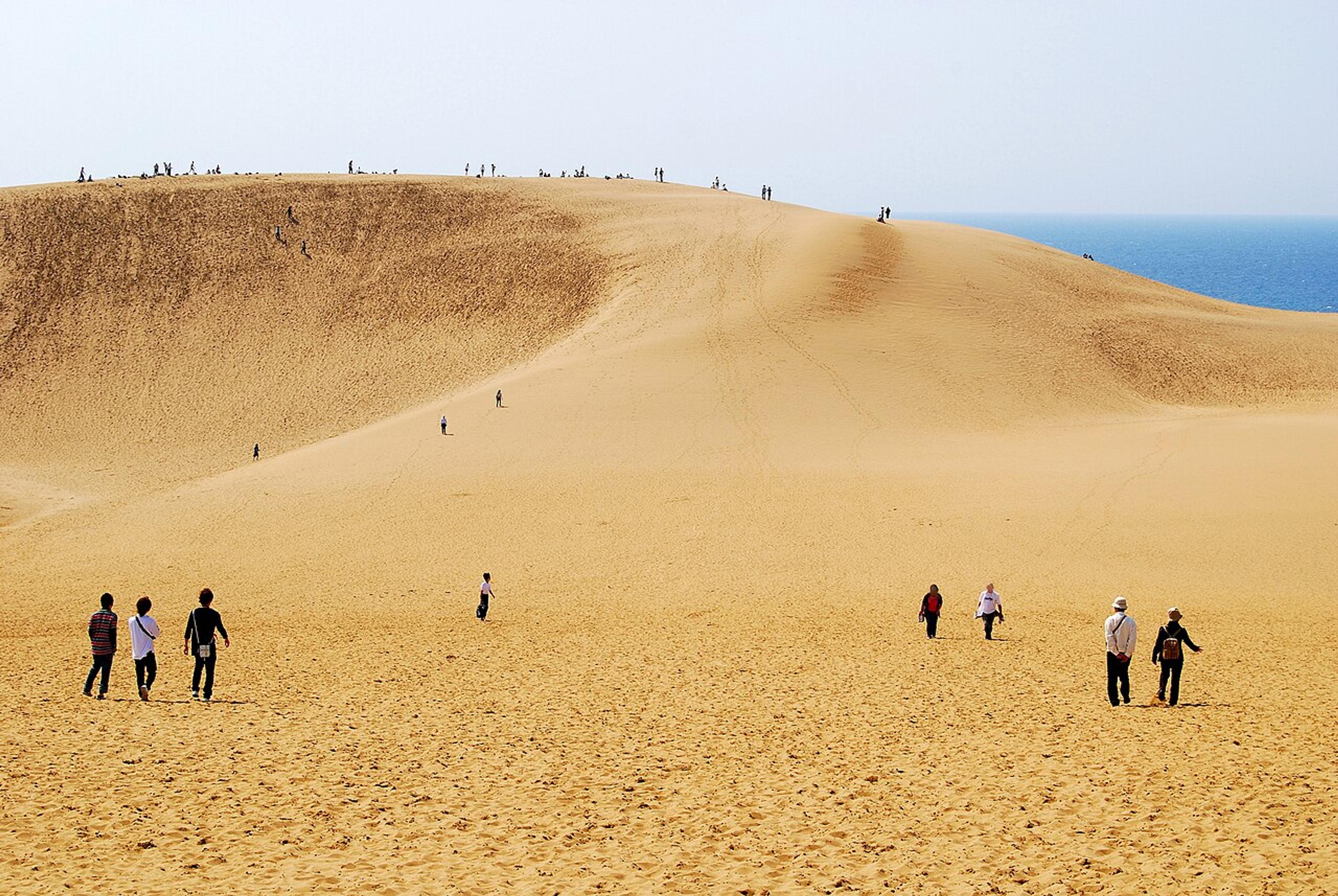
The Tottori Sand Dunes stretch 16 kilometers along the coast and reach 50 meters at their highest point. They are the largest sand dunes in Japan and one of the most surreal landscapes in a country full of them. The dunes were formed over 100,000 years by sand carried from the Sendai River and sculpted by coastal winds.
Walking the dunes is an exercise in scale confusion. The lack of reference points, no trees, no buildings, just sand and sky and the distant line of the sea, makes distances difficult to judge. What looks like a short walk to the summit is a thirty-minute slog through soft sand. The view from the top rewards the effort: the Sea of Japan stretches to the horizon, and behind you the city of Tottori appears tiny and improbable.
The Sand Museum, at the dune entrance, features massive sand sculptures by international artists, rebuilt annually around a different theme. The level of detail, facial expressions, fabric folds, architectural elements, achieved in sand is genuinely astonishing.
Visit the dunes at dawn or dusk for the best light and the freshest wind patterns in the sand. Overnight wind creates perfect ripple patterns that are destroyed by foot traffic within an hour of the park opening.
Izumo Taisha
Izumo Taisha is one of the most important Shinto shrines in Japan and the oldest, with a founding mythology that predates written records. The shrine is dedicated to Okuninushi, the deity of relationships and marriage, and the massive shimenawa (sacred rope) at the worship hall, 13 meters long and weighing five tons, is the largest in Japan.
The shrine compound is vast and deeply forested, with multiple buildings, torii gates, and sacred precincts spread across a hillside. The main hall (honden) is the tallest shrine building in Japan at 24 meters, and archaeological evidence suggests it once stood at 48 meters, an improbable wooden tower that would have been visible from far out to sea.
In the tenth month of the lunar calendar (November), all eight million Shinto deities are said to gather at Izumo for a divine council. The rest of Japan calls this month Kannazuki (month without gods), while Izumo calls it Kamiarizuki (month with gods). The Kamiari Festival during this period features rituals welcoming the arriving deities.
The clapping pattern at Izumo Taisha differs from all other Shinto shrines. Standard shrine worship uses two claps (nihai). At Izumo, worshippers clap four times (shihai). No one is entirely sure why. Follow the locals and clap four times.
Matsue: The Water City
Matsue is a castle town built around a network of canals and moats, with Matsue Castle, one of only twelve original castles remaining in Japan, at its center. The castle's black walls earned it the nickname 'black castle' (and sometimes 'plover castle' for its wing-like rooflines). A boat tour of the castle moat provides a unique perspective, gliding under willow trees and past samurai-era stone walls.
The city has a surprising literary connection: Lafcadio Hearn (Koizumi Yakumo), the Greek-Irish writer who became a Japanese citizen and wrote extensively about Japanese folklore and ghost stories, lived here in the 1890s. His former residence and a memorial museum preserve his study and library. Hearn's empathetic, deeply-researched writing about Japanese culture remains some of the finest ever produced by a Western observer.
The sunset from the north shore of Lake Shinji, Matsue's western lake, is ranked among the most beautiful in Japan. Shimane Art Museum positions its west-facing lobby specifically for sunset viewing, with benches and floor-to-ceiling windows framing the lake. Arrive thirty minutes before sunset to secure a seat.
Adachi Museum of Art
The Adachi Museum of Art, in Yasugi city between Matsue and Tottori, has been voted the best garden in Japan by the Journal of Japanese Gardening for over twenty consecutive years, ahead of the gardens of Kyoto's most famous temples. The garden is not a traditional stroll garden, visitors view it through the museum's windows as a series of framed compositions, each window designed to present the landscape as a living painting.
The museum collection focuses on modern Japanese painting, particularly the work of Yokoyama Taikan, and the relationship between the paintings on the walls and the garden visible through the windows is intentional. The garden changes with every season: plum blossoms in spring, deep green in summer, maples in autumn, snow in winter. Each season is considered a different artwork.
Admission is ¥2,300, which seems steep until you spend three hours moving between windows, watching the light change across the garden. The museum cafe serves matcha with a garden view. There is no additional charge for the garden, it is inseparable from the museum experience.
Featured in this guide
Places to Visit

Turn this guide into a trip
We'll prioritize these 9 places when building your itinerary.