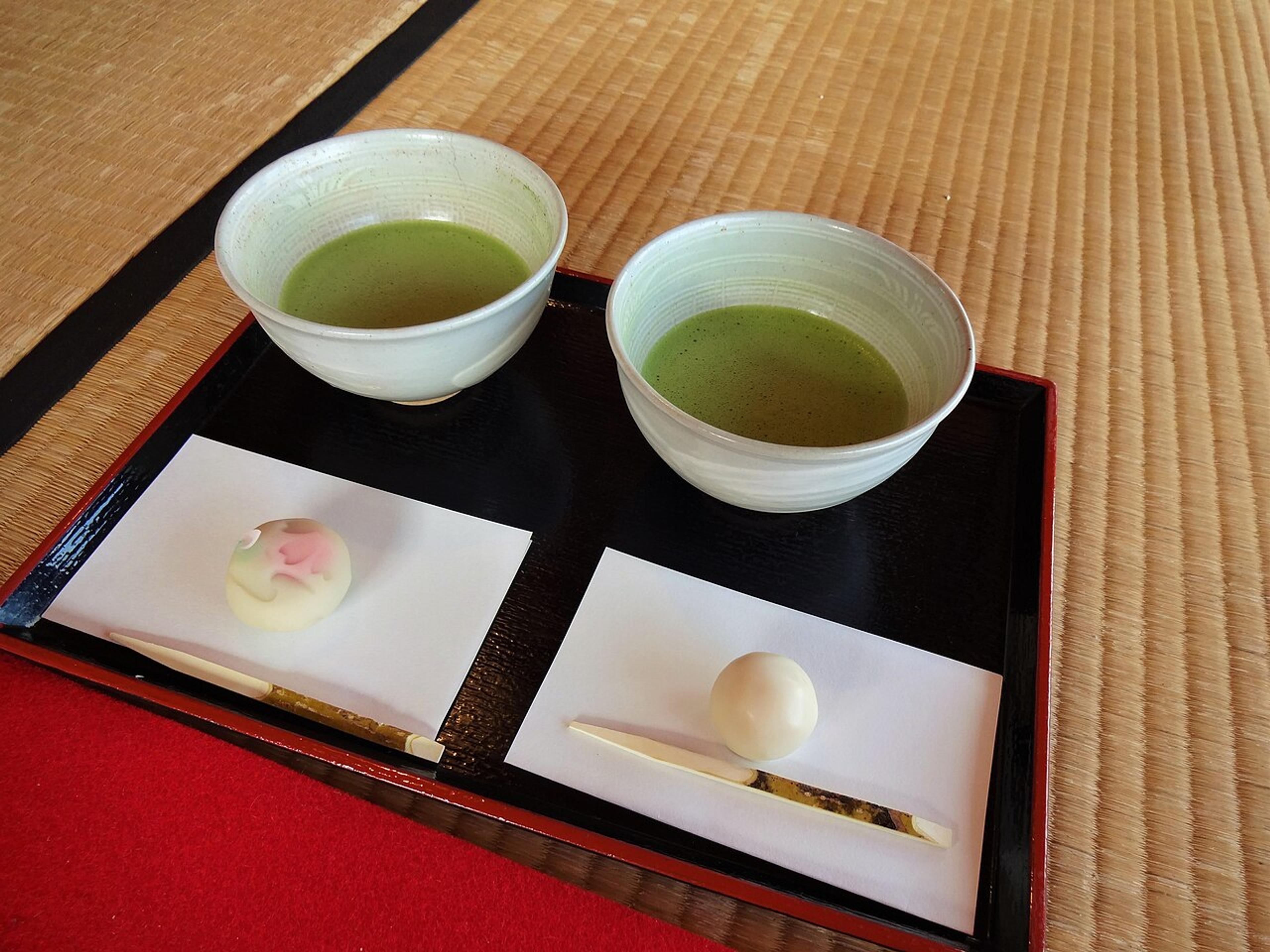
Wagashi follow the seasons as closely as anything in Japanese cooking. A route through the sweets and the tea houses to drink matcha, from Kyoto to Kanazawa and Okinawa.
Koku Editorial · May 25, 2026
6 places in this guide
Wagashi, the sweets served with tea, follow the seasons as closely as anything in Japanese cooking, and the tea houses that serve them are some of the calmest rooms in the country. Here is a route through wagashi and the places to drink matcha, region by region.
How wagashi and tea work
Wagashi are the sweets made to accompany tea, shaped and colored to the season: cherry in spring, chestnut in autumn. The classic pairing is a sweet eaten first, then a bowl of whisked matcha, the sugar setting up the tea's bitterness. Many gardens and temples run a tea house (chaya) where a set of sweet and matcha costs little and buys a long sit. Order the seasonal sweet where one is offered.
Kyoto: the wagashi capital
Kyoto is the center of wagashi, its old confectioners supplying the tea ceremony for centuries, and its gardens built around tea. A bowl of matcha and a seasonal sweet at a garden tea house is the city's quietest pleasure, and Nishiki Market's stalls carry sweets to walk with. Kyoto is where the craft is most refined and most worth seeking.
Kanazawa and the tea districts
Kanazawa rivals Kyoto for tea culture, with preserved geisha-and-tea districts and a long sweets tradition. The city's gardens and tea houses serve matcha with gold-leaf-dusted sweets, a local specialty. It pairs naturally with the craft and garden stops on a Kanazawa day.
Aichi: matcha at the source
Nishio in Aichi produces a large share of Japan's premium matcha, and the Nishio Matcha Museum lets you grind and drink it where it is made. It is a focused stop for tea drinkers, the rare chance to taste matcha at its source rather than in a city tea room.
Sendai and the regional sweets
Regional sweets are worth seeking on a wider trip. In Sendai, Murakamiya has made mochi since the Meiji era, and its zunda mochi, topped with sweet mashed edamame, is the reference version of a Tohoku specialty. Local wagashi like this carry a region's taste as plainly as its savory food.
Okinawa: a sweet tradition of its own
Okinawa runs its own sweets. In Naha, the Buku-Buku Cha tea house serves a distinctive tea topped with a tall foam, and Fuji-ya is known across the city for Okinawa zenzai, a shaved-ice and sweet-bean dish suited to the heat. These are unlike the mainland's wagashi, shaped by the island's climate.
How to take tea and sweets
A few notes. Eat the sweet first, then drink the matcha; the order is the point. Garden and temple tea houses are the cheapest, calmest way in, and the seasonal sweet is the one to order. Many old confectioners sell beautifully boxed sweets that travel well as gifts. And matcha is best fresh, so a bowl whisked to order beats anything pre-made.

Turn this guide into a trip
We'll prioritize these 6 places when building your itinerary.