Hidden Gems of Chugoku: The San'in Coast and Beyond
Blog · Chugoku · 8 min
Chugoku's 54 hidden gems line the San'in coast and the inland mountains, Japan's most underrated stretch of coastline and culture.
Koku Editorial · March 7, 2026
12 places in this guide
Two Coasts, Two Personalities
The Chugoku region occupies the western tip of Honshu, and its character splits along a mountain spine. The south coast (San'yo), Hiroshima, Okayama, Onomichi, is well-connected, urban, and sees decent tourist traffic. The north coast (San'in), Matsue, Tottori, Izumo, is rural, mythological, and overlooked. The hidden gems of Chugoku live predominantly on the quiet side.
Tomonoura Historic Port (Hiroshima Prefecture)
Tomonoura is a fishing village frozen in the Edo period. The harbor is enclosed by stone seawalls, traditional merchant houses line narrow streets, and the preserved port infrastructure, stone docks, tide-waiting towers, a lighthouse, is the most complete historic harbor in Japan.
Hayao Miyazaki reportedly stayed here while developing Ponyo on the Cliff by the Sea. The resemblance is unmistakable. There's no grand attraction, you walk the harbor, visit the small Irohamaru Museum (about a shipwreck), drink the local homeya sake, and absorb the atmosphere. Bus from Fukuyama Station, 30 minutes.
Kibiji Cycling Trail (Okayama)
Between Okayama and Kurashiki, the Kibiji plain is flat rice-paddy country dotted with ancient kofun burial mounds, shrines, and the remnants of the legendary Kibi kingdom. A dedicated cycling trail (17 km) connects the major sites, rent a bike at Bizen-Ichinomiya Station (¥1,100/day) and ride through rural Japan at pedal pace.
The route passes Bitchu-Kokubun-ji (a five-story pagoda standing alone in rice fields), the Kibi-tsuhiko Shrine (associated with the Momotaro legend), and several massive kofun you can climb for views. It's flat, well-marked, and one of the most enjoyable half-days in western Japan.
Ride one way from Bizen-Ichinomiya to Soja Station, then take the train back to your start point. Most bike rental shops allow drop-off at the other end for a small surcharge.
Mitokusan Sanbutsu-ji Nageire-do (Misasa)
Clinging to the face of a vertical cliff at Mount Mitoku, Nageire-do is a small wooden temple that appears to defy gravity. Legend says the monk Ennin threw it onto the cliffside using supernatural power. In reality, it was built using pegs driven into the rock face, but the effect is just as improbable.
Reaching Nageire-do requires a steep mountain hike (about 90 minutes up) with chains and exposed rock sections. It's not dangerous but it's not a stroll, wear proper shoes and use the chains. The temple is a National Treasure, and seeing it wedged into the cliff face after the climb is genuinely jaw-dropping. ¥800 entry at the base.
Misasa Onsen
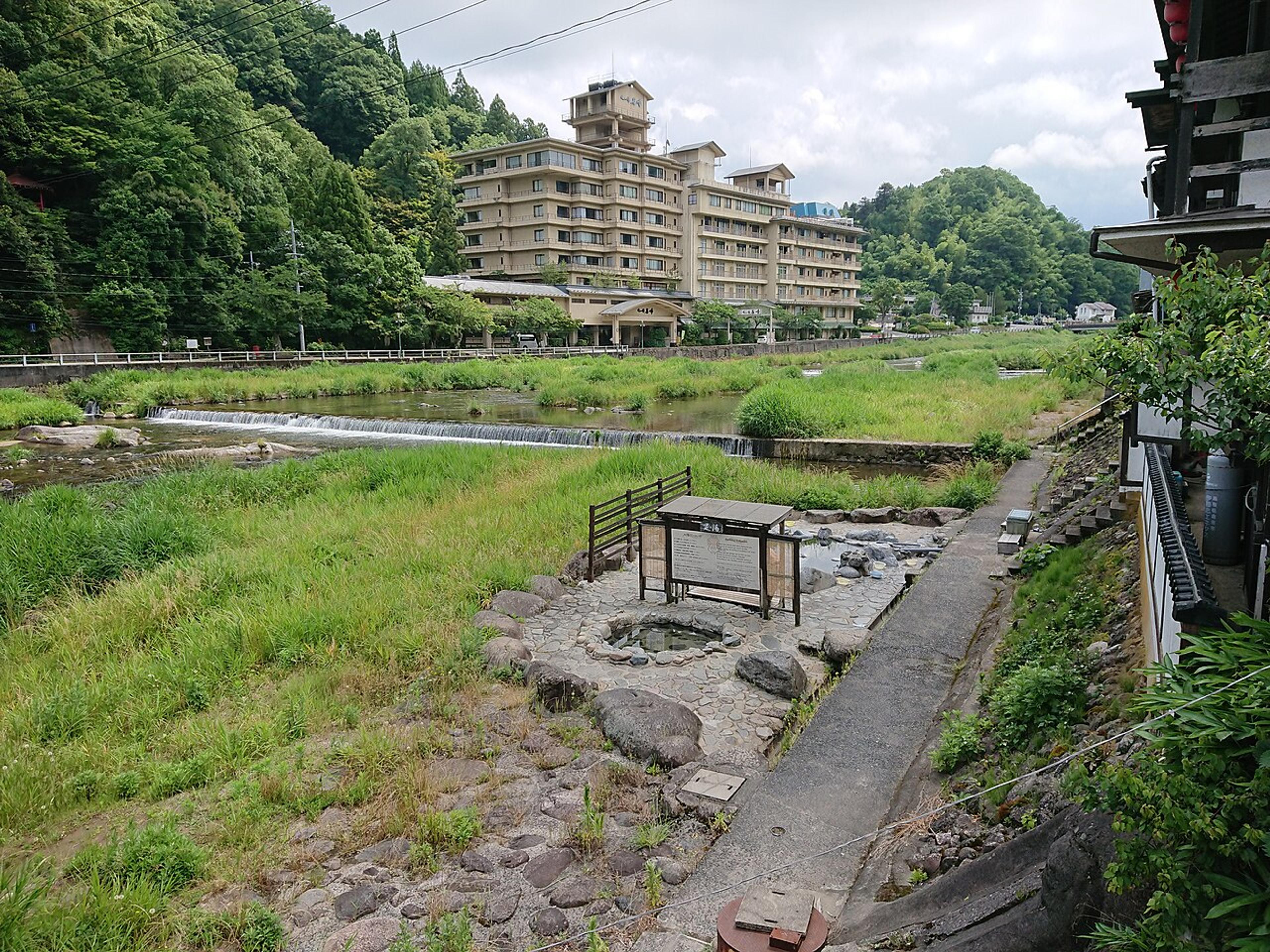
At the base of Mount Mitoku, Misasa Onsen is a small hot spring town known for its radium-rich water, one of the highest concentrations in the world. The mineral content is said to boost cellular repair, and the town has leaned into wellness tourism without losing its village character. Public baths are ¥500 or less.
The river running through town has a free open-air bath (Kawara-buro) right under a bridge. Mixed bathing, no barriers, swimsuits optional. It's rustic and slightly awkward and entirely real. Combine Misasa with the Mount Mitoku hike for one of Chugoku's best day trips.
Karakama Shrine (Izumo)
Everyone visits Izumo Taisha, one of Japan's most important Shinto shrines. Almost nobody continues 15 minutes north to Karakama Shrine, which sits on a dramatic rocky headland overlooking the Sea of Japan. The approach is through dense forest, and the shrine itself is perched on a clifftop with crashing waves below.
The mythology here is rich, the shrine is associated with the Kunibiki land-pulling legend, where gods used a rope to drag pieces of land together to form the San'in coast. The setting, especially at sunset, makes the myth feel plausible.
Iwai Onsen (Iwami)
Deep in western Tottori, Iwai Onsen is a small hot spring town that's been operating since the 9th century. The town has communal baths where locals gather in the evening, a few inns (ryokan), and little else. That's the appeal, it's an onsen town that hasn't been commercialized because there's nothing nearby to commercialize it for.
The water is alkaline and silky. A night at a ryokan with dinner (kaiseki course) runs ¥12,000-18,000 per person. For that price in Hakone, you'd get a business hotel. Here, you get a multi-course meal, a private onsen, and the quiet of rural San'in.
San'in coast ryokan offer dramatically better value than those near Tokyo or Kyoto. The food quality (local crab in winter, squid in summer) often exceeds city restaurants, and the bathing facilities are superb.
Chugoku's Secret
The San'in coast, Matsue to Tottori to Hagi, is arguably the most underrated travel corridor in Japan. It has mythology (Izumo), architecture (Matsue Castle), natural beauty (Tottori Sand Dunes), and onsen culture that rivals Kyushu. But because it's not on the shinkansen line, most travelers never see it. That's your advantage.
Featured in this guide
Places to Visit


Turn this guide into a trip
We'll prioritize these 12 places when building your itinerary.