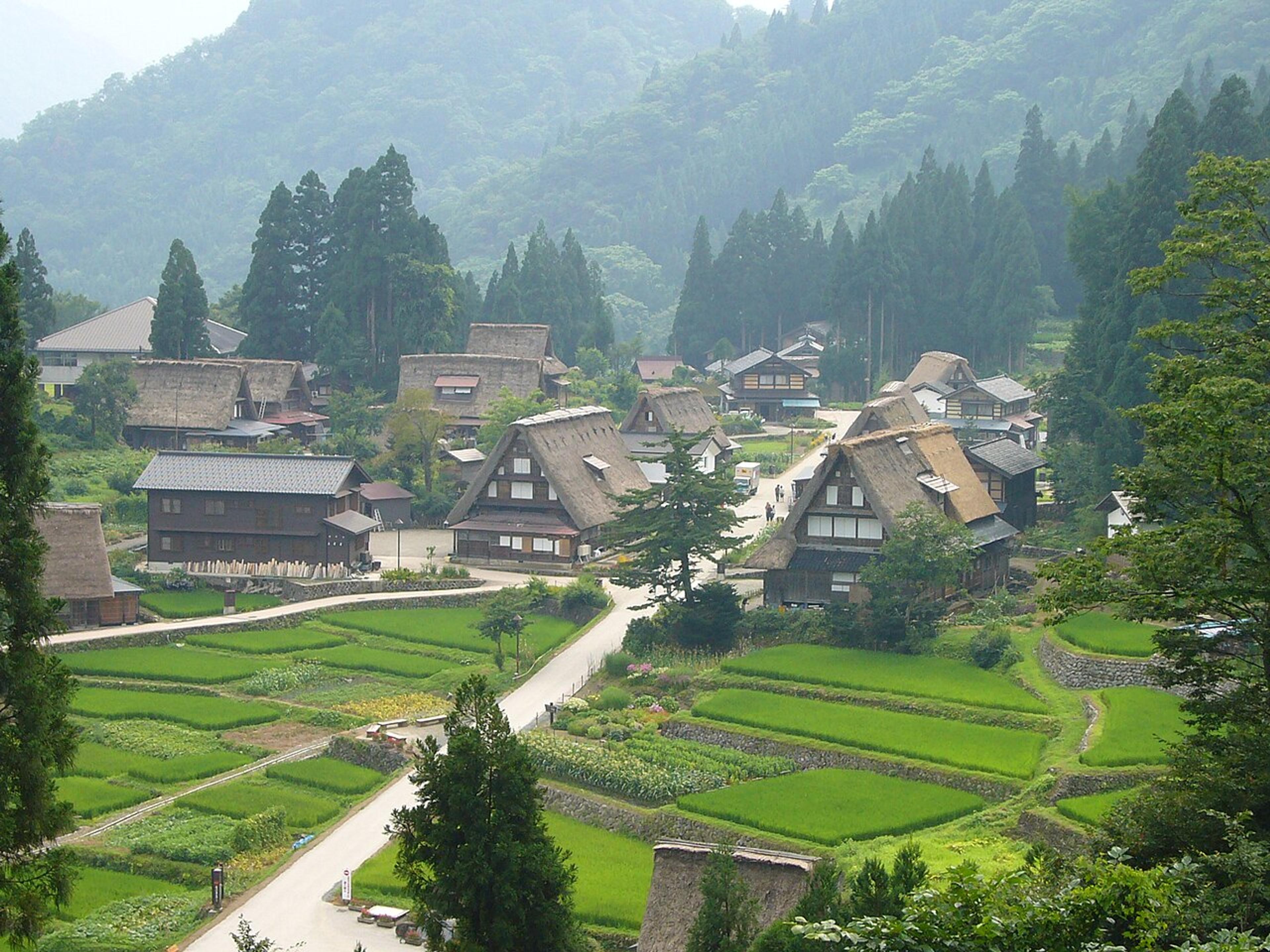
Gokayama: The Other Thatched Village
Deep Dive · nanto · 8 min
Gokayama offers the same UNESCO thatched-roof farmhouses as Shirakawa-go, without the crowds, with deeper craft traditions and overnight stays in working farms.
Yuku Japan · February 16, 2026
3 places in this guide
The Village Everyone Drives Past
Shirakawa-go receives 1.7 million visitors per year. Its gassho-zukuri farmhouses, steep thatched roofs designed to shed the heavy Chubu snowfall, appear on every Japan tourism poster, and the village's observation point is one of the most photographed spots in the country. Twenty kilometers south, sharing the same UNESCO World Heritage inscription, the Gokayama villages of Ainokura and Suganuma receive a fraction of that traffic. The farmhouses are identical in construction. The mountain scenery is equally dramatic. The difference is atmosphere.
Gokayama's villages are still primarily residential. Farmers live in these gassho-zukuri houses, tend gardens behind them, and maintain the thatched roofs through communal work parties that happen every few decades. The craft traditions, washi paper-making, gunpowder production (a Tokugawa-era secret industry), kokkiriko dance, are practiced by the people who live here, not performed for tourism. Visiting Gokayama feels less like entering a heritage site and more like being invited into a community that happens to live in 300-year-old buildings.
Ainokura: The Living Village
Ainokura is the larger of Gokayama's two UNESCO-listed villages, with 20 gassho-zukuri farmhouses scattered across a sloping riverside site. The village has no entrance gate, no parking meters, and no admission fee, you park at the lot above the village (¥500) and walk down into it. The houses are interspersed with gardens, storage sheds, and a small temple. Chickens cross the paths. Residents hang laundry from the first-floor windows. The only concession to tourism is a handful of houses that operate as minshuku (family-run inns) and a small folklore museum.
The Ainokura Folklore Museum (¥300) occupies one of the farmhouses and displays tools, textiles, and photographs that document the gassho-zukuri construction method. The name gassho-zukuri means 'hands in prayer', the steep roof angle resembles palms pressed together. The engineering is remarkable: no nails are used in the roof structure, which is held together by rope lashings and the weight of the thatch itself. The steep 60-degree angle prevents snow accumulation that would crush a shallower roof, and the large attic space was historically used for silkworm cultivation, the industry that sustained these mountain villages.
Stay overnight at one of Ainokura's five minshuku. Goyomon (¥9,000/person with dinner and breakfast) is the most atmospheric, the owner serves mountain vegetable tempura, river fish, and tofu made from local soybeans. After the day visitors leave around 4 PM, the village returns to its resident rhythm. Evening light on the thatched roofs, with woodsmoke rising from the kitchens, is Gokayama at its most genuine.
Suganuma and the Secret Industry
Suganuma is the smaller UNESCO village, just nine gassho-zukuri houses clustered on a river terrace below the road. What distinguishes Suganuma is its history as a secret gunpowder production site. During the Edo period, the Kaga Domain (the feudal territory that controlled this region) established covert saltpeter manufacturing in Gokayama's remote villages, far from the shogunate's surveillance. Saltpeter, the key ingredient in gunpowder, was produced by fermenting silkworm waste and plant material beneath the farmhouse floors.
The Gokayama Gunpowder Museum (Ensho no Yakata, ¥210) in Suganuma documents this hidden industry with models, tools, and explanations of the remarkably sophisticated chemistry involved. The adjacent Gokayama Folk Museum (¥210, combination ticket ¥310 for both) covers daily life in the mountain villages. Suganuma's small size makes it feel more intimate than Ainokura, five minutes of walking covers the entire settlement, and on a quiet weekday you may be the only visitor.
The gassho-zukuri roof replacement is one of Japan's great communal traditions. An entire village turns out for the re-thatching, which takes two to three days and requires hundreds of volunteers working in coordination. The last major re-thatching in Ainokura drew volunteers from across the region. If your visit coincides with a re-thatching event (rare, but announced on the Gokayama tourism site), you will witness a living example of the community cooperation that built and sustains these villages.
Gokayama Washi and Kokkiriko
Gokayama's washi (handmade paper) tradition dates back over 400 years, using the fibers of the kozo (paper mulberry) plant that grows wild in the surrounding mountains. The Gokayama Washi Paper-Making Experience Center (¥600, 30-40 minutes) guides visitors through the process: pulping the kozo bark, stirring the fiber suspension, and drawing sheets using a traditional screen frame. The paper dries in about 30 minutes and is yours to keep, a tangible souvenir of a process that has remained essentially unchanged since the Edo period.
Kokkiriko is a folk dance unique to Gokayama and one of the oldest in Japan, with origins possibly predating the 12th century. The dancers carry binzasara, a percussion instrument made of 108 wooden slats strung together that produces a cascading clatter when whipped. The dance is rhythmic, repetitive, and hypnotic, performed in a circle with increasing intensity. Regular kokkiriko performances are held at the Gokayama Heritage Center in the Kaminashi district (¥500, check schedule), and the annual Kokkiriko Festival in September fills the Kaminashi valley with dancers, musicians, and spectators.
The Kokkiriko Festival (September 25-26) is Gokayama's most important annual event. The dance is performed continuously through the evening at Hakusan-gu shrine, with audience members invited to join. Winter (December-March) transforms the villages under deep snow, the thatched roofs disappear under white drifts and the illumination events (check dates annually) light the snow-covered farmhouses against the dark mountain sky.
Shirakawa-go Comparison and Getting There
The honest comparison: Shirakawa-go has more farmhouses (114 vs. 29), a more dramatic observation point, better bus connections, and significantly more dining and shopping options. Gokayama has quieter villages, the ability to stay overnight in working farmhouses, stronger craft traditions, and the gunpowder history that Shirakawa-go lacks. The ideal visit combines both, bus from Takayama to Shirakawa-go (50 minutes, ¥2,600), then continue by bus to Gokayama (25 minutes, ¥870), spending the night in Ainokura before continuing to Kanazawa the next day.
Direct buses from Kanazawa to Gokayama run several times daily (75 minutes, ¥1,800). The Takayama-Shirakawa-go-Gokayama-Kanazawa route is the classic trans-Chubu corridor and one of the finest bus rides in Japan, crossing the Shokawa Valley through tunnels and over bridges with mountain views at every turn. The Nohi Bus three-day pass (¥5,000) covers the entire route and pays for itself on the second day.
Gokayama's minshuku rates (¥8,000-10,000 per person including dinner and breakfast) are 30-40% less than equivalent stays in Shirakawa-go, where demand has driven prices up. The meals are often better, too, the minshuku owners cook what they grow, supplemented by river fish and mountain mushrooms. The lack of souvenir shops means your spending goes directly to the families maintaining the heritage buildings.
Featured in this guide
Places to Visit
Turn this guide into a trip
We'll prioritize these 3 places when building your itinerary.