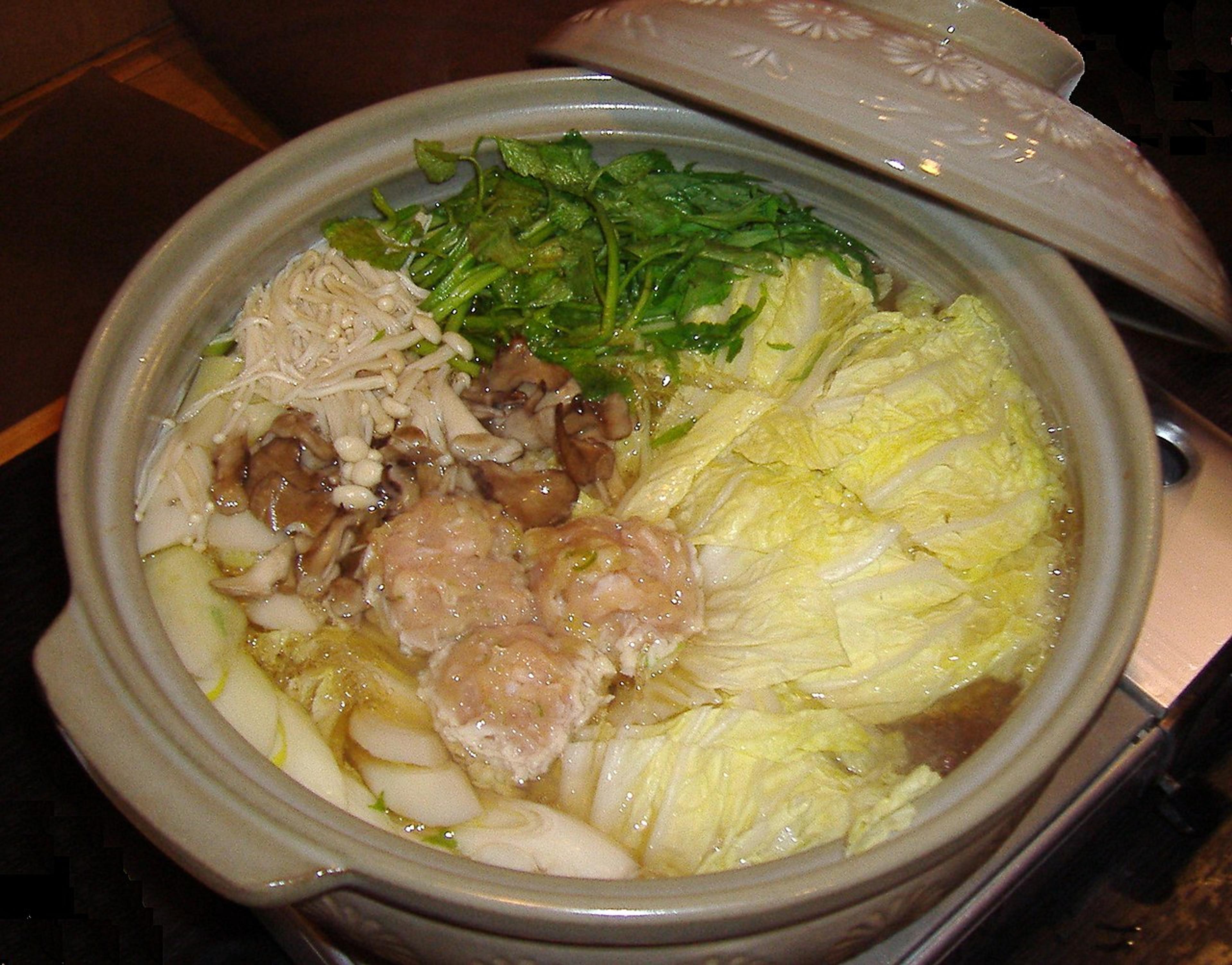
Nabe, fugu, kani, and yuzu run the winter menu. What's in season, where to find each, and the licensing and lead times that gate the more involved dishes.
Yuku Japan · May 4, 2026
2 places in this guide
Winter in Japan is hot-pot weather. Charcoal braziers, tabletop nabe, fish from cold seas, citrus baths. Some dishes need a licensed chef; some need a six-month booking. Here's the working frame.
Nabe (hot pot)
A category, not a dish. Regional variants worth seeking out: chankonabe in Tokyo's Ryogoku, the sumo-stable stew of chicken, fish, vegetables, and tofu in a clear broth; ishikari nabe in Hokkaido, salmon and root vegetables in miso; motsunabe in Fukuoka, beef offal in soy or miso with cabbage and garlic chives; mizutaki in Fukuoka, bone-broth chicken with citrus ponzu. Kiritanpo nabe in Akita uses pounded-rice cylinders as the starch and is at its peak in winter.
Fugu (pufferfish)
The Shimonoseki specialty. Season runs November through February, when the fish fattens for the cold. Shimonoseki, in Yamaguchi Prefecture, runs Japan's primary fugu wholesale market. Strict licensing: only chefs who have completed three or more years of training and passed a prefectural exam are permitted to butcher and serve the fish (the liver and ovaries hold the toxin). Order tessa (paper-thin sashimi arranged like petals on a plate), tetchiri (fugu nabe), or grilled fin steeped in hot sake (hire-zake). Specialty restaurants in Tokyo and Osaka also run fugu through winter; expect 10,000 to 30,000 yen per person at the better operators.
Matsuba kani (snow crab)
Season runs November 6 to March 20, fixed by the fishery. Caught in the Sea of Japan off Tottori and Hyogo prefectures, where it's branded matsuba kani. Kinosaki Onsen, an old hot-spring town in Hyogo, builds an entire winter menu around it: ryokan kaiseki dinners pair the crab with the bath. Tottori City and Iwami Town hold Matsubagani Day on the fourth Saturday of November, with port events and tastings. Book ryokan accommodation two months out; the kaiseki crab dinners run 25,000 to 50,000 yen per person per night.
Yuzu (citron)
Not a dish but a ritual. Yuzu-yu, yuzu citrus floating in the bath, is the winter solstice (December 22) practice; sento public baths and onsen ryokan add yuzu to their tubs around that date. Yuzu turns up in winter cooking as well: ponzu, yuzu-kosho (a fermented yuzu-chili paste from Kyushu), and yuzu sorbet through the cold months.
Featured in this guide
Places to Visit
Turn this guide into a trip
We'll prioritize these 2 places when building your itinerary.