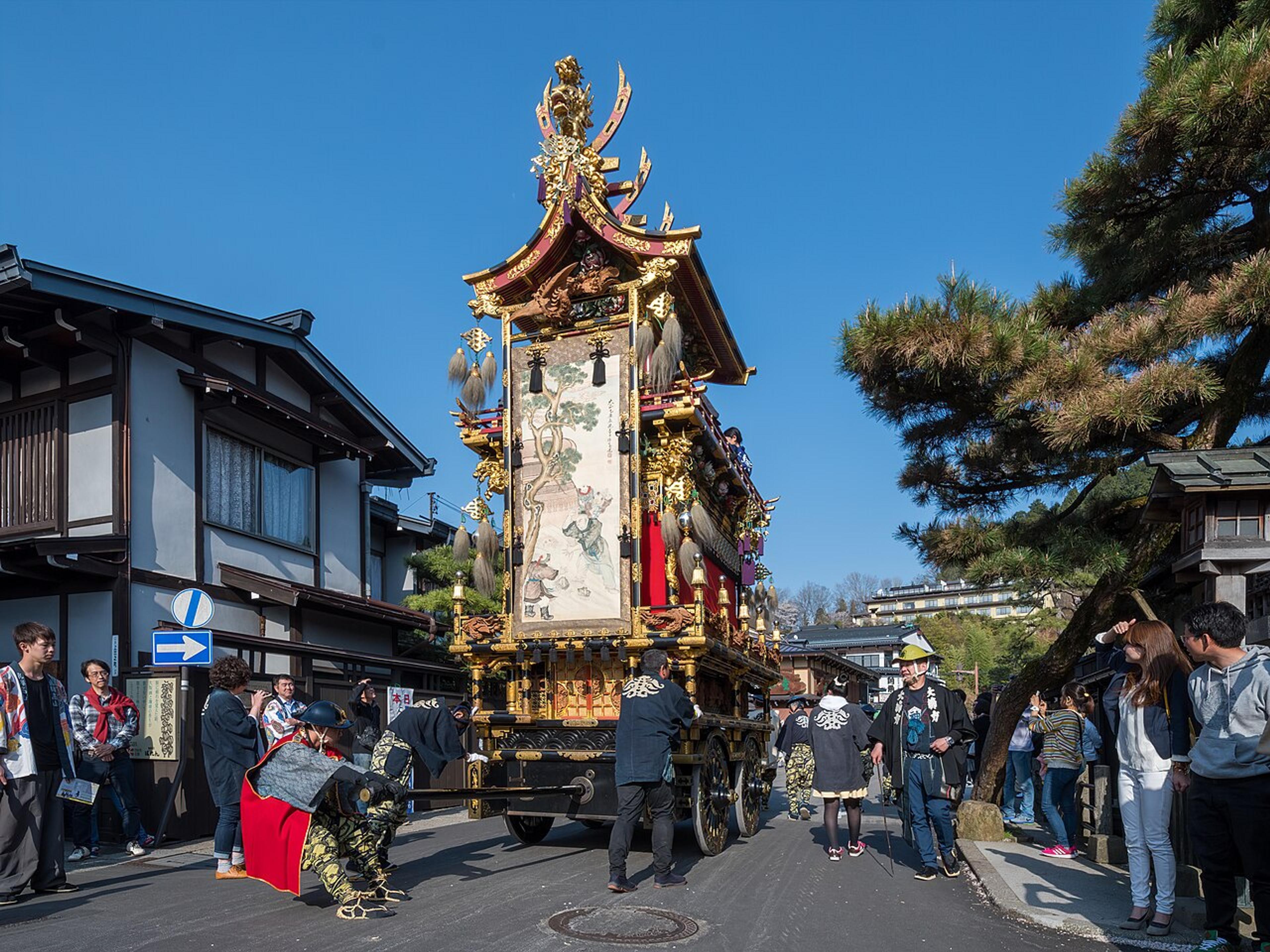
Two days in the mountain town of Takayama: morning markets, preserved streetscapes, Hida beef, and a folk village in the snow.
Koku Travel · April 8, 2026
5 places in this guide
Takayama sits in a river valley in the mountains of Gifu Prefecture, surrounded by peaks that kept it isolated for centuries. That isolation preserved its Edo-era merchant district, its regional cuisine, and a pace of life that feels distinctly different from the cities on the coast.
Two days gives you enough time to settle into the rhythm.
Day 1 Morning: The Markets
Takayama has run morning markets for over 300 years. The Jinya-mae market sets up in front of the former government house. Farmers sell pickled vegetables, handmade miso, mountain herbs, and seasonal fruit. In winter, look for dried persimmons strung on rope. In spring, wild sansai (mountain vegetables) that only grow at elevation.
Takayama Jinya itself is worth entering. It is the only remaining Edo-period provincial government building in Japan. The tatami rooms, interrogation chamber, and rice storehouse map the machinery of feudal administration. The building tells you what power looked like when it had to cross mountains to reach you.
Day 1 Afternoon: The Old Town
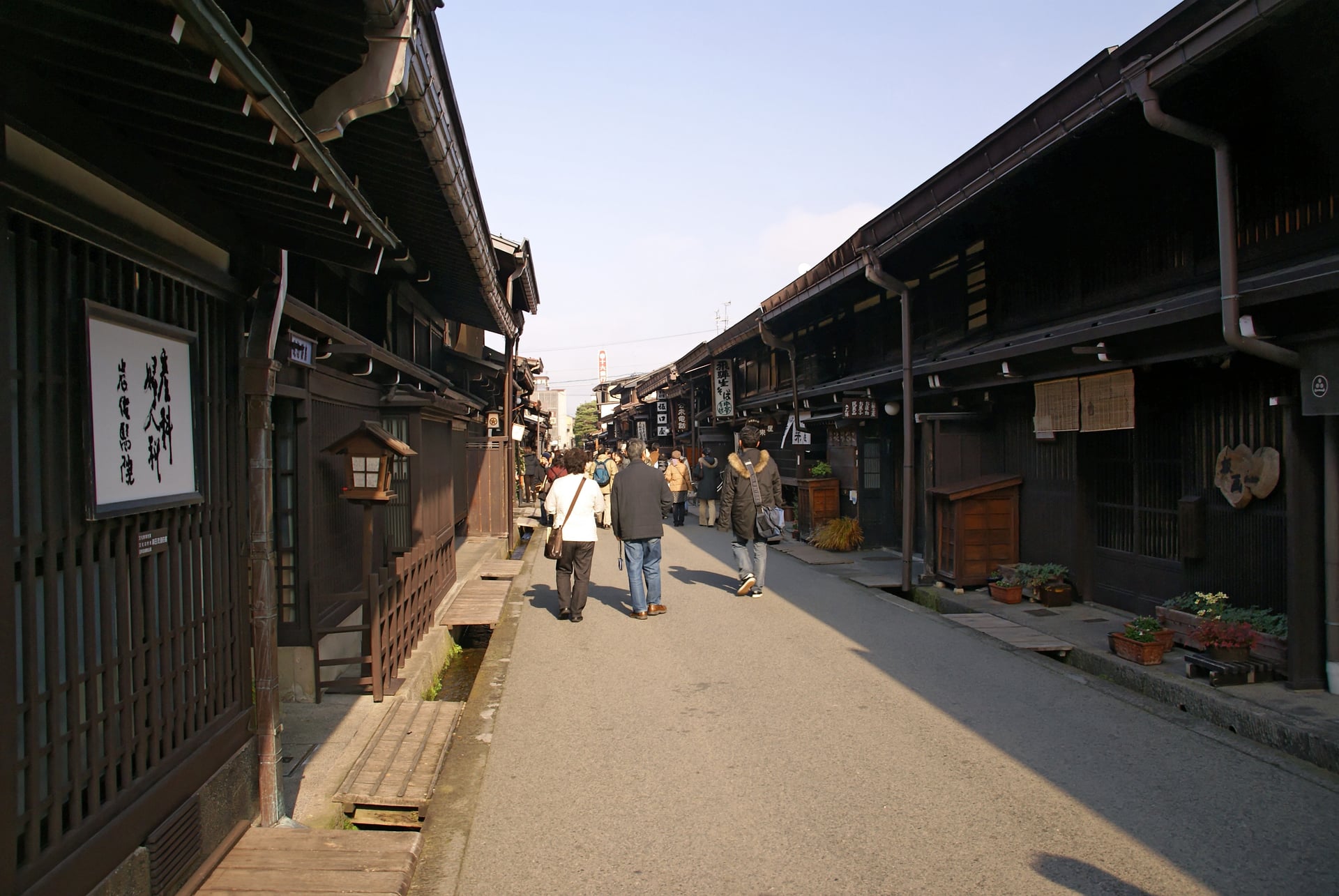
The Sanmachi-suji district preserves three streets of dark-wood merchant houses, many now converted to sake breweries, craft shops, and small museums. The buildings are genuine. Cedar ball signs (sugidama) hang outside sake breweries to announce the new vintage.
Walk slowly. The architecture rewards attention: latticed windows, carved transoms, stone-lined waterways running between buildings. Several sake breweries offer tastings. Funasaka and Harada are known for their Hida varieties.
Day 1 Evening: Hida Beef
Hida beef comes from cattle raised in the cold, clean air of the Gifu mountains. The marbling is intense, the fat sweet and clean. Yakiniku (grilled) is the most popular preparation. Takayama also does Hida beef sushi, thin slices of seared wagyu draped over vinegared rice and eaten by hand.
The izakaya along the Miyagawa River serve hooba miso, fermented soybean paste grilled on a magnolia leaf with mountain vegetables and beef. The leaf chars at the edges. The miso caramelizes. This is mountain cooking at its most direct.
Day 2 Morning: Hida Folk Village
Hida no Sato is an open-air museum of farmhouses relocated from surrounding villages. The steep thatched roofs (gassho-zukuri) were designed to shed heavy snow. Inside, the upper floors housed silkworm cultivation. In winter, the village under fresh snow looks like a woodblock print.
The walk through the village takes 1 to 2 hours, depending on route. Several buildings have working hearths (irori) where volunteers keep charcoal fires burning. Warm your hands. Ask about the roof maintenance. Each re-thatching requires an entire village working together.
Day 2 Afternoon: The Temples
Takayama's Higashiyama walking course connects a line of temples and shrines along the eastern hillside. The 3.5-kilometer path passes 13 temples and moves through forest quiet enough to hear running water. The Shiroyama ruins at the end offer views over the town and the mountains beyond.
Getting There
Takayama is 2 hours 20 minutes from Nagoya by JR Hida limited express, or 1 hour 30 minutes from Toyama by JR Limited Express (useful after visiting Kanazawa). The town is compact and walkable. Rent a bicycle from the station for Day 2.
Turn this guide into a trip
We'll prioritize these 5 places when building your itinerary.