The Wild Kitakami Coast
Itinerary · miyako · 9 min
Iwate's Sanriku coast is Japan's most dramatic shoreline: white-cliff beaches, cathedral caves, world-class seafood, and communities rebuilt with quiet resilience.
Yuku Japan · February 16, 2026
2 places in this guide
Japan's Forgotten Coastline
The Sanriku coast, the Pacific shoreline of Iwate and northern Miyagi Prefectures, is one of the most spectacular and least-visited stretches of coastline in Japan. The geography is a ria coast: a series of deep, narrow inlets carved by rivers and flooded by rising sea levels, creating a jagged shoreline of cliffs, coves, and natural harbors. The same geography that produces such visual drama also channels tsunami energy with devastating efficiency, and the coast's modern history is inseparable from the 2011 disaster.
This itinerary follows the coast from Miyako south to Kamaishi, linking natural wonders, seafood markets, cave systems, and tsunami memorials. The route takes three to four days by car or local train and bus, and rewards travelers who are willing to move slowly through a landscape that is both hauntingly beautiful and marked by recent tragedy.
Jodogahama: The Beach of Pure Land
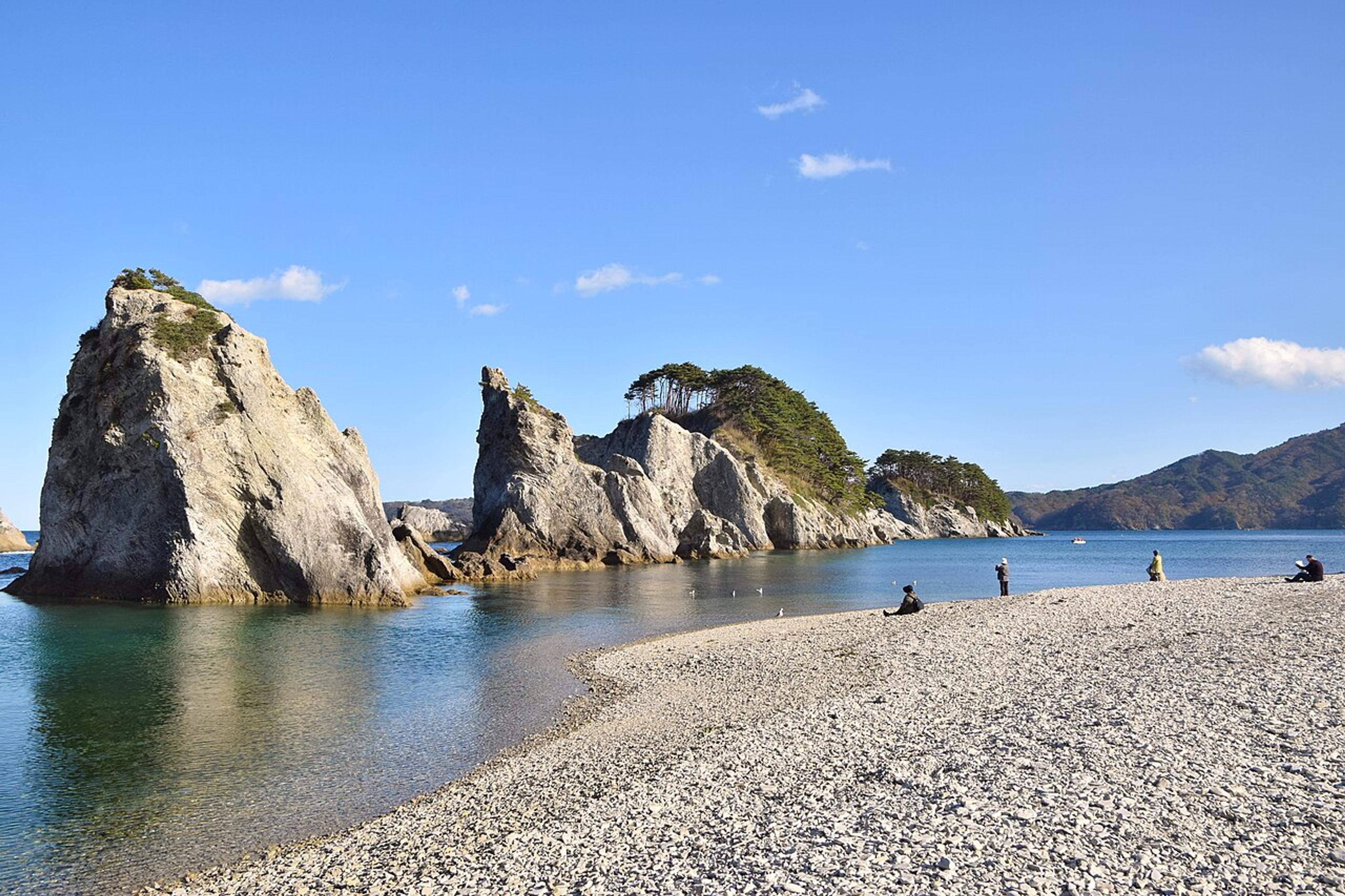
Jodogahama, on the outskirts of Miyako, is one of the most beautiful beaches in northern Japan. The name means 'Pure Land Beach', a reference to the Buddhist paradise, and was given by a 17th-century monk who reportedly declared that 'this must be what the Pure Land looks like.' White rhyolite rock formations jut from the emerald water, sharp-edged and geometric, their surfaces worn into layered textures by wind and wave. The beach itself is small, backed by forest, and sheltered by the rock formations into a natural cove.
Sappa boat cruises (¥1,500, 20 minutes) depart from the beach and navigate through the rock formations and into the Blue Cave (Aonodokutsu), a sea cave where the water turns an intense cobalt blue from refracted light. The cave is accessible only by boat and only in calm conditions. On clear days, the blue is almost unbelievable, a deep, luminous color that seems to glow from beneath the surface. The boats are small enough to enter the cave fully, and the echo of the engine off the rock walls adds to the otherworldly atmosphere.
Sappa boats operate March through November but the Blue Cave is at its bluest on sunny mornings between 9 and 11 AM when the sun angle is optimal. Arrive at the Jodogahama Visitor Center by 8:30 AM to catch the first boats. The visitor center also has excellent exhibits on the Sanriku coast's geology and ecology.
Ryusendo Cave
Ryusendo, located 30 minutes inland from the coast in the town of Iwaizumi, is one of Japan's three great limestone caves and one of the deepest known in the country, explored to a depth of 500 meters, with much of the system still unmapped. The cave is famous for its underground lakes, which hold water of extraordinary clarity. The deepest lake, at 120 meters below the cave entrance, has measured visibility of 41.5 meters, among the clearest underground water ever recorded.
The tourist route covers about 700 meters and passes three illuminated underground lakes. The water is so clear that the bottom of the deepest visible lake, 35 meters down, appears to be just a few meters away. The cave maintains a constant 10°C year-round, which makes it a cool retreat in summer and surprisingly warm in winter. Stalactites and flowstone formations line the passages, some formations estimated at 200 million years old. The scale is impressive, cathedral-sized chambers connected by narrow passages, with the sound of water dripping and flowing everywhere.
Ryusendo admission is ¥1,100 for adults. The adjacent Ryusendo Science Museum (included in the ticket) has displays on the cave's geology and the bat colonies that inhabit the deeper sections. The town of Iwaizumi itself has excellent soba noodle shops, the local buckwheat, grown in mountain soil, produces a distinctive nutty flavor. Lunch at Iwaizumi Soba-ya runs ¥800-1,000.
Tsunami Memorials and Coastal Recovery
The 2011 Great East Japan Earthquake generated a tsunami that struck the Sanriku coast with waves exceeding 30 meters in some inlets. The destruction was immense: entire towns were swept away, nearly 20,000 people died or went missing, and communities that had existed for centuries were erased in minutes. Traveling this coast without acknowledging this history would be incomplete.
Several memorial sites along the route provide context and remembrance. The Taro Tanohata Tsunami Memorial in northern Miyako preserves the ruins of a hotel that was struck by the wave, its lower floors gutted while the upper structure remained intact. In Kamaishi, the Unosumai Memorial Park marks the site of a community center where many residents gathered during the evacuation. The park includes a memorial wall, a museum documenting the disaster and recovery, and views across the rebuilt town.
What strikes most visitors is not the scale of destruction but the quality of recovery. The towns along this coast have been rebuilt with care and determination. New seawalls protect the harbors. Fish markets operate again, serving the same catches their predecessors sold for generations. The communities are smaller now, many young people relocated after 2011, but the ones who stayed or returned have built something meaningful from the devastation.
The memorial sites are places of genuine mourning, not tourist attractions. Visitors are welcome and encouraged, but quiet, respectful behavior is expected. Many memorials include opportunities to offer incense or flowers. Taking photos of the memorials themselves is generally acceptable; photographing grieving visitors is not.
Sanriku Seafood
The Sanriku coast's ria geography creates ideal conditions for marine life. The deep inlets shelter fishing ports, the nutrient-rich Oyashio current feeds the marine ecosystem, and the coastline supports both wild fisheries and extensive aquaculture, wakame seaweed, oysters, scallops, uni (sea urchin), and salmon. The seafood here is among the freshest and least expensive in Japan, largely because it reaches the table within hours of harvest and bypasses the Tokyo market system that inflates prices elsewhere.
In Miyako, the Jodogahama Resthouse and the restaurants near the fish market serve kaisendon (seafood rice bowls) piled with uni, salmon roe, scallops, and tuna for ¥1,500-2,500, prices that would be ¥4,000-6,000 in Tokyo for the same quality. In Kamaishi, the revitalized Omatsu fish market offers morning auctions and a food court where stalls serve freshly grilled sanma (saury), ika (squid), and the coast's celebrated iron-pot seafood stew, Kamaishi ramen, a rich, fish-broth noodle soup unique to the city.
Uni season on the Sanriku coast runs from June through August, when the sea urchins are at their sweetest and most abundant. Outside this window, you can still find excellent scallops, oysters (winter), and salmon (autumn). Ask at any fish market restaurant for the 'kyou no osusume' (today's recommendation), the freshest catch varies daily with the boats.
Featured in this guide
Places to Visit
Turn this guide into a trip
We'll prioritize these 2 places when building your itinerary.