The best fish often sits closest to the boats. A route through sushi beyond the capital, from Oma's bluefin tuna to the Sea of Japan markets and Setouchi counters.
Koku Editorial · May 25, 2026
6 places in this guide
Tokyo gets the sushi headlines, but the best fish often sits closest to the boats, in port cities and market towns around the country. Here is a route through sushi beyond the capital, anchored on the harbors and markets where the catch comes in.
How to order sushi in Japan
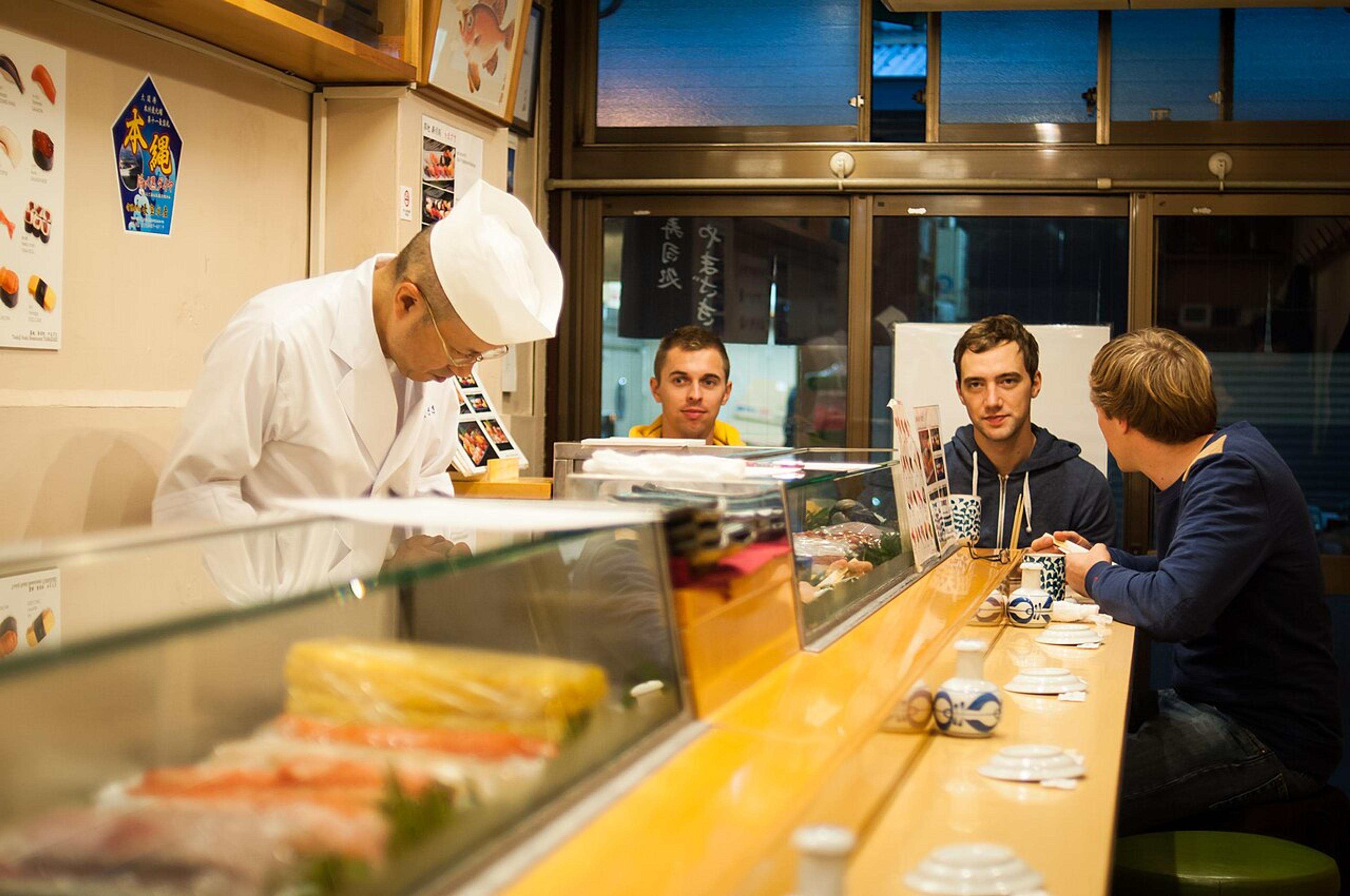
Two broad formats: the counter, where a chef serves piece by piece (often an omakase, chef's-choice course), and kaiten, the conveyor belt, which is cheaper and casual. At a counter, eat each piece as it is served, use fingers or chopsticks, and go easy on extra soy. The fish is regional; ask what is local and in season rather than ordering by habit.
Hokkaido: Sapporo and the markets
Hokkaido's cold northern waters give some of Japan's best uni, crab, and salmon roe. In Sapporo, Sushidokoro Towa runs a master-chef omakase at high value, and the stalls of Sapporo Jogai Ichiba, beside the central wholesale market, serve the catch over rice from the morning. The market route is the casual counterpart to the counter.
Aomori: Oma tuna at the source
At Oma, the fishing port at the northern tip of Honshu, the bluefin tuna that tops Tokyo auctions comes ashore. Hamazushi in Oma serves it where it is landed, the shortest distance between boat and counter in the country. It is remote, deep in northern Aomori, and it is the place to eat tuna at the source.
Toyama and Niigata: the Sea of Japan
The Sea of Japan coast runs its own catch. Himi, on Toyama Bay, lands a famous winter haul, and the portside Himi Fishing Port Market serves it fresh. In Niigata, the Pier Bandai market on the waterfront gathers the prefecture's seafood into casual sushi and donburi. Both pair fish with the region's sake.
Hiroshima and Kurashiki: Setouchi seafood
The Inland Sea gives milder, varied fish. In Hiroshima, Sushitei Hikarimachi serves Setouchi seafood at reasonable prices in an izakaya setting; near the Great Seto Bridge, Fukuzushi in Kurashiki is a well-regarded counter. These suit a Setouchi or art-islands trip.
Kagoshima and Matsuyama: the southern and Shikoku catch
In the south, Kagoshima's Mawaru Sushi Mekkemon runs a high-quality kaiten with fish from local waters. In Matsuyama, Sushi Maru Honten specializes in the local chirashi style. Both put regional fish on the plate at everyday prices.
A note on markets versus counters
The market stalls (Sapporo, Himi, Niigata) are the casual, early, good-value way to eat the catch; the counters (Oma, Hiroshima, Kurashiki) are the slower, chef-led experience. Either way the rule holds: eat what is local and in season, and let the port decide the menu.
Turn this guide into a trip
We'll prioritize these 6 places when building your itinerary.