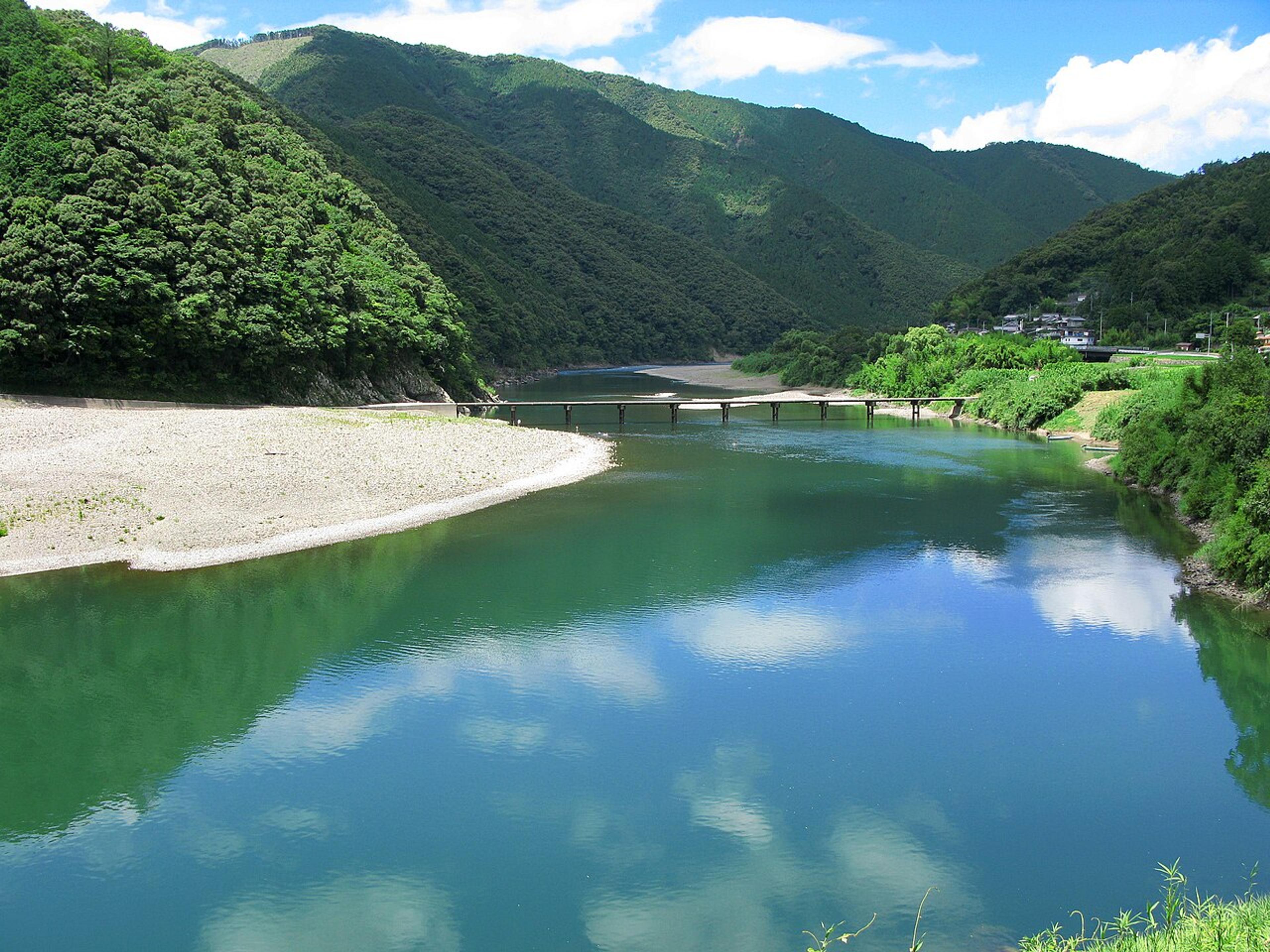
The Shimanto flows free and undammed through western Kochi: cross its sinking bridges, eat river prawns pulled from the current, paddle to the Pacific.
Yuku Japan · February 16, 2026
9 places in this guide
Japan's Last Free River
The Shimanto River is 196 kilometers long, the longest river in Shikoku, and it has no dams on its main channel. In a country where virtually every major river has been dammed, diverted, or encased in concrete, the Shimanto's freedom is remarkable. The river flows through the mountainous interior of Kochi Prefecture, carving wide bends through forested valleys before reaching the Pacific near Shimanto City. Its water is clear, its banks are wild, and the communities along it live in a relationship with the river that has changed little in centuries.
The Shimanto is not remote in the way that Hokkaido's wilderness is remote. Towns and villages line its banks, farmers cultivate rice paddies in the floodplain, and fishermen work the river daily. But the development is modest and respectful, no high-rise hotels, no riverside highways, no concrete embankments. The result is a landscape that feels inhabited but undominated, a rare balance in modern Japan.
The Chinkabashi: Bridges That Sink
The Shimanto's most distinctive features are its chinkabashi, low, railing-less bridges designed to submerge during floods rather than resist them. There are 47 chinkabashi along the river, each a simple concrete deck set just above normal water level. When the river rises after typhoons or heavy rain, the water flows over the bridge rather than against it, preventing structural damage. The bridges re-emerge when the water recedes, often within hours.
Crossing a chinkabashi on foot or by car is a mildly nerve-wracking experience. The lack of railings means there is nothing between you and the river but a meter of concrete and your own balance. The most photogenic is the Iwama Chinkabashi, a 291-meter span that curves across the river in a long arc, reflecting in the water below. The Sada Chinkabashi, closer to the river mouth, is shorter but sits lower, during minor rises, water laps at the deck surface while locals on motorbikes cross without slowing down.
Rent a bicycle in Shimanto City (¥1,000 per day from the tourist office beside JR Nakamura Station) and ride the riverside cycling path that connects several chinkabashi over a 20-kilometer stretch. The path is flat, paved, and almost traffic-free. Allow 3-4 hours with stops for photos and swimming.
River Food: Prawns, Ayu, and Nori
The Shimanto's clean water supports a food culture built directly on the river. Tenaganoebi (river prawns) are caught in traditional basket traps and served deep-fried whole at riverside restaurants, the shells crisp to a delicate crunch, the flesh sweet and briny. Ayu (sweetfish) are caught by cormorant fishing in summer and grilled on skewers over charcoal, their slightly bitter intestinal flavor prized by Japanese gourmets. River nori (aonori seaweed) grows on rocks in the current and is harvested, dried, and sprinkled over everything from udon to tempura.
The best place to eat Shimanto river food is at one of the small restaurants clustered near the Sada area, roughly 10 kilometers upstream from the river mouth. Shimanto-ya, a modest wooden building overlooking the water, serves a river set meal (kawa no teishoku) for ¥1,800 that includes grilled ayu, fried prawns, river nori rice, and pickled vegetables from the adjacent garden. The ayu is caught that morning. The nori was harvested from the rocks visible through the window.
Shimanto river prawns at riverside restaurants cost ¥600-800 per plate. The same prawns packaged as omiyage (souvenirs) at Kochi Airport cost ¥1,400. Eat them fresh at the source. River nori packets (¥300-500) from the local JA agricultural cooperative are the best value food souvenir in all of Shikoku.
Canoeing the Lower Shimanto
The Shimanto's gentle gradient and absence of dangerous rapids make it ideal for canoeing. The most popular route runs 8 kilometers from Kuchiyanaizu to Kashimanata, passing under two chinkabashi and through a section where the river widens into a broad, slow pool reflecting the forested mountains on both sides. Canadian canoe rentals start at ¥5,000 per boat (two persons) for the half-day course, including shuttle back to the start point.
Shimanto River Canoe & Camp (based near the Iwama bridge) runs guided tours for beginners that include 30 minutes of paddling instruction, the 8-kilometer downstream route, and a riverbank lunch of onigiri and grilled ayu. The full tour takes about 4 hours and costs ¥8,500 per person. For experienced paddlers, full-day unguided rentals (¥7,000) cover a 16-kilometer stretch that includes mild Class I rapids and several swimming spots accessible only from the water.
The canoeing season runs April through October. The best conditions are May (before rainy season, warm enough to swim) and September-October (lower water, clearest visibility, autumn color beginning). July and August are hottest but busiest. Avoid the week after heavy rain, the Shimanto carries silt for 2-3 days after storms and the chinkabashi may be submerged.
Ashizuri Cape: Where the River Meets the Pacific
An hour south of the Shimanto River mouth, the Ashizuri Peninsula juts into the Pacific Ocean at Shikoku's southernmost point. Ashizuri Cape (Ashizuri Misaki) is a dramatic headland where 80-meter cliffs drop vertically into churning ocean. A lighthouse built in 1914 marks the point, and a walking trail follows the cliff edge through subtropical forest, camphor trees, fan palms, and camellia, to viewpoints where the curvature of the earth is visible on clear days.
The cape has a melancholy literary association: the writer Tanabe Shimao and several other Japanese authors wrote about it as a place of endings, and Kongofuku-ji (Temple 38 on the 88-temple pilgrimage) sits at the cape's base, traditionally the point where henro pilgrims feel farthest from home. The temple grounds are peaceful and the Pacific view from the main hall is enormous, nothing but open ocean to the next landfall in Micronesia.
Kongofuku-ji is one of the most emotionally significant temples on the Shikoku pilgrimage. Walking henro who arrive here have completed roughly the halfway mark of the circuit and are at the geographical point farthest from Temple 1 in Tokushima. The temple's stamp office is one of the busiest on the route, pilgrims often pause here for reflection before turning north.
Featured in this guide
Places to Visit


Turn this guide into a trip
We'll prioritize these 9 places when building your itinerary.