The best week-long introduction to the 88-temple pilgrimage: walk the Tokushima leg from Temple 1 to 23, with daily routes, gear advice, and settai culture.
Yuku Japan · February 16, 2026
9 places in this guide
Why the First 23 Temples
The Shikoku 88-temple pilgrimage (henro) circles the entire island, 1,200 kilometers taking 30 to 60 days on foot. Few travelers have that time. But the Tokushima section, temples 1 through 23, offers the most concentrated and varied introduction to the pilgrimage in a single week of walking. The temples are closer together here than anywhere else on the route. The terrain ranges from coastal flatland to mountain passes. And the cultural infrastructure of the henro, the stamp offices, the pilgrim lodges, the settai tradition of local hospitality, is strongest in this opening section.
Tokushima Prefecture is called the 'Land of Awakening' (Hosshin no Dojo) in henro tradition, it is where the pilgrim's path begins. Walking these first 23 temples takes approximately 7 days, covering 80-90 kilometers of marked trail. The distances are manageable for moderately fit walkers, with daily stages of 10-15 kilometers, and the route passes through villages, rice paddies, forests, and coastal stretches that showcase the full variety of Shikoku's eastern landscape.
Gear and Preparation
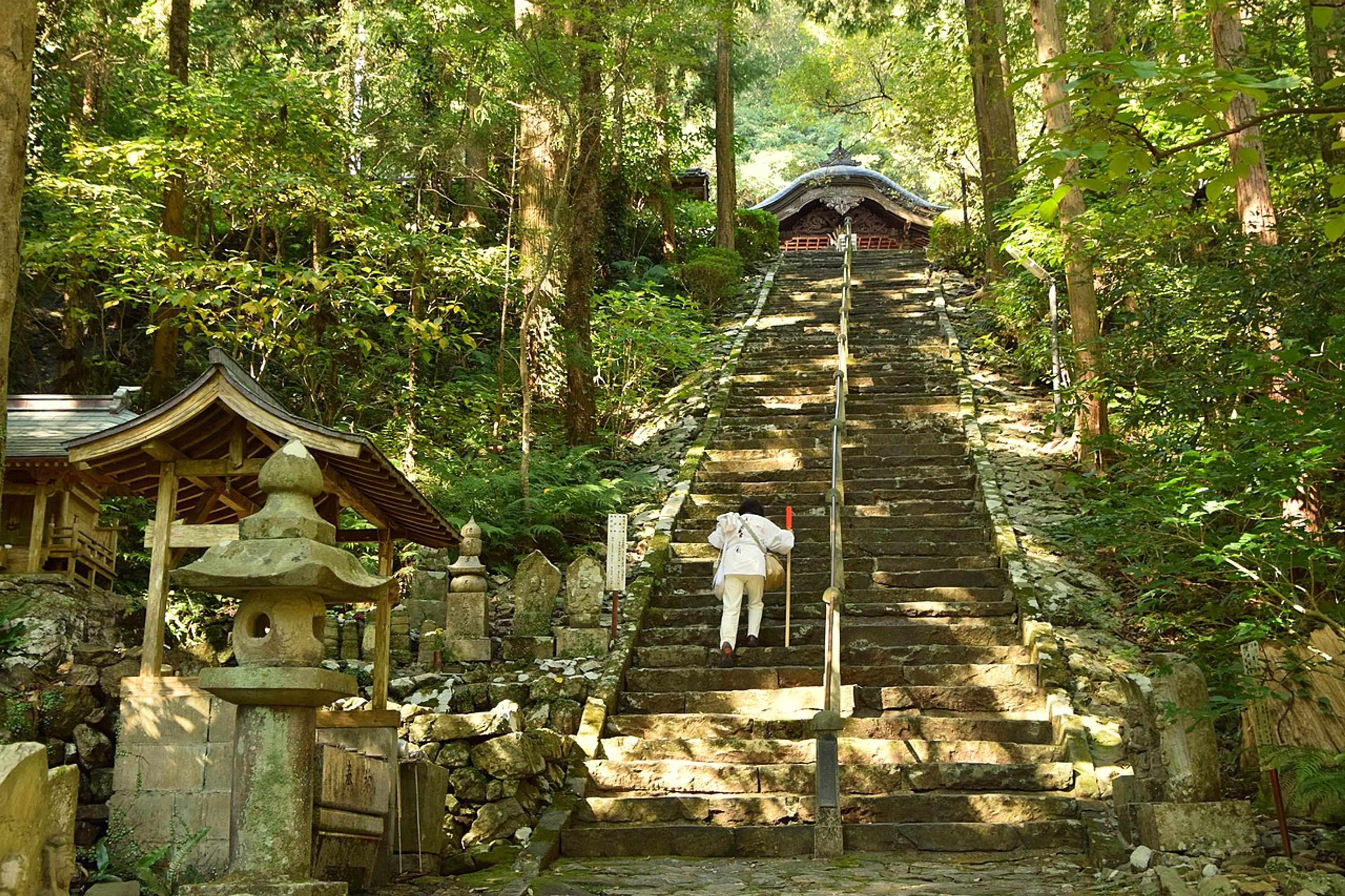
The traditional henro outfit is distinctive and functional: a white vest (hakui) worn over regular clothing, a conical sedge hat (sugegasa) for sun and rain, a walking stick (kongozue) representing Kobo Daishi walking beside you, and a wagesa (stole) worn around the neck. A small bell attached to the pack or stick provides a rhythmic accompaniment to each step. None of this is mandatory, many modern walkers use regular hiking gear, but wearing even the white vest identifies you as a pilgrim and unlocks the settai tradition.
The stamp book (nokyocho) is essential. At each temple, you present it at the stamp office (nokyosho) and receive a calligraphic entry, the temple's name, date, and seal brushed in ink by a temple official. The cost is ¥300 per stamp. The completed book becomes a personalized artwork and a record of the walk. Buy the nokyocho and basic pilgrim gear at Temple 1 (Ryozen-ji), which has a well-stocked shop specifically for starting pilgrims. A full gear set, white vest, hat, walking stick, book, bell, incense, candles, costs approximately ¥6,000.
Invest in the kongozue walking stick (¥1,500 at Temple 1). Beyond its spiritual significance, it is treated as a representation of Kobo Daishi and is ritually washed and placed upright at night, it is genuinely useful on the mountain sections. The octagonal cypress shaft is comfortable in the hand and the pointed tip grips well on forest trails. Many returning pilgrims consider the kongozue the most meaningful item from their journey.
Days 1-3: The Coastal Temples
Day 1 begins at Temple 1 (Ryozen-ji) in the town of Naruto, near the famous Naruto whirlpools. The first five temples are clustered within 5 kilometers, an easy walking distance that allows time for the rituals at each temple (incense, candle, sutra chanting, stamp) without rushing. Temple 3 (Konsen-ji) has a peaceful garden, and Temple 5 (Jizo-ji) is set in a dense forest of ginkgo trees that turn brilliant gold in November.
Days 2-3 follow the coast south through the town of Komatsushima and into agricultural flatland. The walking is easy, the temples are spaced 3-5 kilometers apart, and the route passes through communities where henro walkers are a familiar and welcomed sight. Temple 11 (Fujii-dera) is the staging point for the route's first mountain crossing, an 8-kilometer trail over Mount Shosan to Temple 12 that is the most demanding single stage in the opening section. Spend the night near Temple 11 to tackle the mountain fresh.
Accommodation ranges from free (tsuyado, basic shelters maintained for pilgrims) to ¥3,000-4,000 (minshuku with dinner and breakfast). The henro-specific lodgings are listed in the official pilgrimage map book (¥1,500 at Temple 1). Budget ¥5,000-7,000 per day for accommodation, meals, and temple stamps. Konbini (convenience stores) are regular along the coastal sections and provide reliable, affordable meals.
Days 4-5: The Mountain Crossing
The trail from Temple 11 to Temple 12 (Shosan-ji) climbs 700 meters through dense forest on a rocky, root-tangled path that takes 3-4 hours. This is the henro trail's first real physical test, and the temple at the top, perched on a mountain ridge at 700 meters, surrounded by ancient cedar trees and perpetually wrapped in mist, rewards the effort. The atmosphere at Shosan-ji is markedly different from the lowland temples: quieter, more austere, and infused with the mountain's weather.
After descending from Temple 12, days 4-5 cross through the Yoshino River valley toward temples 13 through 17. The terrain alternates between river flatland and gentle hills. Temple 13 (Dainichi-ji) has an unusually large and welcoming nokyosho where the monks take time with each pilgrim. Temple 17 (Idoji) sits beside an ancient well that Kobo Daishi is said to have struck with his staff, producing fresh water, the well still flows and pilgrims drink from it.
Settai, the tradition of offering food, drink, or small gifts to walking pilgrims, intensifies in the rural sections between temples. You may be stopped by a farmer offering mikan oranges, a shopkeeper pressing a cold drink into your hand, or an elderly woman handing you ¥100 wrapped in paper. Accepting settai is important: refusing is considered impolite, and the exchange of generosity is believed to generate merit for both giver and receiver.
Days 6-7: Cape Muroto and the Final Push
The final two days push south toward Temple 23 (Yakuo-ji) in the coastal town of Hiwasa. The route follows the coastline through fishing villages where the Pacific Ocean opens wide to the east. Temple 21 (Tairyuji) requires a steep ascent, a ropeway (¥2,600 round trip) is available for those with tired legs, and the temple's mountain-ridge position offers sweeping views of the coast below.
Temple 23 (Yakuo-ji) is the traditional endpoint of the Tokushima section and a natural stopping point for a week-long walk. The temple is famous for its yakuyoke (protection against misfortune) rituals, pilgrims climb the 33 women's steps and 42 men's steps (numbers corresponding to yakudoshi, unlucky ages in Japanese tradition) placing a coin on each step as they ascend. The view from the main hall over Hiwasa Bay, with fishing boats and the Pacific horizon, provides a fitting conclusion to the walking section.
From Temple 23, JR Hiwasa Station is a 10-minute walk. The Mugi Line train runs north to Tokushima City (about 90 minutes, ¥1,500) where you can connect to limited express services to Takamatsu or Kochi. If you plan to continue the pilgrimage another time, the nokyocho has no expiration, many pilgrims complete the circuit over multiple visits across years or decades. The book simply picks up where you left off.
The Walking Rhythm
What transforms the henro from a hiking trip into something more is the accumulation of ritual. At each temple, the sequence is the same: purify hands at the chozuya, light incense and a candle, place a name slip (osamefuda) in the box, chant the Heart Sutra, and receive the stamp. By the third or fourth day, the ritual becomes automatic, your body knows the movements, your voice knows the sutra, and the mind, freed from decision-making, enters a state that henro walkers describe as 'walking meditation.'
The physical rhythm reinforces the mental one. The regular pace, the weight of the pack, the tap of the kongozue, the chime of the bell, these become a cadence that carries you forward without conscious effort. Blisters, sore muscles, and rain are inevitable, but they become part of the texture rather than obstacles. Experienced henro walkers say the trail walks you as much as you walk the trail. Seven days is enough to understand what they mean.
The henro trail is well-marked with red arrows and pilgrim symbols, but GPS maps are unreliable on mountain sections. Buy the official bilingual henro map book at Temple 1 (English/Japanese, ¥1,500), it shows every turn, every accommodation, and every water source. Phone signal is patchy in mountain sections. Carry at least 1.5 liters of water on the Temple 11-12 mountain crossing.
Featured in this guide
Places to Visit

Turn this guide into a trip
We'll prioritize these 9 places when building your itinerary.