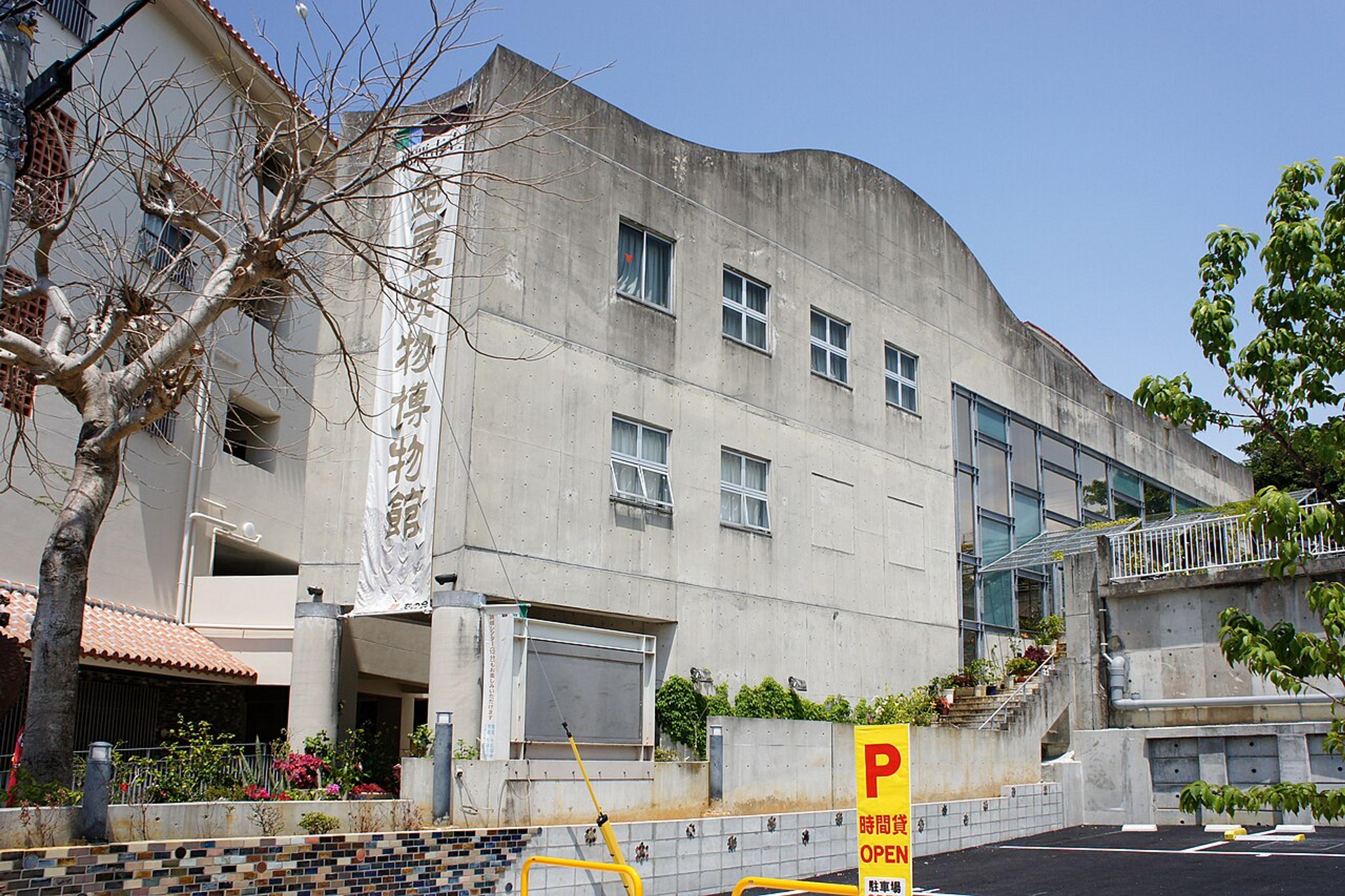
Okinawa's craft traditions are alive in working villages: Yomitan's pottery kilns, Ryukyu glass studios, bingata dyeing workshops, Shuri weavers, and Yaeyama textiles.
Koku Travel · February 16, 2026
12 places in this guide
Made by Hand, Rooted in Place
Okinawa's craft traditions are distinct from mainland Japan's. The influences are different, Chinese, Southeast Asian, and Polynesian rather than Korean and Chinese, and the materials are different: coral limestone instead of granite, banyan bark instead of mulberry, tropical indigo instead of mountain ai. The crafts survived war, occupation, and globalization not as museum pieces but as living practices. Potters fire their kilns every week. Weavers sit at looms every day. Glass blowers work through the heat of summer because the furnaces never cool.
This three-day itinerary moves through the island's major craft villages and studios, from the pottery kilns of Yomitan to the textile workshops of Shuri to the glass studios of Naha, with a final stop in the Yaeyama Islands where the Minsa textile tradition continues in its ancestral home.
Yomitan Pottery Village (Yachimun no Sato)
Yachimun no Sato, in the hills above Yomitan village on Okinawa's west coast, is the island's pottery heartland. The village was founded in 1972 when master potter Kinjo Jiro relocated from Naha's Tsuboya district to build a traditional noborigama (climbing kiln), a multi-chambered, wood-fired kiln built into a hillside, where heat rises through successive chambers, each one slightly cooler than the last. The village now houses over 60 pottery studios arranged along a single winding road.
The pottery here is functional and beautiful. The signature Yomitan style features bold, freehand decoration, fish, flowers, geometric patterns, painted in cobalt blue, iron brown, and copper green over a cream or gray base glaze. The forms are chunky and substantial: thick-walled rice bowls, heavy plates designed to withstand daily use, and the iconic shisa lion-dog pairs that guard every Okinawan rooftop. Studios sell directly to visitors, and prices are remarkably reasonable, handmade bowls from ¥800, plates from ¥1,200, shisa pairs from ¥3,000.
Visit Yachimun no Sato on a weekday morning when the studios are working and the tourist buses have not yet arrived. The large communal noborigama at the village entrance is fired approximately once a month, if you time your visit to a firing day (ask at the village entrance), you can watch the three-day process of loading, firing, and cooling. The Yomitan Pottery Festival in February and November offers discounted seconds and one-off pieces.
Ryukyu Glass Blowing
Ryukyu glass has an unlikely origin story. After the Battle of Okinawa, with traditional materials scarce, local craftsmen began collecting discarded American soda and beer bottles and melting them down to create new glassware. The recycled glass, with its impurities and air bubbles, produced a distinctive aesthetic, thick-walled, colorful, slightly irregular, and full of character. What began as wartime necessity became a recognized art form.
Today, several studios in Naha and the central coast continue the tradition, though they now use raw glass materials alongside recycled stock. The Ryukyu Glass Craft Village (Ryukyu Garasu-mura) in Onna offers hands-on glass-blowing experiences where visitors shape molten glass into a tumbler or small bowl under the guidance of a master glassblower. The experience takes about 20 minutes at the bench (¥2,200-3,500 depending on the piece), and the finished item is cooled overnight and shipped to your accommodation. The studio gallery sells finished pieces by resident artists, the colors range from deep cobalt to seafoam green to amber, all with the signature bubbles and irregularities that mark Ryukyu glass.
Glass-blowing studios operate furnaces at 1,300 degrees Celsius. Wear closed-toe shoes and long pants, not sandals. Hair must be tied back. Children under six are generally not permitted near the furnaces. The studios are extremely hot in summer (the furnace heat combines with Okinawa's tropical humidity), so hydrate well before your session.
Bingata Dyeing Workshops
Bingata is Okinawa's signature textile art, a resist-dyeing technique that produces fabrics of extraordinary vibrancy and detail. The process involves applying rice-paste resist through hand-cut stencils, painting mineral and vegetable pigments into the exposed areas, then removing the resist to reveal crisp, multicolored patterns. Traditional bingata patterns include tropical flowers (deigo, hibiscus), ocean waves, dragons, and stylized clouds, drawn from both Ryukyuan nature and Chinese court iconography.
The Shuri Ryusen workshop in Naha's Shuri district offers the most accessible bingata experience for visitors. The ¥3,300 workshop (approximately 90 minutes) provides a pre-stenciled tote bag or handkerchief, mineral pigments, brushes, and instruction in the basic application technique. The work requires patience, the pigment must be applied in thin, even layers with a stippling motion, building up color gradually. The results are immediately satisfying: bright, bold patterns on a fabric you made yourself. For a deeper experience, the full-day workshop (¥8,000) includes stencil cutting and multi-layer dyeing.
Bingata was historically regulated by the Ryukyu court, certain colors and patterns were restricted to specific social ranks. Yellow bingata with five-clawed dragons was reserved for the king. Red bingata with phoenixes was for the queen. Commoners were permitted only indigo-dyed bingata (aigata). Understanding this hierarchy adds layers of meaning to the patterns you see in museums and studios.
Shuri Weaving and the Silk Tradition
Shuri, the old royal capital, was the center of Ryukyuan textile production for centuries. The Shuri textile tradition encompasses several distinct techniques: Shuri-ori (Shuri weaving) uses silk and banana fiber in complex geometric patterns; Ryukyu kasuri is an ikat technique where threads are resist-dyed before weaving to create blurred, organic patterns; and bashofu is a fabric woven from banana fiber, light, cool, and so labor-intensive that a single bolt takes three months to produce.
The Naha City Traditional Craft Center (Naha Dento Kogei-kan) on Kokusai-dori displays examples of all Okinawan textile traditions and offers short weaving demonstrations. For a hands-on experience, the Shuri Ryusen complex includes a weaving workshop (¥2,200, 30 minutes) where visitors create a small coaster on a traditional Okinawan loom. The Okinawa Prefectural Museum in Omoromachi has the finest collection of historical Ryukyuan textiles, including court garments and royal bingata robes that are rotated seasonally.
The Naha City Traditional Craft Center is free to enter and offers demonstrations throughout the day. Combined craft experiences (bingata dyeing + weaving or glass blowing + pottery) are available through several workshops at discounted package prices, typically ¥5,000-7,000 for two activities. Ask at the tourist information counter inside Naha Airport for current combo deals and workshop schedules.
Minsa Textile in the Yaeyama Islands
Minsa is a cotton textile tradition unique to the Yaeyama Islands, particularly Taketomi and Ishigaki. The distinctive Minsa pattern is a narrow band of indigo-dyed cotton featuring rows of five-and-four-square motifs (itsutsu-yottsu). Traditionally, a woman would weave a Minsa belt and present it to the man she wished to marry, the five-and-four pattern read as 'itsu no yo mo' (forever and ever), a woven declaration of enduring love.
The Minsa Craft Center (Minsa Kogei-kan) on Ishigaki offers loom demonstrations, a small museum of historical pieces, and a workshop where visitors can weave a Minsa coaster (¥1,500, approximately 30 minutes). On Taketomi Island, several artisan homes sell Minsa products directly, belts, table runners, bookmarks, and accessories. The handwoven pieces are significantly more expensive than machine-made versions (a handwoven belt runs ¥15,000-25,000 versus ¥2,000 for machine-made), but the quality difference is visible in the tight, even weave and the depth of the natural indigo dye.
Combine the Minsa Craft Center visit with an Ishigaki pottery studio, Ishigaki-yaki workshops in the town center offer wheel-throwing experiences (¥3,000, 40 minutes) using local red clay. The finished pieces are fired and shipped within two weeks. A craft-focused day on Ishigaki, Minsa weaving in the morning, pottery in the afternoon, and a walk through the town's artisan shops, provides a satisfying counterpoint to the beach days.
Featured in this guide
Places to Visit

Turn this guide into a trip
We'll prioritize these 12 places when building your itinerary.