Eating at Japan's Markets and Yokocho
Top Picks · 6 min
Photo: Hyppolyte de Saint-Rambert, CC BY-SA 4.0.
The cheapest and freshest meals in Japan are at its markets. A route through the morning markets, food arcades, and yokocho stall alleys worth building a meal around.
Koku Editorial · May 25, 2026
7 places in this guide
Japan eats well at its markets. Morning fish markets, covered food arcades, and the yokocho alleys of stalls under the railway tracks are where the cheapest and freshest meals are, and where a city's food culture shows plainly. Here is a route through the markets and food alleys worth building a meal around.
How market eating works
Three rough types. Morning markets (asaichi) run early and sell the day's catch and produce, often with stalls that cook it on the spot. Covered arcades (shotengai) and food halls run all day. Yokocho are dense lanes of tiny bars and counters, busiest at night. The rule across all three: eat where the turnover is highest, point if you cannot order in Japanese, and carry cash.
Kyoto: Nishiki Market
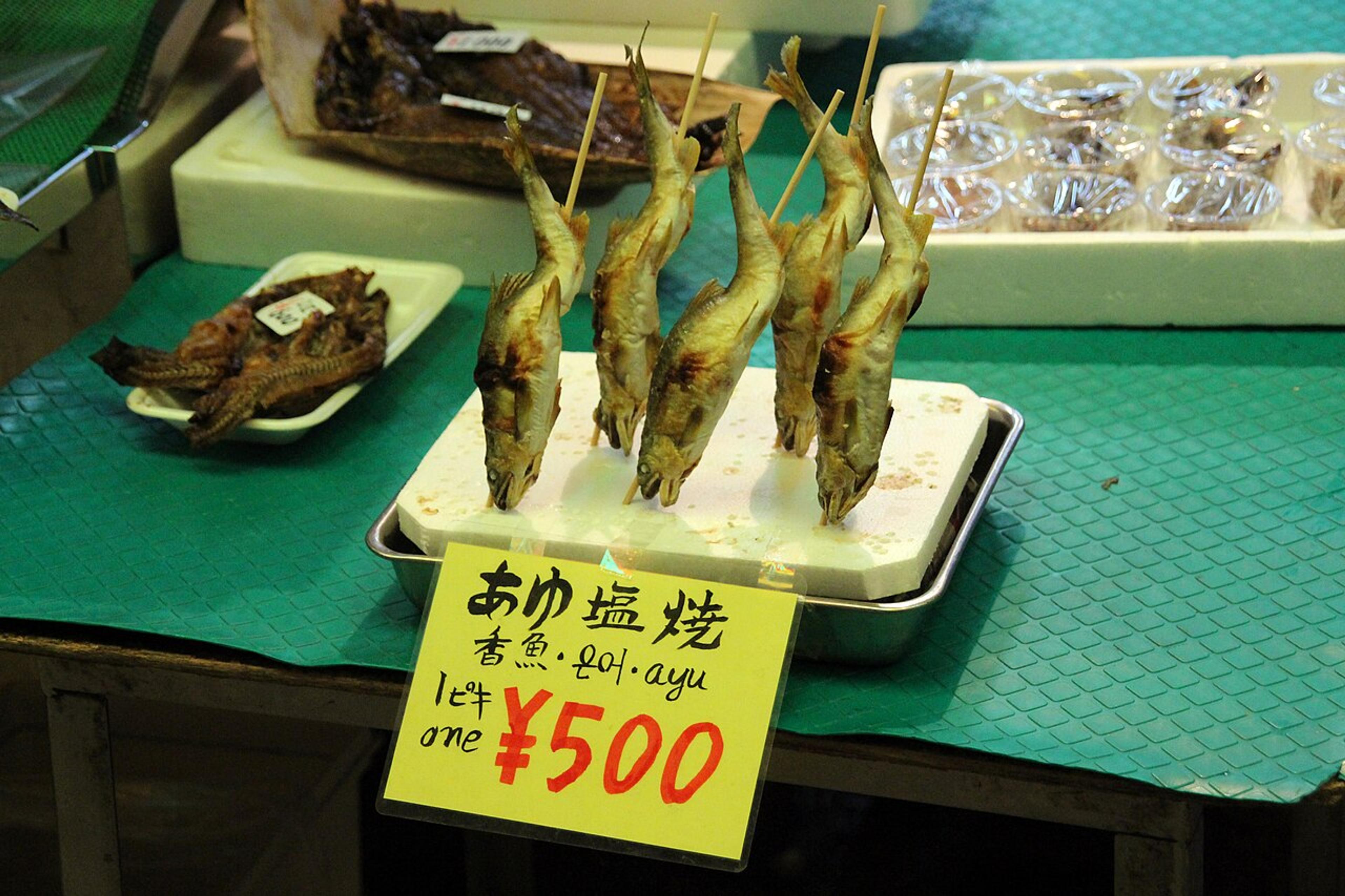
Nishiki Market has served as Kyoto's main food market for more than four hundred years, a narrow covered lane of stalls selling tsukemono, tofu, sweets, knives, and skewered snacks to eat as you walk. It runs through the city center and needs no detour. Go before midday; the lane jams in the afternoon.
The three great morning markets
Japan counts three great morning markets, and each is a meal in itself. Katsuura in Chiba has run for more than four centuries, its produce and fish sold on rotating streets from dawn. Wajima on the Noto Peninsula carries a tradition said to stretch over a thousand years. Takayama's Miyagawa market lines the river in the old town. Reach any of them by mid-morning, before the stalls pack up around noon.
Hokkaido: the Sapporo and Kushiro markets
Hokkaido's markets put the cold-water catch over rice. Sapporo Jogai Ichiba, beside the central wholesale market, serves crab, uni, and salmon roe from its stalls; in the east, the Kushiro Washo Market, open since 1954, runs the katte-don system where you buy rice then top it stall by stall. Both are breakfast or early-lunch stops.
Hachinohe and Fukuoka: northern and southern catches
At opposite ends of the country, two seafood markets stand out. In Hachinohe, the Tatehana Wharf morning market is among the largest, and Miroku Yokocho gathers 26 stalls of local food into one lane. In Fukuoka, the Nagahama market is the city's largest, packed with the morning's fish. Both fold into northern and Kyushu routes.
Naha: the Okinawan markets
Okinawa eats differently, and its markets show it. In Naha, Maguro Mart and the fish-market izakaya around it serve the island's tuna and tropical fish straight from the counter. They are casual, loud, and cheap, the island's everyday way to eat seafood.
How to eat at markets
A few notes. Go early; morning markets wind down by noon and the best stalls sell out. Carry cash, as many stalls take nothing else. At buy-then-top market systems (Kushiro especially) you start with a bowl of rice and add toppings stall by stall, so walk the full lane before committing. And the yokocho alleys are an evening scene, best for a stall crawl rather than a single sit-down.
Turn this guide into a trip
We'll prioritize these 7 places when building your itinerary.