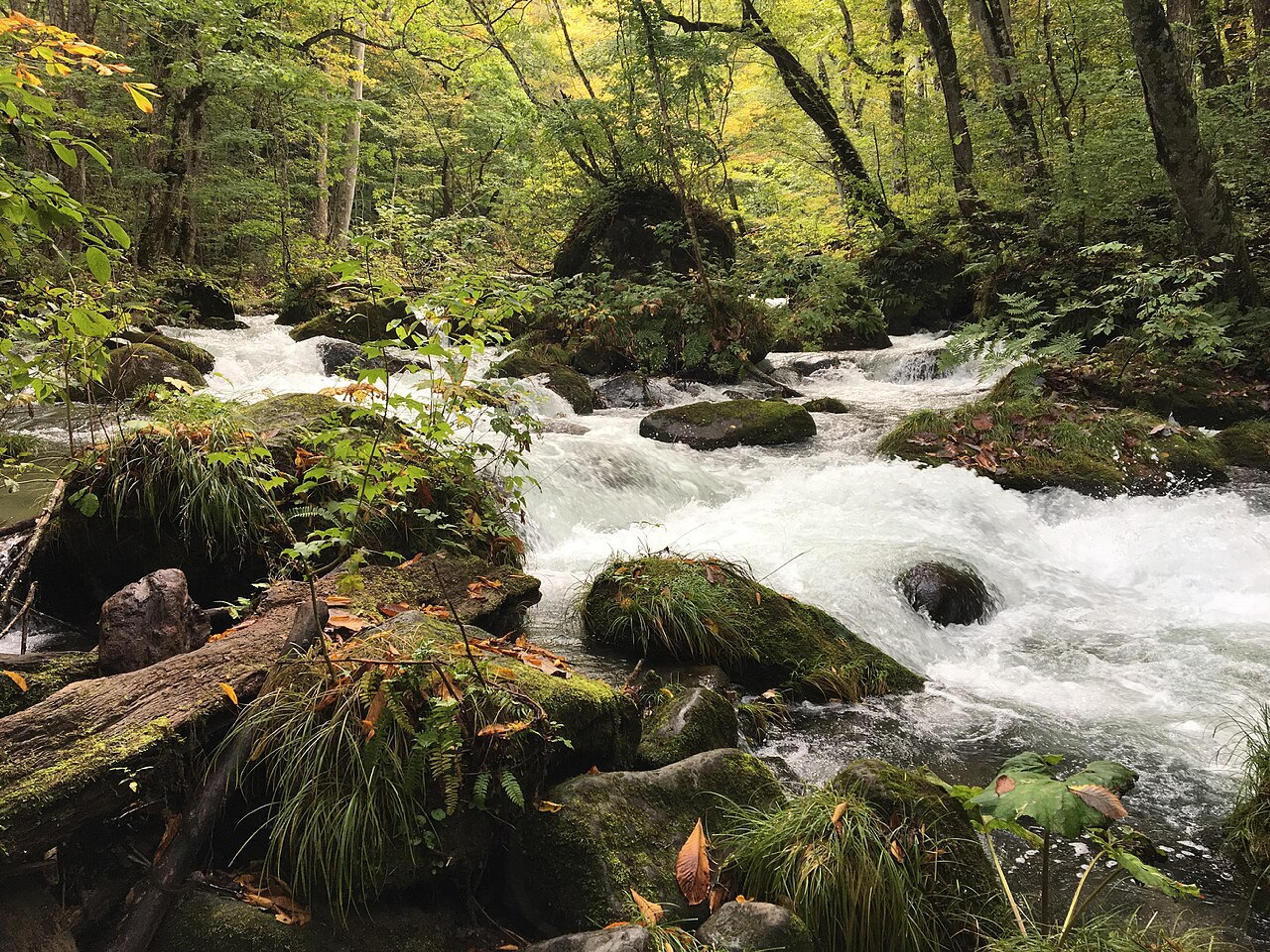
Tohoku's 71 hidden gems, from gorges to sake museums to castle towns, are Japan at its most unhurried and least packaged.
Koku Editorial · March 7, 2026
12 places in this guide
The Region Time Forgot
Tohoku, the six prefectures of northern Honshu, is the least-visited major region by international tourists. This is Japan before the tourism boom: feudal castle towns preserved in amber, mountain gorges with no guardrails, and onsen villages where the innkeeper is the third generation of a family that's run the place since the Meiji era. For travelers who've done Tokyo-Kyoto and want to go deeper, Tohoku is the answer.
Dakigaeri Gorge (Semboku)
In Akita Prefecture, the Dakigaeri Gorge follows the Tama River through steep, forested canyon walls. The hiking trail is 1.5 kilometers of boardwalks, suspension bridges, and waterfalls, the most famous being Mikaeri Falls, a 30-meter cascade visible from a swaying footbridge.
The gorge is named "dakigaeri" ("embracing return") because the path was once so narrow that hikers had to embrace each other to pass. It's wider now, but the drama of the setting is unchanged. Autumn foliage here is extraordinary, reds and yellows reflected in the blue-green river. Free entry. About 45 minutes from Kakunodate by bus.
Kakunodate Samurai District (Semboku)
Often called the "Little Kyoto of Tohoku," Kakunodate's samurai district is a grid of preserved samurai residences behind black wooden walls, shaded by weeping cherry trees that are over 300 years old. Unlike Kyoto, where you pay to enter each attraction, most of Kakunodate's samurai houses are free or ¥300-500. The town is walkable in a half day.
The cherry bark craft (kabazaiku) tradition here is unique to Kakunodate, artisans use the bark of wild mountain cherry trees to create tea canisters, jewelry boxes, and decorative items. The Kakunodate Cherry Bark Craft Museum demonstrates the process. It's beautiful work and the only place in Japan where it's made.
Kakunodate's weeping cherries bloom in late April to early May, about two weeks after Tokyo. The samurai district lined with pink blooms is one of Tohoku's most beautiful spring scenes, with a fraction of Kyoto's crowds.
Geibikei Gorge (Ichinoseki)
In southern Iwate Prefecture, Geibikei Gorge offers flat-bottomed boat rides through a narrow limestone canyon. The boatman poles upstream through turquoise water between 100-meter cliff faces, singing traditional songs that echo off the rock. At the turnaround point, you can try throwing clay discs into a small cave for luck.
The boat ride is 90 minutes round trip (¥1,800). In winter, the canyon walls ice over and the boat rides continue with heated kotatsu blankets in the boats, a specifically Tohoku experience that's equal parts cozy and otherworldly.
Inaniwa Udon (Yuzawa)
Akita Prefecture's contribution to Japan's noodle canon: Inaniwa udon, thin and silky hand-pulled wheat noodles served cold with a dipping sauce. Unlike the fat, chewy udon of Kagawa, Inaniwa noodles are delicate, closer to somen in texture, but with more bite.
The definitive version is at Sato Yosuke Honten in Yuzawa, where the Sato family has made Inaniwa udon for over 300 years. The factory is attached to the restaurant, and tours are available. A meal costs ¥1,000-1,500. This is one of Japan's great regional noodle experiences and almost unknown outside Tohoku.
Dewazakura Sake Museum (Tendo)
In Yamagata Prefecture, one of Japan's premier sake-producing regions, the Dewazakura brewery runs a museum and tasting room in the town of Tendo. The museum covers the brewing process with English explanations, and the tasting room offers flights of their award-winning lineup including the signature Oka (Cherry Bouquet) ginjo.
Yamagata's sake culture is robust, there are over 50 breweries in the prefecture. Dewazakura is the most accessible for visitors, but if you're serious about sake, plan a multi-brewery route through the Mogami River valley. Winter brewing season (November-March) is the most interesting time to visit.
Sake tastings in Japan are usually free or very cheap (¥300-500 for 3-5 pours). Pace yourself, the alcohol content is 15-17%. It's polite to buy a bottle if you've enjoyed the tasting. A good bottle runs ¥1,500-3,000.
Bandai-Azuma Skyline (Fukushima)
A 29-kilometer mountain road through the Azuma volcanic range in Fukushima Prefecture, the Bandai-Azuma Skyline climbs to Jododaira plateau at 1,600 meters. The landscape is volcanic and barren at the top, steaming vents, sulfur-crusted rocks, and panoramic views of the Bandai range and surrounding lakes.
The road is open from late April to mid-November. In autumn, the entire route blazes with color. At Jododaira, short hiking trails lead to volcanic craters and observation points. The drive itself, hairpin turns through alpine scenery, is one of the best mountain drives in Japan. Free to drive.
Why Tohoku
Tohoku's appeal is its unpolished authenticity. There are no theme park onsen, no tourist-oriented "experiences" with English commentary and gift shops at the exit. There are just old towns, wild gorges, family-run inns, and regional food traditions preserved because people here still eat this way. It's Japan at its most genuine, and it's quietly extraordinary.
Featured in this guide
Places to Visit

Turn this guide into a trip
We'll prioritize these 12 places when building your itinerary.