Tsuwano & Hagi: Castle Towns Time Forgot
Itinerary · tsuwano · 9 min
Deep in Yamaguchi and Shimane, Tsuwano and Hagi preserve samurai-era streetscapes, Hagi-yaki pottery kilns, and the academy that launched the Meiji Restoration.
Yuku Japan · February 16, 2026
8 places in this guide
Towns the Bullet Train Missed
The Shinkansen follows the Sanyo coast, Hiroshima, Okayama, the southern corridor. North of the mountains, the San'in side of western Honshu was bypassed by both the bullet train and the postwar development boom. The result is a landscape where Edo-period town planning survives not as heritage preservation but as everyday reality. Streets follow their original grid. Houses stand where samurai built them. Canals still carry water through the town centers. Tsuwano and Hagi are not museum towns, they are towns where the past was never demolished.
The two towns sit roughly 90 minutes apart by car, connected by a mountain road that winds through cedar forests and past abandoned silver mines. Together, they offer a concentrated experience of samurai-era Japan that rivals Kanazawa but without the tourist infrastructure or the crowds. This is not a complaint, the absence of crowds is precisely the point.
Tsuwano: Little Kyoto of San'in
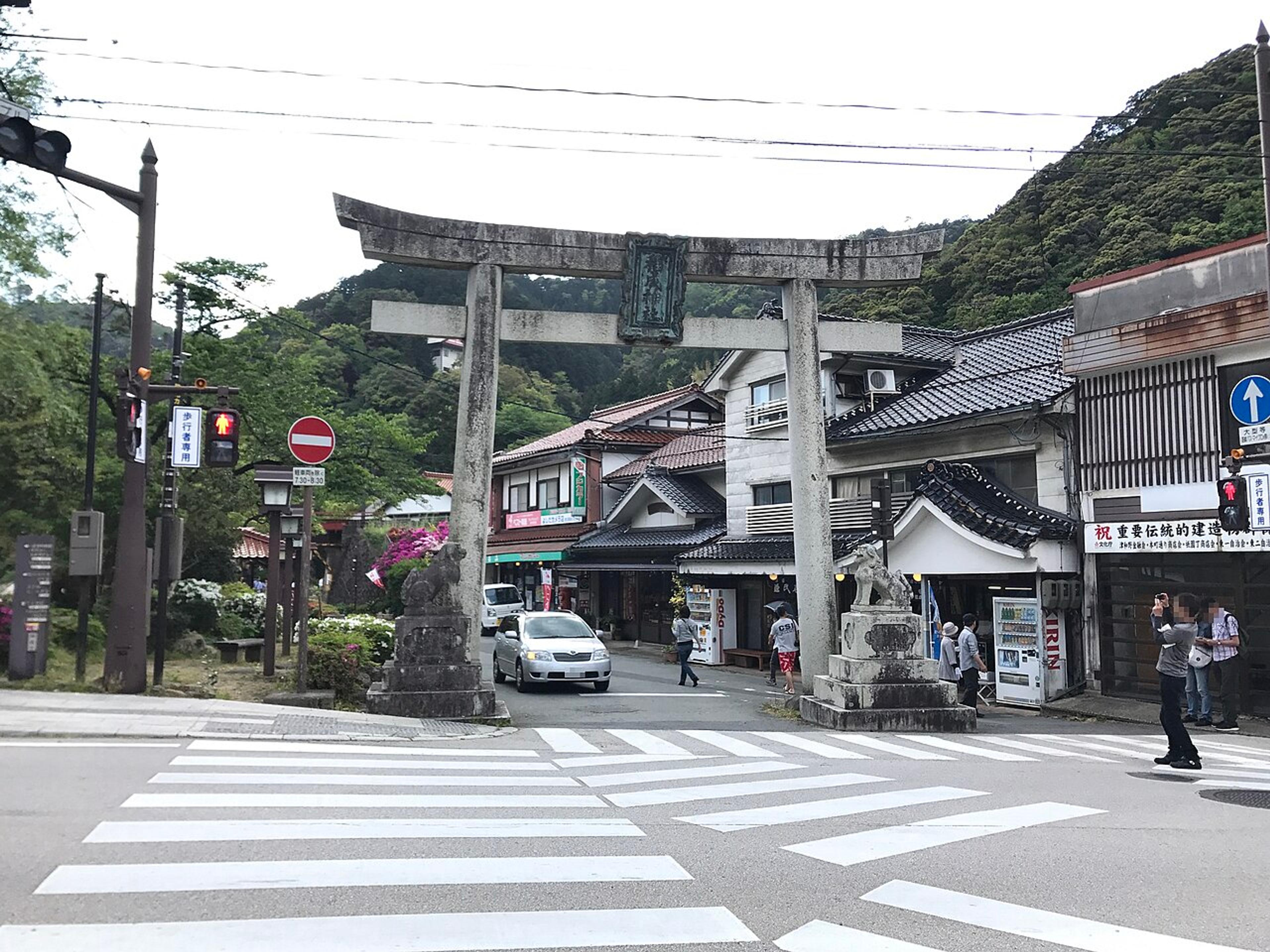
Tsuwano occupies a narrow valley in the mountains of western Shimane Prefecture. The town earned its nickname 'Little Kyoto of San'in' for its canals, temples, and refined atmosphere, though the comparison undersells its distinct character. The main canal, Tonomachi-dori, runs along the old samurai district, and its clear water is stocked with hundreds of enormous, brilliantly colored koi carp, orange, white, gold, and spotted, that glide past the foundations of former samurai residences. On a still morning, the reflection of dark wooden walls and bright carp in the canal water is one of the most photographed scenes in rural Japan.
The town's cultural density is remarkable for its size (population under 7,000). The Tsuwano Catholic Church, a Gothic wooden structure built in 1931, commemorates the 36 Christians martyred here in the early Meiji period. The Morijuku Sake Brewery offers tastings of local Shimane sake. The Katsushika Hokusai Museum houses a collection of works by the ukiyo-e master, whose connection to Tsuwano is tenuous but whose art is undeniably worth seeing. The Yasaka Shrine hosts the annual Sagi-mai (Heron Dance) festival in July, where dancers in elaborate white heron costumes perform on a stage built over the canal.
The Sagi-mai Heron Dance festival (July 20 and 27) is Tsuwano's most spectacular event. Dancers in full white-feathered heron costumes perform a graceful, centuries-old choreography accompanied by drums and flutes. The festival dates back to the Muromachi period and is designated an Important Intangible Folk Cultural Property. Book accommodation weeks ahead if visiting during the festival.
Taikodani Inari Shrine
Above Tsuwano, the Taikodani Inari Shrine is reached by climbing through a tunnel of approximately 1,000 vermilion torii gates that wind up the mountainside. The tunnel of gates, similar in concept to Kyoto's Fushimi Inari but with a fraction of the visitors, creates a rhythmic visual experience: red arch, green forest, red arch, green forest, sunlight and shadow alternating as you climb. The ascent takes about 20 minutes at a comfortable pace.
At the summit, the shrine offers panoramic views across the Tsuwano valley, tiled roofs, rice paddies, and the surrounding mountains layered in morning mist. The shrine is one of the five great Inari shrines in Japan, dedicated to the fox deity of harvest and prosperity. White fox statues guard the approach, and small fox figurines (ceramic, wooden, stone) populate every ledge and corner of the shrine precincts. On clear days, the view from the shrine down through the torii tunnel to the valley floor is vertiginous and beautiful.
Visit Taikodani at dawn for the most atmospheric experience. The torii tunnel catches early morning light at dramatic angles, and the shrine is empty. If you are driving, park at the upper lot behind the shrine and walk down through the gates, descending through 1,000 torii is easier than climbing, and you emerge directly into Tsuwano's town center.
Hagi: The Town That Made Modern Japan
Hagi is a coastal castle town in Yamaguchi Prefecture that played a wildly outsized role in Japanese history. Five of the nine prime ministers of the early Meiji era came from Hagi. The leaders of the Meiji Restoration, the revolution that ended 250 years of samurai rule and transformed Japan into a modern industrial power, were educated here, in a small academy that still stands. For a town of 45,000 people on the wrong side of the mountains, Hagi's historical significance is extraordinary.
The Shoka Sonjuku academy, a modest wooden building that could easily be mistaken for a storage shed, is a UNESCO World Heritage Site. Here, the teacher Yoshida Shoin educated the young samurai who would go on to overthrow the Tokugawa shogunate. Shoin was executed at age 29 for his radical ideas, but his students, Ito Hirobumi, Yamagata Aritomo, Kido Takayoshi, became the architects of modern Japan. The academy's small scale makes the story more powerful, not less: world-changing ideas taught in a room barely large enough for a dozen students.
Yoshida Shoin is revered in Hagi with an intensity that borders on devotion. The Shoin Shrine, adjacent to the academy, enshrines him as a deity. Locals speak of him as a contemporary figure rather than a historical one. Understanding Shoin's philosophy, loyalty, self-sacrifice, action over deliberation, helps decode much of modern Japanese political culture.
Hagi-yaki: The Living Pottery Tradition
Hagi-yaki pottery is one of the most prized ceramic traditions in Japan. The tea ceremony saying goes: 'First Raku, second Hagi, third Karatsu', ranking Hagi ware among the finest tea ceramics in the country. The distinctive Hagi aesthetic values imperfection: rough clay textures, uneven glazes, controlled cracks (kannyu) in the surface that absorb tea over decades, gradually changing the vessel's color. A Hagi chawan (tea bowl) is considered to reach its full beauty only after years of use.
Several active kilns in Hagi welcome visitors. The Shizuki Kiln, near the castle ruins, operates a traditional noborigama (climbing kiln) and offers workshops where visitors can throw and glaze their own piece (from ¥2,500, fired and shipped after three months). The Sakata Kiln, operated by a family that has produced Hagi-yaki for 14 generations, displays museum-quality historical pieces alongside contemporary work. Walking between kilns through the samurai quarter, past earthen walls and gate posts that have stood for 400 years, is itself an exercise in understanding the continuity that defines Hagi.
A handmade Hagi-yaki yunomi (everyday tea cup) from a local potter costs ¥2,000-5,000, remarkably affordable for handmade ceramics of this quality. Tea ceremony chawan start at ¥8,000 and ascend into the hundreds of thousands for master-potter pieces. The kiln workshops (¥2,500-4,000) include materials, instruction, firing, and domestic shipping.
Turn this guide into a trip
We'll prioritize these 8 places when building your itinerary.