Tottori's interior hides Japan's most daring temple architecture, Daisen's sacred beech forests, Misasa's radium onsen, and pear orchards fed by volcanic soil.
Yuku Japan · February 16, 2026
9 places in this guide
The Mountain No One Climbs
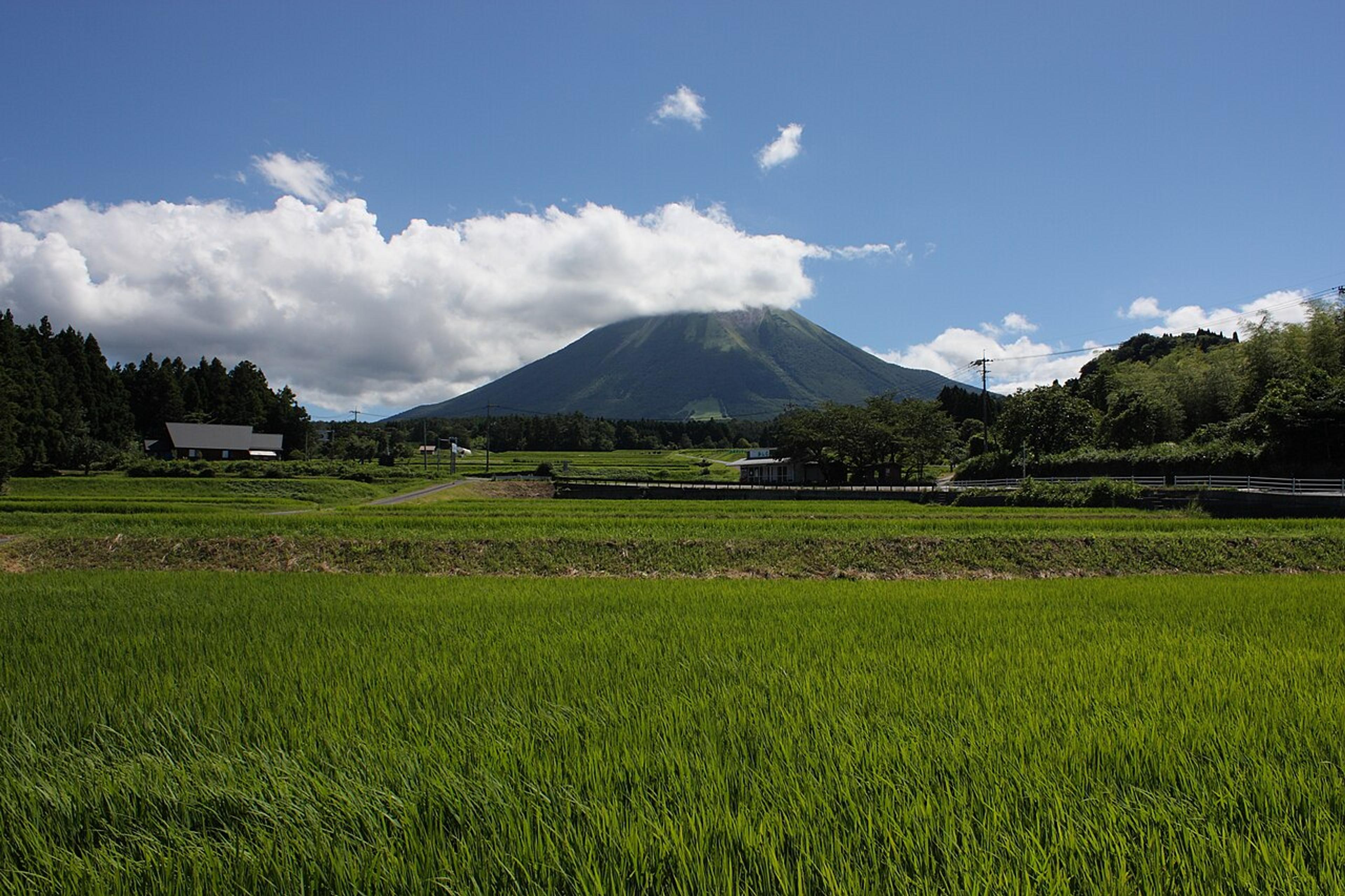
Mount Daisen is the highest peak in the Chugoku region at 1,729 meters, and from the north it presents a nearly perfect volcanic cone that has earned it the inevitable comparison to Fuji. The south face tells a different story, a collapsed caldera wall that drops in sheer cliffs, giving the mountain a split personality: smooth from one angle, savage from another. Despite its accessibility (two hours by bus from Yonago Station), Daisen receives a fraction of the visitors that crowd the more famous peaks of central Japan.
The mountain sits at the center of Daisen-Oki National Park, surrounded by one of the largest remaining beech forests in Japan. The forest floor in autumn is a carpet of gold and copper, and the spring canopy filters light into a green luminescence that makes the trails feel subaquatic. This is mountain walking at its most meditative, well-maintained paths through old-growth forest, with the peak appearing and disappearing above the canopy as the trail switchbacks upward.
Daisen-ji Temple and the Summit Trail
Daisen-ji, founded in 718, was once a vast temple complex housing 3,000 monks and 100 sub-temples. Today, the main hall and a few subsidiary buildings survive, set in a grove of enormous Japanese cedars at the base of the mountain. The Ogamiyama Shrine, sharing the grounds in the traditional Buddhist-Shinto fusion that predates the Meiji-era forced separation, adds a torii gate and a small worship hall to the temple precinct.
The summit trail begins behind the temple and climbs 900 meters over 3.5 kilometers through beech forest, then dwarf bamboo, then bare volcanic rock. The ascent takes about three hours at a moderate pace. The final section follows a narrow ridge with views in every direction, the Sea of Japan to the north, the Chugoku mountains to the south, and on exceptionally clear days, the Oki Islands floating on the horizon 60 kilometers offshore. The summit itself is a small platform with a weather station and a view that justifies every step.
Start the summit trail by 7 AM to avoid afternoon clouds that frequently obscure the upper mountain. The trailhead at Daisen-ji has free parking and a visitor center with trail maps. Bring layers, the temperature drops roughly 10°C from base to summit. The descent via the Misen Trail (different route) avoids retracing your steps and emerges at a bus stop on the western side.
Mitokusan Sanbutsu-ji: The Cliff Temple
Sanbutsu-ji temple on Mount Mitoku is home to Japan's most improbable building: the Nageire-do, a prayer hall that appears to have been thrown into a cliff face. The small wooden structure sits in a natural cavity 520 meters up a sheer rock wall, supported by slender wooden pillars wedged into cracks in the stone. No one is entirely certain how it was built. Legend says the monk Enno Gyoja threw (nageru) the entire structure into the cliff with supernatural strength, hence the name.
Reaching the Nageire-do viewing platform requires climbing the mountain via a trail that includes sections of bare rock face, iron chains bolted into cliff walls, and exposed tree roots used as natural ladders. The climb is officially classified as a form of ascetic practice (shugendo), and visitors are given straw sandals and instructed to treat the ascent as a spiritual exercise. The trail takes about 45 minutes of scrambling, and the reward, the Nageire-do floating in its cliff niche, silent and inexplicable, is one of the most extraordinary sights in Japanese architecture.
The Sanbutsu-ji trail involves genuine scrambling on wet rock and exposed sections with chain assists. It is not suitable for anyone with mobility issues, fear of heights, or inappropriate footwear. Admission is ¥800 and includes the straw sandals. Solo climbing is prohibited, you must ascend with at least one companion. The trail closes in heavy rain and during winter months.
Misasa Onsen: Radium and Radon
Misasa Onsen, set in a valley between Daisen and Mitokusan, is one of the world's most concentrated sources of naturally occurring radon gas in hot spring water. The town has promoted the therapeutic benefits of low-dose radiation bathing since the 1950s, and Okayama University maintains a research institute here studying the health effects. Whether the claimed benefits (improved immunity, reduced inflammation, pain relief) are real or placebo, the baths themselves are excellent, hot, mineral-rich, and set along a river gorge.
The Misasa River runs through the center of town, and several open-air baths sit directly on the riverbank. The Kawara Baths (free, mixed-gender, swimsuits required) are stone pools right at water level, you soak while watching the river flow past at arm's length. The Kajonoyu public bathhouse (¥500) is the more conventional option, with indoor and outdoor baths, saunas, and a rest area. Ryokan along the river offer private rotenburo (outdoor baths) overlooking the gorge.
Misasa's public baths are among the cheapest quality onsen in Japan. The Kawara riverside baths are free. Kajonoyu is ¥500. Several ryokan offer day-use bathing (higaeri) for ¥800-1,200. A full day cycling between Misasa's baths, the town has seven distinct spring sources, costs nothing beyond the ¥500 bicycle rental from the tourist office.
Pear Country and the Volcanic Soil
The volcanic soil on Daisen's lower slopes produces some of the best nashi (Japanese pears) in the country. Tottori Prefecture is Japan's leading pear producer, and the orchards around the base of Daisen, particularly in the Hoki and Kofu areas, have been cultivated since the Edo period. The Nijisseiki pear variety, developed in Tottori, is the standard against which all Japanese pears are judged: crisp, juicy, with a sweetness that is clean rather than cloying.
Pick-your-own pear orchards operate from August through October, charging ¥1,000-1,500 for all-you-can-eat sessions of about an hour. The Tottori Nijisseiki Pear Museum in Kurayoshi documents the history and science of pear cultivation, including a greenhouse with pears from around the world. Outside harvest season, pear-flavored products, pear wine, pear cider, pear sorbet, pear curry (surprisingly good), are available throughout the region.
Nijisseiki pears are harvested from late August through September. The Aki-e variety extends the season into October. Visit during peak harvest for the full orchard experience, trees laden with fruit, the sweet smell of ripe pears in the warm air, and the satisfaction of eating a perfectly ripe nashi minutes after picking it. The Tottori Pear Festival in early September includes tastings, competitions, and orchard tours.
Featured in this guide
Places to Visit

Turn this guide into a trip
We'll prioritize these 9 places when building your itinerary.