The Noto Peninsula Road
Itinerary · wajima · 9 min
Drive the Noto Peninsula for Japan's most dramatic coastal craft corridor: Wajima lacquerware, Senmaida terraces, and artisan resilience after the 2024 earthquake.
Yuku Japan · February 16, 2026
3 places in this guide
The Peninsula That Juts Into the Sea of Japan
The Noto Peninsula extends 100 kilometers north from the Chubu mainland into the Sea of Japan, forming Ishikawa Prefecture's dramatic appendage. For centuries, this remote finger of land developed its own craft traditions, fishing practices, and cultural rhythms, largely independent of the urban centers to the south. Wajima lacquerware became Japan's finest. The salt farms of the outer coast preserved a Bronze Age evaporation method found nowhere else. The morning markets operated on a schedule older than the towns around them.
On January 1, 2024, a magnitude 7.6 earthquake devastated the peninsula. Wajima's morning market burned in the fires that followed. Historic buildings collapsed. Roads buckled. The recovery is ongoing and, as of early 2026, many areas have reopened while others remain under repair. Visiting Noto now is an act of participation in that recovery, every meal eaten, every lacquer piece purchased, every night spent in a rebuilt ryokan contributes directly to the economic revival of communities that refused to abandon their home.
Wajima Morning Market and Lacquerware
The Wajima Asaichi (morning market) has operated for over 1,000 years, making it one of the oldest markets in Japan. Held daily except on the 10th and 25th of each month, the market lines Asaichi-dori with stalls selling fresh seafood, dried fish, pickled vegetables, local sake, and Wajima-nuri lacquerware. The market lost several buildings in the 2024 earthquake and fire, but temporary stalls began operating within months, and the permanent reconstruction is underway. Current hours are 8 AM to noon.
Wajima-nuri lacquerware is distinguished by its durability and depth of finish, each piece receives over 120 coats of lacquer applied over a period of months, with each coat dried, polished, and sometimes decorated with gold dust (maki-e) before the next is applied. The Wajima Lacquerware Hall (¥300) explains the process through displays and video, but the real education comes from visiting working studios. Several lacquer artisans on the streets behind the market welcome visitors to watch the painstaking application process. Finished pieces range from ¥3,000 for simple chopsticks to ¥500,000+ for decorated serving trays.
Arrive at the morning market by 8:30 AM for the widest selection. The seafood stalls sell freshly grilled squid, turban shells, and iwagaki oysters (in season May-August) for ¥300-800 each, eat them standing at the stall. The lacquerware stalls toward the market's eastern end tend to be run by the artisans themselves and offer better prices than the tourist shops on the main road.
Shiroyone Senmaida: A Thousand Rice Terraces
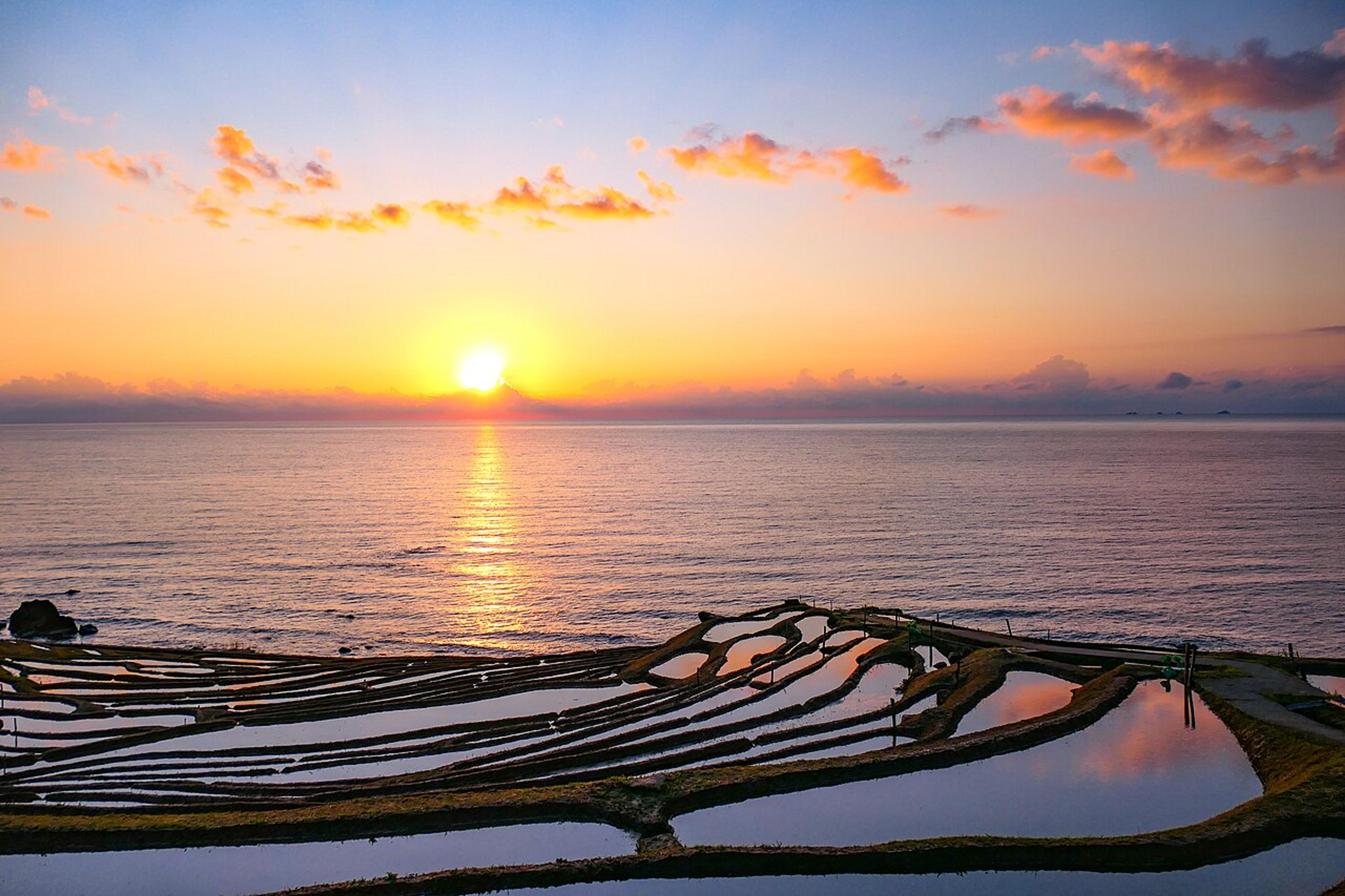
Twenty minutes east of Wajima by car, the Shiroyone Senmaida rice terraces cascade down a steep hillside to the Sea of Japan in over 1,000 tiny paddies, some no larger than a tatami mat. The terraces have been farmed for over 400 years and are designated a Globally Important Agricultural Heritage System. In spring and early summer, the flooded paddies reflect the sky and sea, creating a layered mirror effect down the hillside. By autumn, the golden rice creates a staircase of amber descending to blue water.
The terraces suffered damage in the 2024 earthquake, retaining walls collapsed and irrigation channels were disrupted, but restoration work has progressed rapidly, with community volunteers and agricultural engineers working together to rebuild the system. The observation area at the hilltop provides the classic panoramic view. A walking path descends through the terraces to the waterline, passing stone walls and irrigation channels that represent centuries of accumulated engineering knowledge.
From October through March, the Senmaida are illuminated with 25,000 solar-powered LED lights in the 'Aze no Kirameki' installation, transforming the empty winter terraces into a cascade of light falling to the dark sea. The illumination runs from dusk (around 5 PM in winter) until 4 AM. It is best viewed in the first hour after dark, when the sky retains a trace of blue behind the lights.
Agehama Salt-Making on the Outer Coast
The Suzu area on the Noto Peninsula's outer coast preserves agehama-style salt production, a method dating back over 500 years and practiced today at only a handful of sites worldwide. The process involves repeatedly hauling seawater from the ocean and spreading it over a sand field, where sun and wind evaporate the water and concentrate the salt in the sand. The salt-laden sand is then rinsed with more seawater to create a concentrated brine, which is boiled in large iron pans over wood fires until the salt crystallizes.
The Suzu Salt Farm (Suzu Enden) offers demonstrations and hands-on experiences (¥1,500, roughly 60 minutes) where visitors participate in spreading seawater across the salt field, harder physical work than expected, carried out in all weather. The resulting salt has a complex mineral flavor that differs markedly from industrial salt, with a sweetness and depth that chefs prize. A 100-gram bag of agehama salt costs ¥500-800 and makes a distinctive souvenir. The Noto coast's isolation preserved this method after it disappeared everywhere else in Japan during the Meiji-era industrialization of salt production.
Agehama salt-making is designated an Important Intangible Folk Cultural Property by the Japanese government. The designation recognizes the method as living heritage, not museum practice, the salt farms operate commercially, selling to high-end restaurants across Japan. The physical labor of hauling seawater in wooden buckets along a sandy field connects directly to a Bronze Age technology chain.
Suzu and the Quiet Outer Coast
Beyond the salt farms, the city of Suzu occupies the peninsula's tip, the furthest point from Kanazawa and, in many ways, the most rewarding. Suzu's Rokkozaki Lighthouse stands at the very end of Noto, looking out over open ocean. The coastal road approaching it passes through fishing villages where squid are dried on wooden racks and the daily catch is sold from boats pulled onto the beach. The Suzu area was hit hard by the earthquake, but the community's determination to rebuild has drawn volunteers and media attention that has paradoxically increased awareness of this previously overlooked corner of Japan.
The drive back along the peninsula's western (inner) coast offers a different mood, sheltered bays, calm water, and the Noto Kongo coast, where eroded rock formations create natural arches and sea caves accessible by sightseeing boat (¥1,100, 20 minutes). The full Noto Peninsula circuit, starting and ending in Kanazawa, covers about 250 kilometers and takes two to three days at a pace that allows for stops, meals, and the kind of unplanned encounters that define a road trip in rural Japan.
Road conditions on the Noto Peninsula continue to improve but some sections, particularly on the outer coast between Wajima and Suzu, may have temporary detours or single-lane restrictions due to earthquake repair work. Check road condition updates from the Ishikawa Prefecture tourism site before departing. Fuel up in Wajima, gas stations are sparse on the outer coast.
Featured in this guide
Places to Visit
Turn this guide into a trip
We'll prioritize these 3 places when building your itinerary.