Skip the Sapporo crowds and head deeper into Hokkaido: Asahikawa's ice sculptures, Furano's powder, Biei's Blue Pond, and Sounkyo's frozen waterfalls.
Koku Travel · February 15, 2026
12 places in this guide
The Other Hokkaido Winter
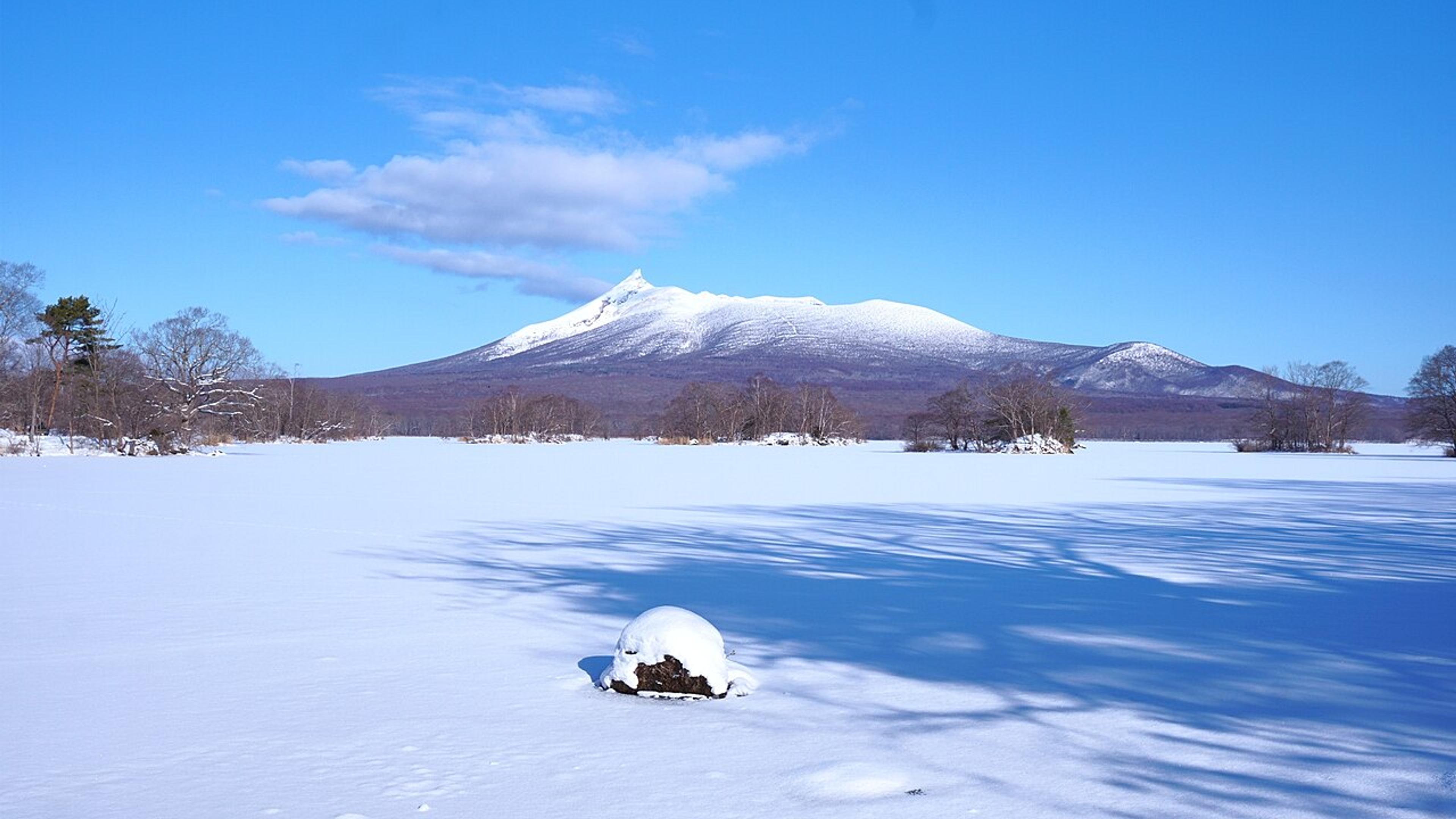
Sapporo gets the attention. The Snow Festival draws two million visitors every February, and the city's ramen alleys and beer gardens are well-documented in every Japan guidebook. But the real Hokkaido winter, the one that turns the island into something closer to Scandinavia than Tokyo, begins where the city ends. An hour northeast by train, the landscape transforms into a tableau of white fields, frozen rivers, and mountains buried under meters of dry powder snow.
Asahikawa sits at the center of Hokkaido's Kamikawa basin, where cold air pools in winter to produce some of the lowest temperatures in Japan. The city has recorded -41°C, the national record. This extreme cold creates conditions unlike anywhere else in the country: ice that forms in feathered crystals, snow so dry it squeaks underfoot, and a quality of light, low, golden, filtered through ice particles in the air, that photographers cross continents to capture.
Asahikawa Ice Star Festival
While Sapporo's Snow Festival relies on massive carved blocks, Asahikawa's Winter Festival (Asahikawa Fuyu Matsuri) works with ice. The extreme cold allows sculptors to build structures of astonishing delicacy, thin-walled ice towers, translucent arches, and illuminated sculptures that glow from within when lit at night. The festival runs for a week in early February, centered on the Asahibashi River site.
The Asahikawa Ice Star Festival runs concurrently on Heiwa-dori, the city's main shopping street. Local restaurants set up ice bars, serving hot sake and Hokkaido wine in ice glasses. The street transforms into a luminous corridor, every surface crystalline and glowing.
Festival dates shift slightly each year but typically span the first week of February. The ice sculptures are at their sharpest during the first two days, before sun and wind begin softening the edges. Evening illumination starts around 5 PM.
Biei Blue Pond and the Patchwork Road
Thirty minutes south of Asahikawa, the town of Biei is famous for two things: rolling farmland that resembles a patchwork quilt in summer, and a small artificial pond that turns an impossible shade of cobalt blue. The Blue Pond (Aoi Ike) was created accidentally when a dam was built to protect the town from volcanic mudflows off Mount Tokachi. Dissolved aluminum particles from the volcanic soil scatter light in a way that produces the intense blue color.
In winter, the pond freezes. Since 2014, the town has installed LED lights that illuminate the frozen surface and surrounding silver birch trees after dark. The effect is otherworldly, blue ice glowing against dark forest, the birch trunks casting long shadows across the snow. Apple used an image of the Blue Pond as a default wallpaper for macOS, and the resulting tourism boom transformed Biei from a sleepy farming town into a year-round destination.
Visit the Blue Pond illumination between 5-7 PM for the best balance of natural twilight and artificial light. By 7 PM, the sky is fully dark and the effect becomes more theatrical but less subtle. Arrive early to secure parking, the lot fills quickly on weekends.
Furano Powder
Furano sits in the same Kamikawa basin that gives Asahikawa its extreme cold, and the ski resort benefits directly. The snow is among the driest in Japan, moisture content often below 5%, compared to 8-12% at most Honshu resorts. The result is a powder quality that rivals Niseko but with a fraction of the international crowd. Furano's terrain is steeper and more technical than Niseko's mellow tree runs, with long fall-line descents through widely spaced birch forests.
The town of Furano itself retains a rural Hokkaido character that Niseko lost years ago to development. Local izakaya serve farm-to-table Hokkaido cuisine, venison, potato croquettes, Hokkaido cheese, at prices that would seem impossible in Niseko. The onsen at the base of the ski hill is a no-frills municipal bath with volcanic water and a view of the mountains.
A Furano day pass costs about ¥5,500, roughly half the price of Niseko United. Accommodation in town runs ¥6,000-8,000 for a clean guesthouse. A full day of skiing plus lodging plus meals comes to about ¥15,000, less than a Niseko lift ticket alone during peak season.
Sounkyo Gorge and the Ice Fall Festival
An hour east of Asahikawa, the Sounkyo Gorge cuts through the Daisetsuzan mountain range, Japan's largest national park. In summer, it is a hiking base camp. In winter, the waterfalls that line the gorge freeze into massive ice columns, and the Sounkyo Ice Fall Festival (Hyobaku Matsuri) builds an entire village of ice structures around them.
The festival runs from late January through mid-March and is illuminated nightly. Unlike Asahikawa's refined ice sculptures, Sounkyo's structures are raw and monumental, ice tunnels you walk through, frozen waterfalls you can touch, and an ice shrine where visitors offer prayers. The natural frozen waterfalls behind the festival, Ryusei Falls and Ginga Falls, are the real attraction, dropping 120 meters down the gorge wall in curtains of blue-white ice.
The ice shrine at Sounkyo is a functioning Shinto prayer site during the festival. Visitors purchase small wooden ema prayer plaques and hang them on ice hooks inside the shrine. The combination of sacred ritual and frozen architecture creates an atmosphere that is both reverent and surreal.
Planning the Route
The ideal circuit runs three to four days: Asahikawa (one night, ice festival) → Biei (day trip, Blue Pond) → Furano (one-two nights, skiing) → Sounkyo (one night, ice falls). JR Hokkaido trains connect all points, though some segments require buses. A rental car is more flexible but winter driving in Hokkaido requires studded tires and confidence on icy mountain roads.
The JR Hokkaido Rail Pass (5-day flexible) covers all trains in this circuit and pays for itself by day three. Reserve heated waiting rooms at smaller stations, some Hokkaido platforms are open-air and -20°C wind chill is no joke.
Featured in this guide
Places to Visit

Turn this guide into a trip
We'll prioritize these 12 places when building your itinerary.