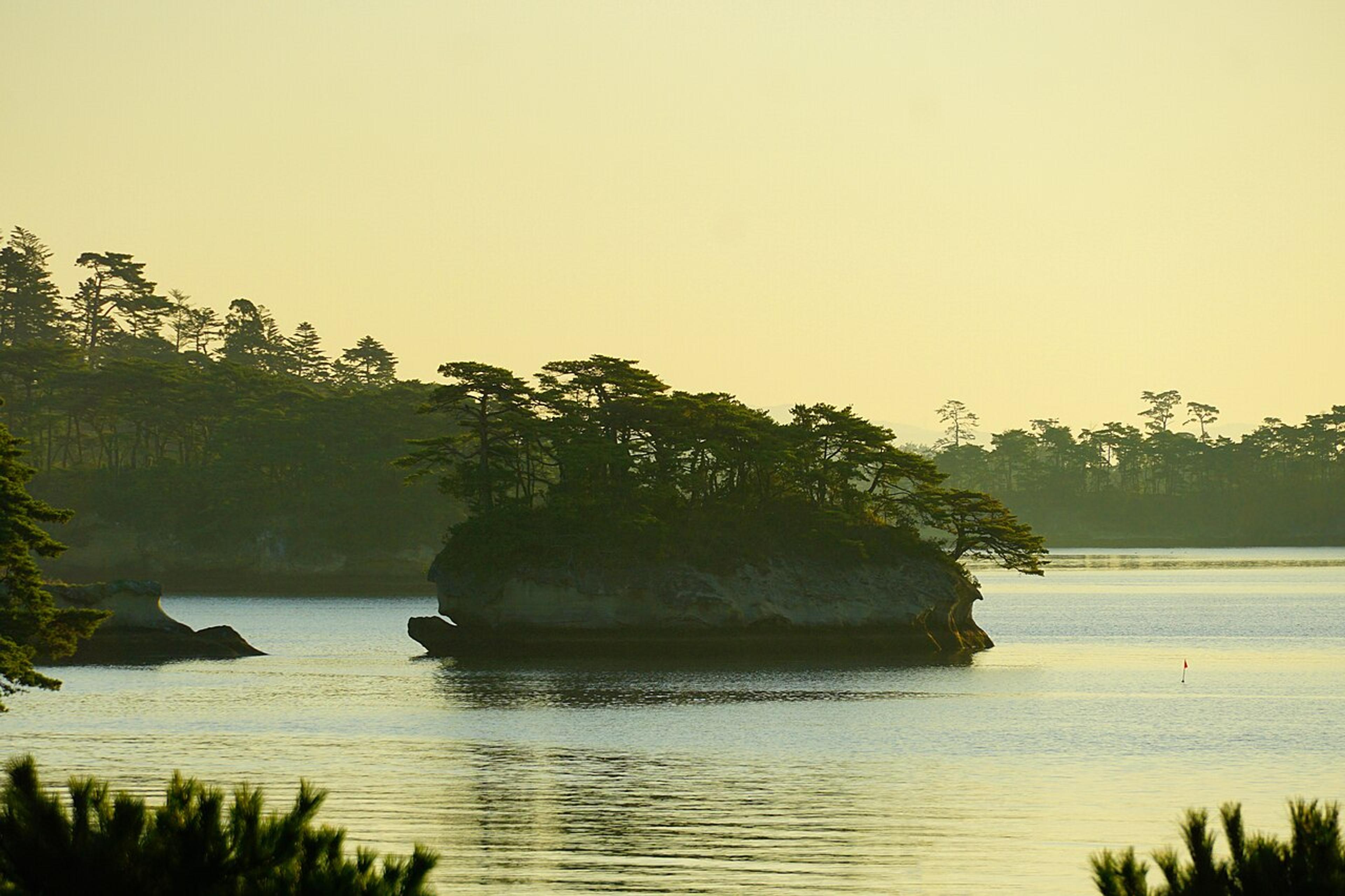
Sendai and Matsushima Bay
Itinerary · Sendai · 7 min
A day-and-a-half route from Sendai's gyutan alleys to the pine-studded bay that left Matsuo Basho speechless.
Koku Travel · April 8, 2026
7 places in this guide
Sendai is the largest city in the Tohoku region, founded by the one-eyed warlord Date Masamune in 1600. It is a city of wide, tree-lined avenues, excellent food, and easy access to one of Japan's most celebrated coastal landscapes.
Day 1: Sendai
Morning: Zuihoden
Date Masamune's mausoleum sits on a forested hillside, reached by a stone stairway through cedar trees. The original structures were destroyed in the 1945 air raids and reconstructed in 1979 using the same techniques: black lacquer, gold leaf, and polychrome carvings. The craftsmanship is Nikko-level. The crowds are not.
The adjacent museum displays artifacts recovered from Masamune's tomb, including his armor and sword. Allow 60 minutes.
Midday: Gyutan
Sendai's signature dish is grilled beef tongue (gyutan), sliced thick, charcoal-grilled, and served with barley rice, pickled cabbage, and ox-tail soup. The dish was invented here in 1948 by a yakitori shop owner who adapted the French preparation of langue de boeuf for Japanese tastes.
The gyutan restaurants around Sendai Station compete fiercely. The standard lunch set runs about 1,500 yen. The quality difference between shops is smaller than each one claims.
Afternoon: Jozenji-dori
Sendai's signature boulevard runs through the city center, lined with mature zelkova trees that form a complete canopy in summer. Walk the center promenade. Street musicians play on weekends. In December, the Pageant of Starlight illuminates the trees with hundreds of thousands of lights.
The Sendai Mediatheque, Toyo Ito's steel-and-glass library at the avenue's western end, is architecturally significant and open to visitors. The ground floor cafe is a good rest stop.
Evening
The covered shopping arcades near the station (Clis Road, Marble Road) run deep with izakaya. Sendai also produces excellent zunda mochi, rice cakes coated in sweet edamame paste. It sounds odd. It works.
Day 2: Matsushima Bay
Getting There
Take the JR Senseki Line rapid service from Sendai to Matsushima-Kaigan Station (25 to 30 minutes). The train hugs the coast for the final stretch.
The Bay
Matsushima Bay holds 260 small islands covered in twisted pine trees. The haiku poet Matsuo Basho arrived here in 1689 during his travels to the deep north and, according to his travel diary, was so moved that he could only write "Matsushima, ah! Matsushima, Matsushima."
Take the ferry circuit (50 minutes) through the islands. Seagulls follow the boat. The pine shapes are eccentric, sculpted by salt wind over centuries. The afternoon light is best.
Zuiganji Temple
One of Tohoku's great Zen temples, rebuilt by Date Masamune in 1609 with materials and artisans brought from Kyoto. The main hall and kitchen are designated National Treasures; the painted fusuma panels are Important Cultural Properties. The avenue of tall cedars leading to the entrance passes natural caves carved with Buddhist figures by medieval monks.
Return
The last Senseki Line train to Sendai departs around 22:00, but evening trains run roughly every 30 minutes. You will be back in Sendai in time for a final bowl of gyutan.
Getting to Sendai
Tokyo to Sendai: 90 minutes on the Tohoku Shinkansen. Sendai is also a gateway to wider Tohoku travel (Yamagata, Morioka, Aomori).

Turn this guide into a trip
We'll prioritize these 7 places when building your itinerary.