Miyazaki's Nichinan Coast packs surreal geology, a cliff shrine, Moai replicas, the island shrine of Aoshima, and Obi's preserved samurai quarter into one drive.
Yuku Japan · February 16, 2026
4 places in this guide
Kyushu's Forgotten Riviera
The Nichinan Coast runs 100 kilometers south from Miyazaki City along the Pacific shore of Kyushu's eastern edge. It is one of the finest coastal drives in Japan and one of the least known internationally. The climate is subtropical, palm trees line the roads, hibiscus blooms in roadside gardens, and the ocean temperature allows surfing year-round. The coastline alternates between white sand beaches backed by black pine forest and sections of exposed volcanic rock sculpted by wave action into formations that look designed by a surrealist.
This itinerary covers the coast as a full-day drive from Miyazaki City to Nichinan and back, with stops at five essential sites. A rental car is necessary, public transport exists but is infrequent and would require two days to cover the same ground. The drive itself, on Route 220 hugging the coast with ocean views at every curve, is half the experience.
Aoshima Island and the Subtropical Shrine
Aoshima is a tiny island, 1.5 kilometers in circumference, connected to the mainland by a pedestrian bridge. The entire island is a botanical oddity: a lush, subtropical forest of betel palms, banyan trees, and over 200 species of tropical and temperate plants growing on a wave-cut platform surrounded by the distinctive 'Devil's Washboard' rock formations. Aoshima Shrine occupies the island's center, its vermilion torii gate standing against a wall of tropical green.
The Devil's Washboard (Oni no Sentaku-ita) is the geological star of the Nichinan Coast. Concentric ridges of sandstone and mudstone, tilted by tectonic forces and eroded by wave action, extend from Aoshima's shore in parallel lines that look almost impossibly regular, like a giant corrugated washboard laid flat across the tidal zone. At low tide, the ridges are fully exposed and you can walk among them, the rock surfaces striated with patterns formed over millions of years of differential erosion.
Visit Aoshima at low tide to see the full extent of the Devil's Washboard formations. The Miyazaki tide tables are available at any tourist office or online. Morning low tides are ideal, the light is better for photography and the tourist crowds arrive after 10 AM. The shrine opens at 6 AM and the early-morning atmosphere, with mist rising off the subtropical forest, is particularly atmospheric.
Sun Messe Nichinan and the Moai
Sun Messe Nichinan is, on paper, absurd: seven full-size replica Moai statues lined up on a grassy hillside overlooking the Pacific Ocean. They are the only Moai replicas in the world officially authorized by Chile's Easter Island community, granted in gratitude after Japanese engineers helped restore fallen Moai on Rapa Nui in the 1990s. Each statue stands 5.5 meters tall and weighs approximately 18 tons.
In practice, the site works better than it should. The Moai face the ocean on a ridge above coastal cliffs, and the combination of subtropical vegetation, deep blue Pacific water, and the solemn stone figures creates a genuinely striking tableau. The park grounds (¥800 admission) include gardens, a small butterfly house, and several viewpoints along the cliff edge. On clear days, the horizon line is knife-sharp and the sense of standing at the edge of a continent is palpable.
Sun Messe admission is ¥800 for adults. The on-site restaurant serves decent curry rice and Miyazaki chicken nanban (the local specialty, fried chicken with vinegar-tartar sauce) for ¥900-1,200. Budget 60-90 minutes for the full site including the cliff walk. Parking is free and plentiful.
Udo Jingu: The Cliff Shrine
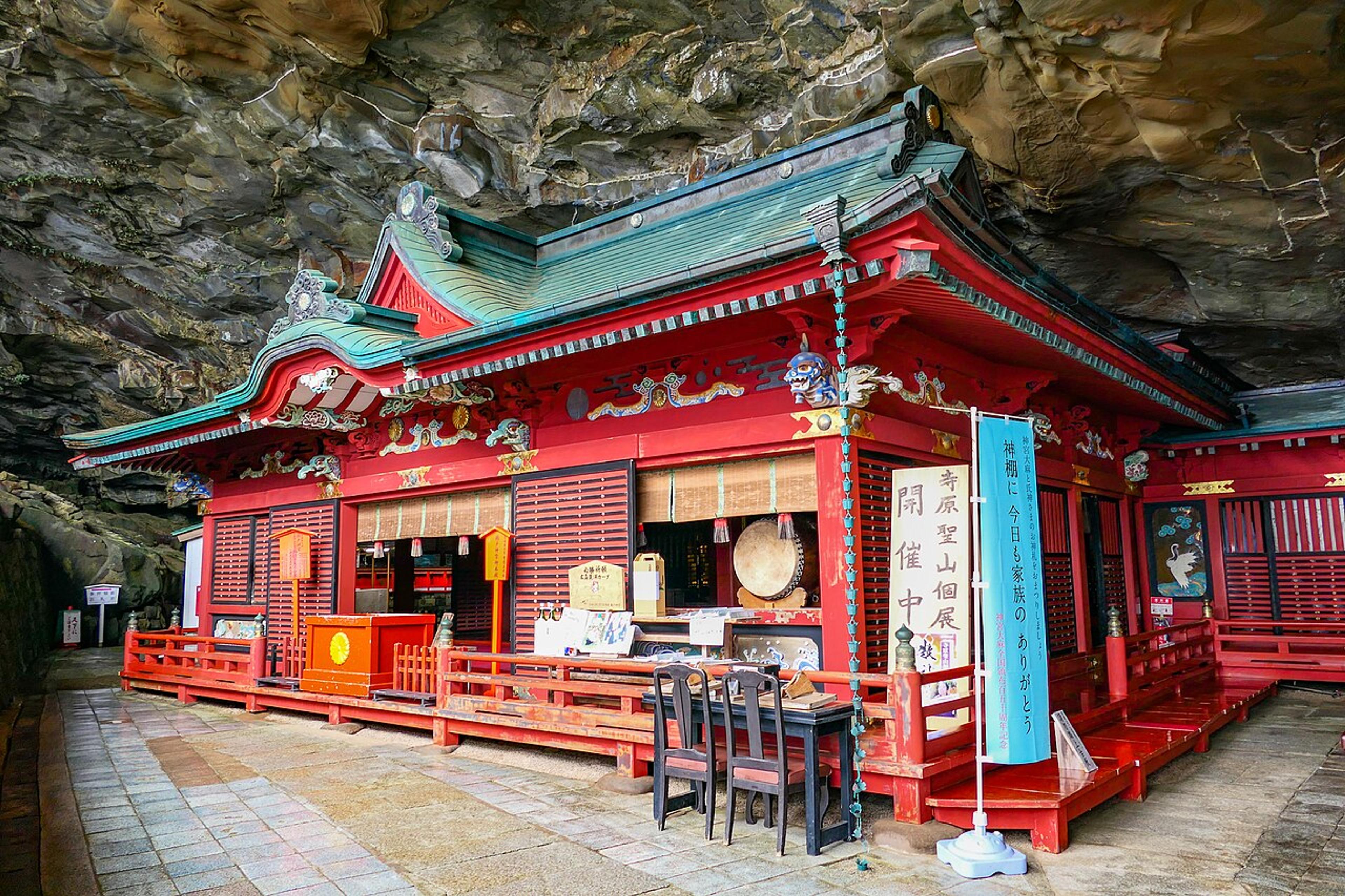
Udo Jingu is the Nichinan Coast's most sacred site and one of the most dramatically positioned shrines in Japan. The main hall is built inside a natural sea cave at the base of a cliff, facing the Pacific. The approach descends a steep stone staircase carved into the cliff face, passing through a series of torii gates and along a narrow path cut into the rock above the crashing surf. The cave itself is surprisingly spacious, the vermilion shrine buildings fit within it comfortably, and the rear of the cave opens to a view of the ocean through the cave mouth.
The shrine is dedicated to Ugayafukiaezu-no-Mikoto, the father of Japan's legendary first emperor, Jimmu. According to mythology, the deity was born in this cave. The shrine is particularly popular for prayers related to fertility, safe childbirth, and marriage. Visitors purchase undama (luck balls), small clay pellets, and attempt to throw them into a rope-circled depression in a turtle-shaped rock formation on the cliff below. Landing the throw is said to grant wishes.
Udo Jingu reverses the typical shrine orientation. Most Shinto shrines face south or east; Udo faces west, directly into the Pacific sunset. The cave setting means the shrine receives direct sunlight only at specific times of day, creating dramatic lighting effects. The sacred cave at the rear of the shrine, where 'mother's milk' calcium deposits drip from the ceiling into stone vessels, is the spiritual heart of the site.
Obi: The Little Kyoto of Kyushu
Obi, 20 minutes inland from the coast, is a former castle town that preserves its Edo-period samurai quarter with a completeness that rivals Kakunodate or Hagi. The Obi clan ruled from a hilltop castle (now partially restored) surrounded by stone walls and a water-filled moat, and the samurai residences below are connected by lanes lined with white-plastered walls, stone gutters, and carefully maintained gardens. The Yoshokan, the clan's chief retainer residence, is open to the public and displays armor, scrolls, and domestic artifacts of samurai daily life.
The town's modest scale is part of its appeal. Obi can be walked in two hours, with the castle ruins, three or four samurai residences, and the old merchant quarter all within easy walking distance. The local specialty is obi-ten, fish cake made from local sardines, pressed flat, and deep-fried. Street vendors sell them fresh from the oil (¥150-200), crispy outside and fluffy within. Combined with the coastal drive, Obi provides the cultural counterweight to the Nichinan Coast's natural spectacles.
Purchase the Obi Castle Town combination ticket (¥800) at any of the participating sites, it covers the castle ruins, Yoshokan residence, Matsuo no Maru hall, and the Obi Historical Museum. Individual admissions total over ¥1,400, so the pass pays for itself at the second stop. The castle hill viewpoint offers the best overview of the town's intact Edo-period street grid.
Featured in this guide
Places to Visit
Turn this guide into a trip
We'll prioritize these 4 places when building your itinerary.