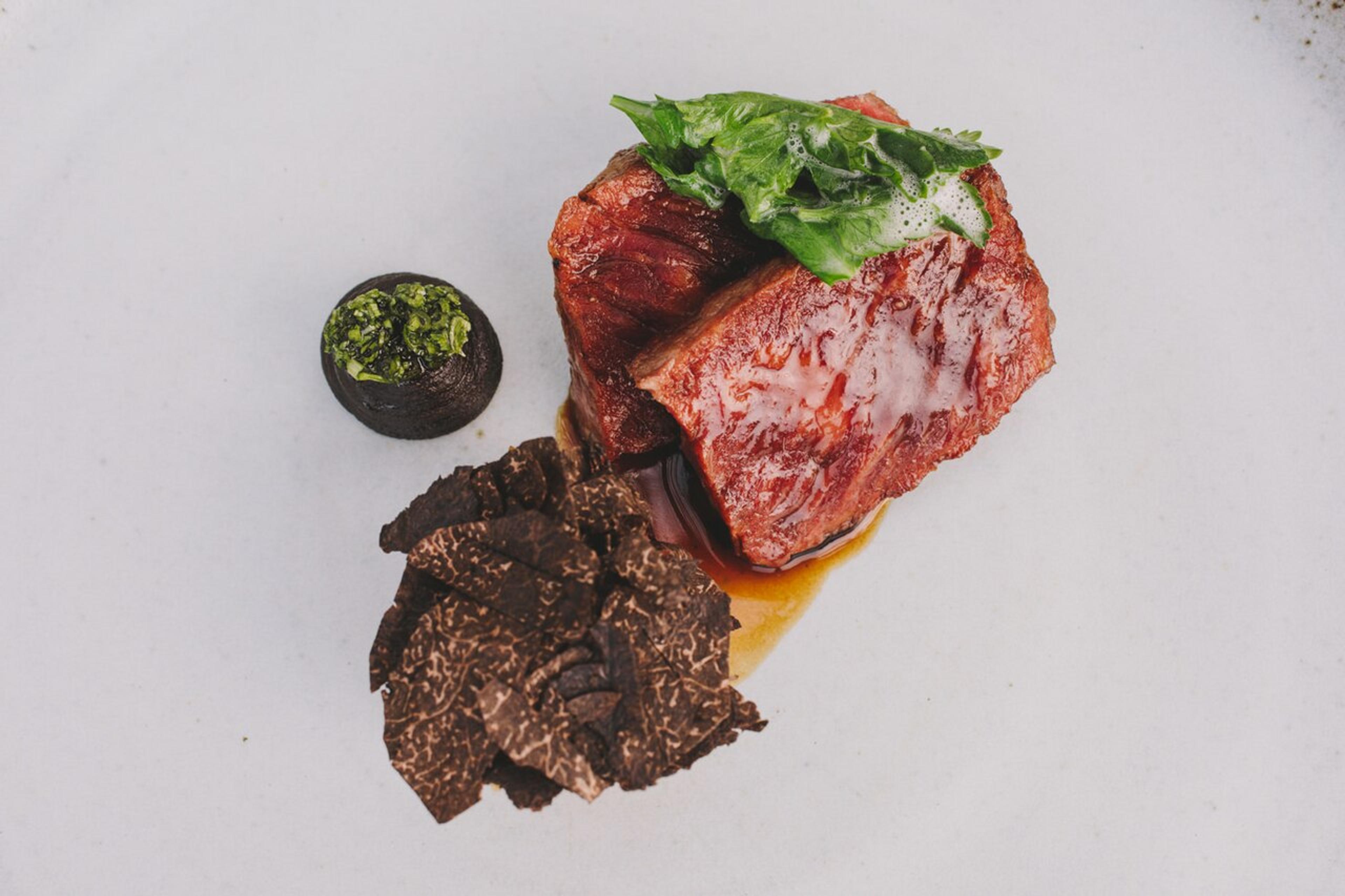
Japanese beef is branded by where the cattle are raised. A route through regional wagyu and how the styles differ, from Yokohama's gyunabe to Aso's akaushi bowl.
Koku Editorial · May 25, 2026
6 places in this guide
Japanese beef is regional, branded by the place the cattle are raised: Kobe, Matsusaka, Hida, Omi, and a dozen more, each with its own register and its own way of serving. Here is a route through regional wagyu and how the styles differ, from refined counters to roadside bowls.
How regional wagyu works
Wagyu means Japanese cattle, and the famous brands are region-specific: Kobe and Matsusaka from Hyogo and Mie, Hida from Gifu, Omi from Shiga, plus prefectural breeds across the country. Serving styles vary: teppanyaki (grilled on an iron plate before you), yakiniku (you grill your own over coals), sukiyaki and shabu-shabu (hot pot), and the cheaper, fast donburi (a bowl over rice). A little goes far; the fat is rich.
Yokohama: the birthplace of gyunabe
Yokohama, where Japan reopened to the West, is where beef hot pot entered the modern Japanese diet. Janomeya has served gyunabe, the Tokyo-style beef-and-vegetable pot that became sukiyaki, since 1893, in a city built on foreign trade. It is a historic place to eat the dish where it took hold.
Kobe and the Kansai beef tradition
Kobe beef is the most famous brand, and the Kansai region runs deep in beef culture, from teppanyaki counters to sukiyaki houses. The style here leans refined: small portions, careful grilling, the marbling left to speak. It pairs with a Kobe or Kansai trip, where the brand is at its source.
Aso, Kumamoto: the akaushi bowl
Kumamoto's Aso highlands raise akaushi, a leaner red Wagyu, and serve it differently from the marbled brands. Imakin Shokudo in Aso is famous for its akaushi don, a bowl of seared red beef over rice, the affordable, everyday face of regional Wagyu. It suits an Aso caldera day.
Takamatsu: Olive Wagyu
Kagawa raises a rare brand, Olive Wagyu, cattle finished on the spent olives from the prefecture's groves. Grill Plancha in Takamatsu specializes in it on the teppan, a chance to taste one of the scarcer regional beefs. It is a Shikoku specialty worth seeking.
Nagano and Iwate: the mountain breeds
The uplands raise their own. In Nagano, Shinshu Wagyu comes from cattle raised in the mountain climate, served as yakiniku at shops like Shinshu Sodachi. In Morioka, Ginga Rikyu showcases Iwate's beef among the prefecture's ingredients. Both fold into northern and central routes.
How to eat wagyu well
A few notes. Order less than you think; the fat is rich and a small portion satisfies. The cheaper donburi bowls (Aso especially) are the everyday way in, against the pricier counters. At yakiniku you grill your own, so cook the fattier cuts briefly. And the brand follows the region, so eat the local beef where you are rather than chasing Kobe everywhere.
Turn this guide into a trip
We'll prioritize these 6 places when building your itinerary.