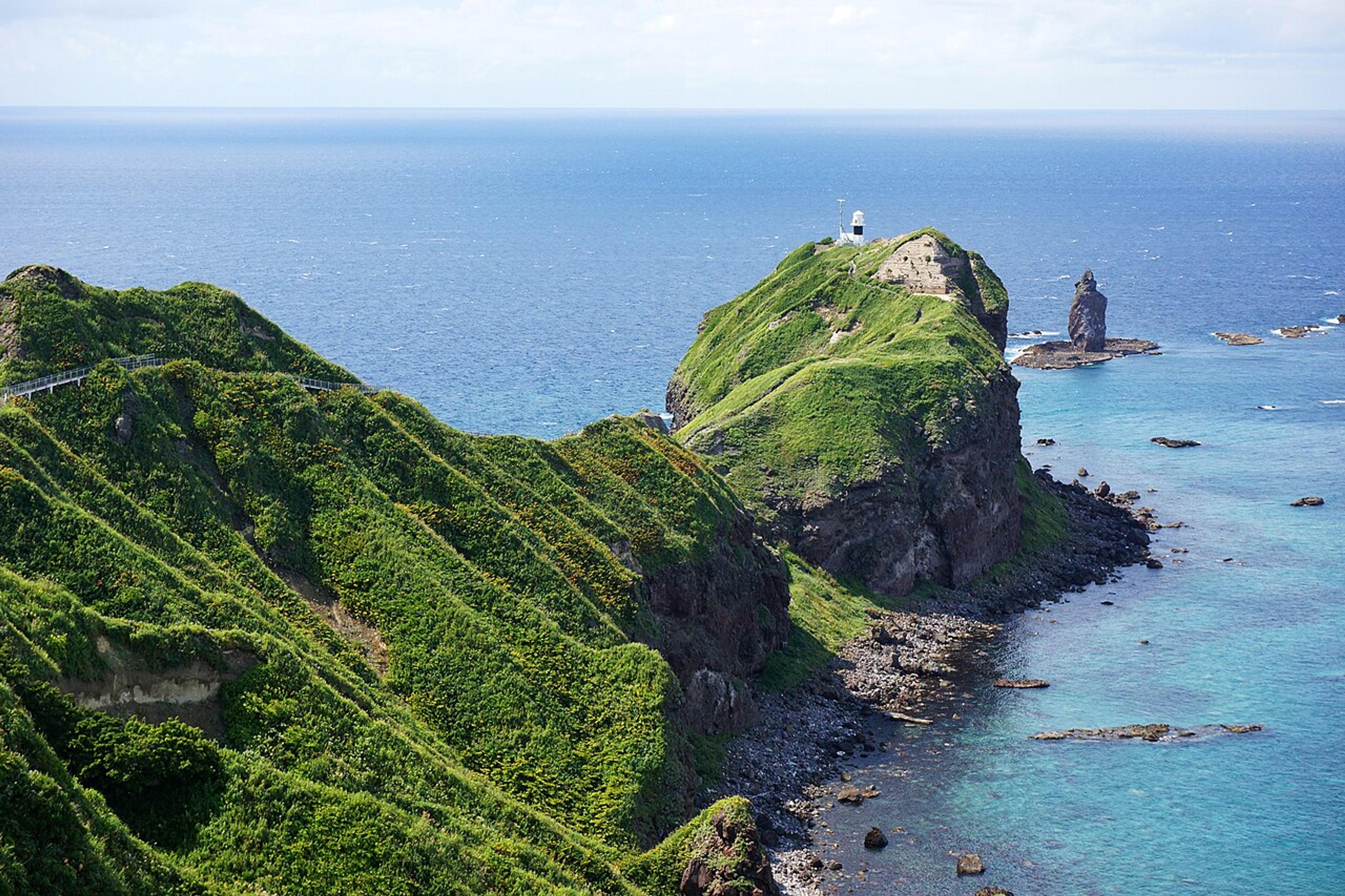
The Shakotan Blue Coast
Itinerary · shakotan · 8 min
Shakotan Peninsula hides Hokkaido's most dramatic coastline: Cape Kamui's cliffs, Shimamui Coast's turquoise coves, fresh uni, and wild coastal camping.
Yuku Japan · February 16, 2026
10 places in this guide
Hokkaido's Secret Coastline
Two hours west of Sapporo, the Shakotan Peninsula juts into the Sea of Japan like a clenched fist. The coastline is a series of sheer cliffs, sea caves, and hidden coves where the water turns an improbable shade of cobalt blue, a color so vivid locals call it 'Shakotan Blue.' Despite being within easy reach of Sapporo's two million residents, the peninsula remains sparsely visited. There are no large hotels, no tour buses, no convenience stores once you pass the last fishing village. The infrastructure is a two-lane road, a handful of minshuku, and the sea.
The peninsula's geology creates the color. The seafloor is white limestone and sand, and the volcanic cliffs filter sediment from runoff, producing water clarity that rivals tropical seas, but at water temperatures that remind you this is 43 degrees north latitude. The combination of clear subarctic water, dramatic cliffs, and near-total absence of development makes Shakotan one of the most striking stretches of coastline in Japan.
Cape Kamui
Cape Kamui occupies the westernmost tip of the peninsula, a narrow spine of cliff that extends 300 meters into the sea, ending at a lighthouse and a sheer drop to churning water below. The walking path to the lighthouse runs along the cliff edge with no guardrails for the final section, and the wind off the Sea of Japan is strong enough to stagger you. On clear days, you can see Rishiri Island to the far north and the Shakotan Mountains rising behind you. The cape is a registered Hokkaido Natural Monument, and peregrine falcons nest on the cliff faces.
The name Kamui comes from the Ainu word for a spirit or deity, this was a sacred site in Ainu cosmology, a place where the boundary between the human and spirit worlds thinned. According to one Ainu legend, a woman waiting for a fisherman who never returned threw herself from the cliff and cursed the cape, forbidding women from approaching. The 'women forbidden' sign remained until 1855. Today the path is open to everyone, but the wind-blasted, sea-sprayed atmosphere retains something of the legend's intensity.
The final 100 meters of the Cape Kamui trail is exposed to open sea winds with no barriers. The path is narrow and can be slippery when wet. Do not attempt in strong wind or rain. In summer, the trail is straightforward; in shoulder season (April, October), check conditions with the Shakotan tourism office before walking.
Shimamui Coast and the Blue Caves
The Shimamui Coast, on the peninsula's south side, is where Shakotan Blue reaches its most intense expression. A steep 800-meter trail descends from the parking area to a rocky beach hemmed by cliffs on three sides. The water in the cove is so clear that boats appear to float above their shadows, and the color shifts from pale turquoise in the shallows to deep sapphire where the seafloor drops away. The beach is wild, no facilities, no lifeguard, no shade, and entirely unspoiled.
Sea kayak tours from nearby Bikuni port offer access to the coast's sea caves, which are inaccessible on foot. The caves penetrate the cliffs for 20-30 meters, and inside, the water glows a luminous blue as sunlight refracts through the entrance. The kayak operators, typically local fishermen who run tours in summer, know the tide windows and cave conditions intimately. Tours run ¥6,000-8,000 for a 2-3 hour paddle, including cave entry and open-water sections along the cliff base.
Visit Shimamui Coast between 10 AM and 2 PM when the sun is directly overhead, this is when the water color is most vivid. The descent trail takes 15 minutes down and 25 minutes back up. Bring water, sun protection, and sturdy shoes. There is nothing at the beach except the beach itself.
Uni Season: Sea Urchin at the Source
Shakotan's cold, kelp-rich waters produce some of the finest sea urchin (uni) in Japan. The peninsula's uni season runs from June through August, when divers harvest bafun-uni (short-spined urchin) and murasaki-uni (purple urchin) from the rocky seabed. The bafun-uni, with its rich orange roe and concentrated sweetness, commands premium prices at Tokyo's Tsukiji, but at the source, a fresh uni-don (sea urchin rice bowl) costs ¥2,000-3,500 at the fishing port restaurants.
The village of Bikuni is the uni capital of the peninsula. The small restaurants along the port serve uni that was in the ocean hours earlier, the texture is firm and creamy simultaneously, the flavor briny and sweet without the iodine bitterness that plagues lesser uni. Mikaku Shokudo, a no-frills diner facing the harbor, serves an uni-don piled absurdly high for ¥2,800. The Shakotan Fisherman's Cooperative runs a seasonal uni festival in late June with tastings, demonstrations of the diving harvest, and direct sales at dockside.
Bafun-uni season peaks in July; murasaki-uni runs slightly longer through August. Outside these months, the uni restaurants close or switch to frozen stock. For the freshest possible experience, visit on a weekday in mid-July when the fishing boats return around 10 AM and the restaurants receive the day's catch within the hour.
Coastal Camping and Wild Swimming
The Shakotan Peninsula has several campgrounds perched on clifftops and coastal terraces, basic sites with toilets and water but no showers or electricity. The Cape Shakotan campground (¥500 per tent per night, first-come basis) sits on a grassy bluff above the sea with unobstructed sunset views across the Sea of Japan. The nearest bath is at the Shakotan Misaki Onsen, a small public facility (¥500) 3 kilometers back along the coast road, fed by a sulfur spring that emerges from the cliff.
Wild swimming off the peninsula's rock beaches is possible in July and August, when water temperatures reach 20-22°C, bracing by southern standards but tolerable with acclimatization. The clearest swimming spots are in the smaller coves between Shimamui and Cape Kamui, accessible by scrambling down short cliff trails. Bring reef shoes, the volcanic rock is sharp. There are no currents in the protected coves, but the open-water headlands have strong tidal flow and should be avoided.
A Shakotan camping trip from Sapporo is remarkably cheap. Rental car ¥6,000/day, campground ¥500/night, onsen ¥500, uni-don lunch ¥2,800, konbini supplies for dinner ¥800. A full two-day coastal trip with camping, seafood, and onsen comes to roughly ¥18,000 per person, less than a single night at a mid-range Sapporo hotel.
Featured in this guide
Places to Visit
Turn this guide into a trip
We'll prioritize these 11 places when building your itinerary.