Hidden Gems of Hokkaido: Wild Edges and Empty Roads
Blog · Hokkaido · 8 min
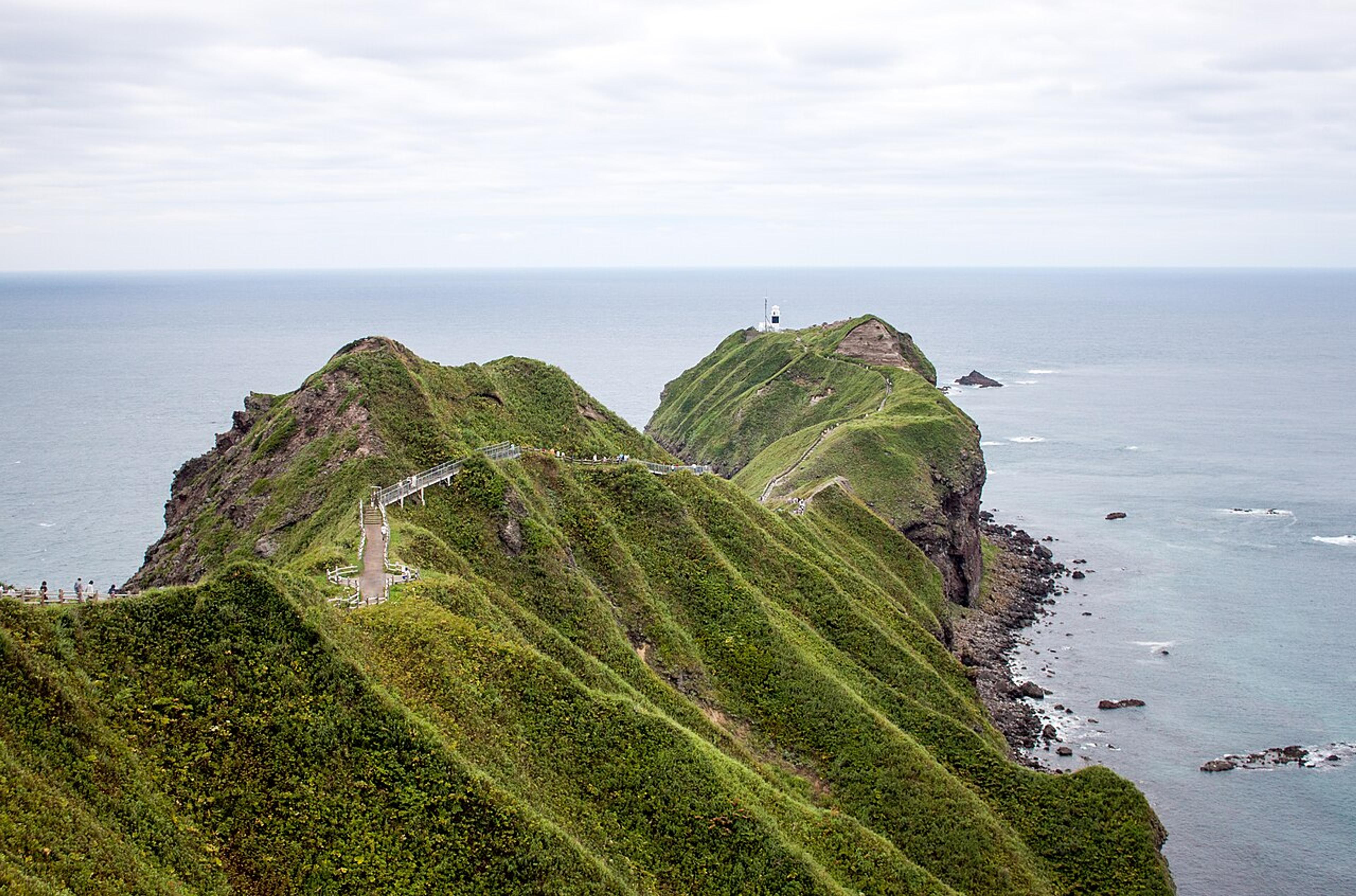
Photo: Tan Wei Liang Byorn, CC BY-SA 4.0.
Japan's northern frontier has 32 hidden gems: remote onsen, primeval forests, and coastlines that feel like the end of the world.
Koku Editorial · March 7, 2026
11 places in this guide
Japan's Frontier
Hokkaido is Japan's least densely populated main island, roughly the size of Austria with 5 million people, most of them in Sapporo. Outside the city, the landscape shifts to something un-Japanese: vast dairy farms, empty two-lane highways, volcanic mountain ranges, and a coastline that stretches for hundreds of kilometers without a conbini in sight. The hidden gems here aren't tucked behind temples. They're out in the open, just far from everything.
Seseki Onsen (Rausu)
On the eastern coast of the Shiretoko Peninsula, a UNESCO World Heritage site, Seseki Onsen is a natural hot spring that emerges directly from the rocky shoreline. At high tide, the Pacific Ocean submerges the pool entirely. At low tide, you sit in geothermally heated water while waves break meters away. There are no facilities. No changing rooms. No admission fee. Just rocks, hot water, and the ocean.
Getting here requires a car and some planning (check tide tables). The road along the Shiretoko coast is one of the most dramatic drives in Japan, sheer cliffs on one side, the Sea of Okhotsk on the other. Brown bears are common in the area. This is as wild as Japan gets.
The Shiretoko Peninsula has one of the densest brown bear populations in Japan. Don't hike alone. Carry a bell. Store food properly. This is genuine wilderness, not a nature park.
Kawayu Onsen (Teshikaga)
Near the volcanic Lake Mashu and the extraordinary blue Lake Kussharo, Kawayu Onsen is a hot spring town where the Kawayu River itself is hot. In winter, you can dig a pool in the riverbed, mix hot spring water with cold river water, and create your own bath. The town provides shovels.
The formal bathhouses are excellent too, with strongly acidic sulfur water that's among the most potent in Hokkaido. The surrounding area, Mashu, Kussharo, Akan, is volcanic lake country with some of the clearest water in the world.
Saru River Primeval Forest (Hidaka)
In the Hidaka Mountains of central-south Hokkaido, the Saru River flows through a primeval forest that has never been logged. Old-growth Yezo spruce and Sakhalin fir tower overhead, and the riverbanks are thick with ferns and moss. The area has deep significance for the Ainu people, the indigenous inhabitants of Hokkaido, and several Ainu cultural sites are nearby.
The forest is accessible by car from Hidaka or Obihiro. Trails are minimal, this is backcountry. The reward is encountering a landscape that looks as it did before human settlement. Deer, foxes, and eagles are common.
Lake Toyoni (Erimo)
Near Cape Erimo, the windswept southernmost point of Hokkaido, Lake Toyoni is a small coastal lake backed by grassy hills and frequented by migratory birds. The cape itself is famous for wind (average speed: 25km/h, with gusts that can knock you sideways), but the lake, sheltered in a valley behind the cape, is calm and otherworldly.
Erimo is remote. The nearest city (Obihiro) is two hours by car. But the drive along the coast is spectacular, and the sense of isolation at the cape, standing at the edge of Hokkaido, looking south toward nothing but open ocean, is worth the distance.
Hokkaido Museum of Modern Art (Sapporo)
In a city known for beer, snow festivals, and ramen, Sapporo's Museum of Modern Art is an overlooked jewel. The collection focuses on Hokkaido-connected artists, including the glass sculptor Takeichi Kataoka and the painter Migishi Setsuko. The building is set in a park of silver birch trees on the edge of Maruyama.
The museum is small enough to see in 90 minutes and thoughtfully curated. ¥510 entry. Combine with a walk through Maruyama Park and lunch at one of the excellent soup curry shops in the surrounding neighborhood.
Suage+ and Garaku, both within walking distance of the museum, are among Sapporo's best soup curry restaurants. This Hokkaido-original dish, spiced broth with chunky vegetables and tender chicken, is essential eating.
Traveling Hokkaido
A rental car is almost mandatory for Hokkaido's hidden gems. Train coverage outside the Sapporo-Hakodate-Asahikawa corridor is thin, and buses are infrequent. The upside: Hokkaido's roads are excellent, traffic is light, and the driving itself, through lavender fields, past volcanic lakes, along empty coastlines, is part of the experience.
Budget 3-5 days minimum beyond Sapporo. Hokkaido doesn't work as a day trip. The distances are real, the landscape changes dramatically as you drive, and the best moments happen when you stop somewhere unplanned.
Featured in this guide
Places to Visit


Turn this guide into a trip
We'll prioritize these 12 places when building your itinerary.