Kamikochi and the Northern Alps
Itinerary · matsumoto · 9 min
Kamikochi is Japan's premier alpine valley: walk to Kappa Bridge, hike toward the Hotaka peaks, and stay in the mountain huts of the Northern Alps.
Yuku Japan · February 16, 2026
6 places in this guide
The Valley at the Roof of Japan
Kamikochi is a high-altitude river valley at 1,500 meters in the heart of the Northern Japan Alps, surrounded by peaks that exceed 3,000 meters. The Azusa River runs through it, glacier-cold and impossibly clear, flanked by marshland, larch forest, and granite cliffs that form the eastern wall of the Hotaka mountain range. Private cars have been banned since 1975, so the only access is by bus or taxi from Matsumoto or Takayama, a restriction that preserves an atmosphere of quietness unusual for a place this famous.
The valley was opened to the West by Walter Weston, a British missionary and mountaineer who explored the Japanese Alps in the 1890s and whose enthusiastic writing introduced the concept of recreational mountaineering to Japan. A relief portrait of Weston is set into a riverside boulder near Kappa Bridge, and the annual Weston Festival in June marks the opening of the climbing season. Kamikochi operates seasonally, the road opens in mid-April and closes in mid-November, and outside these dates the valley is inaccessible and buried under meters of snow.
Kappa Bridge to Myojin Pond
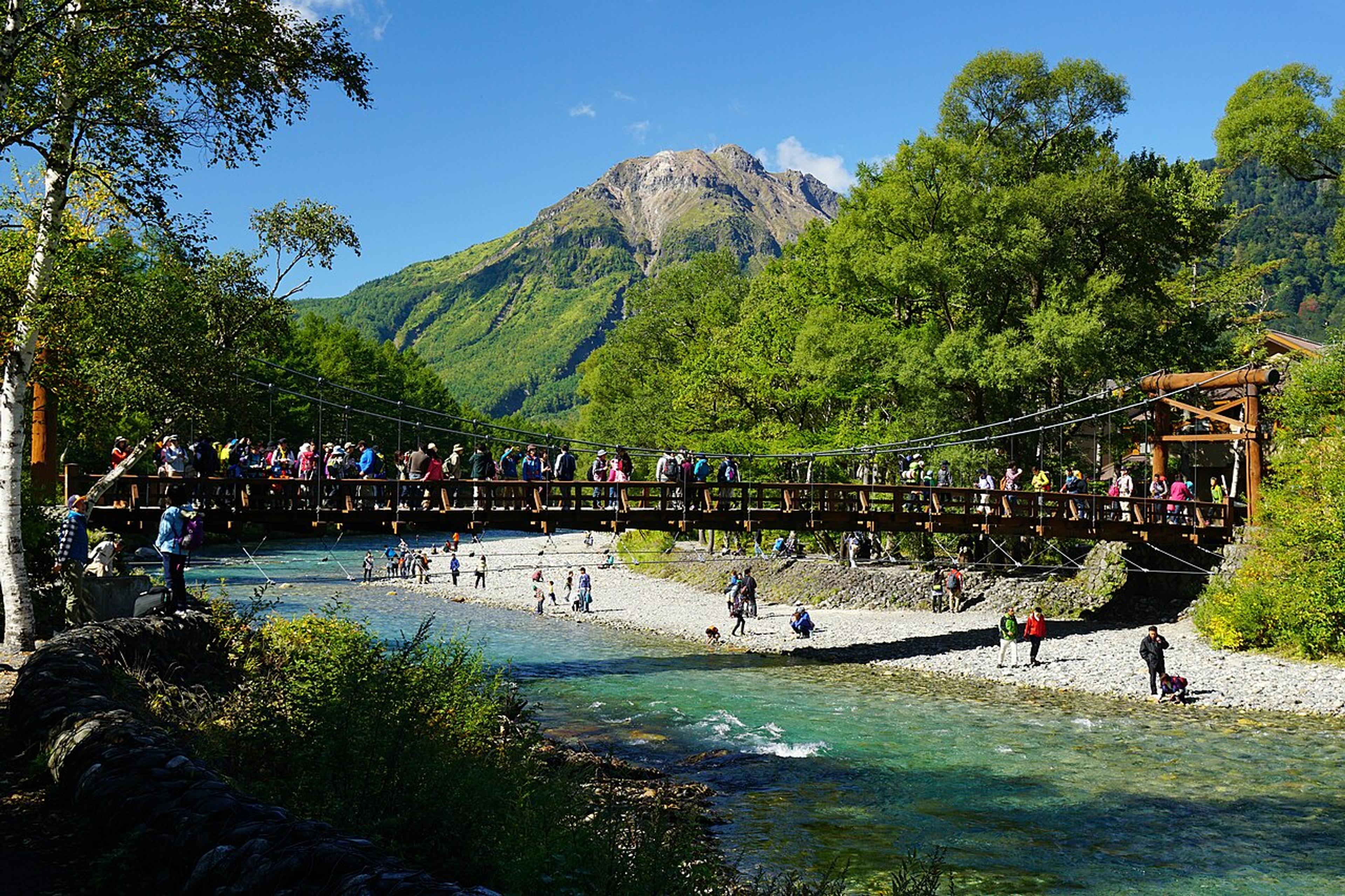
The classic Kamikochi walk begins at Kappa Bridge, the suspension bridge over the Azusa River that appears on every poster and guidebook cover. The bridge frames a view upstream to the Hotaka peaks, Oku-Hotaka (3,190m, Japan's third-highest mountain), Mae-Hotaka, and Nishi-Hotaka, that is among the most photographed mountain views in Japan. In early morning, before the day-trip buses arrive from Matsumoto (first bus reaches Kamikochi around 10 AM), the bridge is nearly empty and the reflection of the peaks in the river is flawless.
From Kappa Bridge, a flat, well-maintained trail follows the right bank of the Azusa River upstream to Myojin Pond, a 60-minute walk through larch and birch forest. Myojin Pond is a spring-fed pool of startling clarity at the base of the Myojin cliffs. The Hotaka Shrine on the pond's shore charges ¥500 for access to the inner pond area, and the fee is worth it, the inner pond, framed by the vermillion torii gate and the granite cliffs behind, has a stillness that the outer area, with its souvenir shop and bus tour groups, cannot match.
Stay overnight at one of Kamikochi's lodges to experience the valley before and after the day-trip crowds. The buses run from roughly 5 AM to 5 PM, outside those hours, Kamikochi belongs to its overnight guests. Konashidaira Camping Ground (¥1,000/site) and Kamikochi Imperial Hotel (from ¥35,000) represent opposite ends of the overnight spectrum, but both deliver the same empty-valley dawn.
Taisho Pond and the Downstream Walk
Walking downstream from Kappa Bridge toward the bus terminal, a 20-minute trail leads to Taisho Pond, a shallow lake created in 1915 when a volcanic eruption from Mount Yake-dake dammed the Azusa River. The dead trees that stand in the pond, bleached silver by decades of sun and water, create an eerie foreground for the Hotaka panorama behind them. In autumn, when the surrounding larch trees turn gold and the peaks carry the first snow, this view achieves a perfection that verges on unreality.
The Taisho Pond boardwalk continues through wetland to the Tashiro Bridge area, adding another 30 minutes to the walk. This section is less crowded than the upstream trail and passes through marshland where Japanese macaques are frequently spotted. The monkeys here are wild and unhabituated, maintain distance and never offer food. The trail from Taisho Pond to Tashiro Bridge is fully accessible and flat, making it suitable for visitors who cannot manage the rougher upstream trails.
Kamikochi is bear country. Japanese black bears inhabit the valley and surrounding forests, and encounters occur several times each season. Carry a bear bell (available at shops near Kappa Bridge for ¥500-1,000), stay on marked trails, and make noise when rounding blind corners. If you see a bear, back away slowly without running. The Kamikochi Visitor Center posts bear sighting locations daily.
Into the High Mountains
Kamikochi is the primary trailhead for the Northern Alps' most celebrated climbs. The Hotaka traverse, ascending from Kamikochi to the Karasawa cirque (2,300m), then climbing Oku-Hotaka (3,190m) via exposed ridgelines with chain-assisted sections, is Japan's most celebrated alpine route. The Karasawa hut sits in a granite amphitheater that turns crimson with autumn nanakamado foliage in early October, an image that defines Japanese mountain photography.
For those not equipped for technical climbing, the hike to Yari-ga-take (3,180m, the 'Matterhorn of Japan') via the Yokoo Valley is challenging but non-technical, a two-day round trip with an overnight at Yarisawa Lodge or the summit hut. The final approach involves a scramble up a rocky pyramid, with fixed ladders for the steepest sections, and the summit offers a 360-degree panorama of the Northern, Central, and Southern Alps. Mountain hut accommodation costs ¥10,000-13,000 per person including dinner and breakfast, the meals are hearty (curry rice, grilled fish, miso soup) and the communal sleeping arrangements are efficient if not luxurious.
Mountain huts (yamagoya) require no tent, sleeping bag, or cooking equipment, everything is provided. This makes Alpine-style multi-day hiking accessible without the gear investment required in Western mountain ranges. Reservations are essential for peak season (late July-August, early October). Book through the Yama-to-Kogen resort website or call directly, most huts do not use online booking systems.
Matsumoto as Base Camp
Matsumoto, the gateway city to Kamikochi, deserves more than a transit stop. Matsumoto Castle, built in 1594, is one of Japan's five designated National Treasure castles and the oldest surviving six-story keep. Its black walls, distinctive against the white-capped Alps behind it, give it the nickname Karasu-jo (Crow Castle). The castle interior, with its steep wooden staircases and arrow slits, is open to visitors (¥700) and the top floor frames the mountain panorama through narrow windows.
The Nakamachi district, a preserved merchant quarter of black-and-white kura storehouses, has been converted into cafes, craft shops, and galleries. Matsumoto has an unexpectedly strong craft beer scene, Matsumoto Brewery's taproom near the station serves ales brewed with Northern Alps water. The city also serves as the base for day trips to the Azumino wasabi farms, where spring-water fields produce 90% of Japan's wasabi crop. The Daio Wasabi Farm (free entry) has extensive grounds and a riverside where transparent water reveals every pebble on the streambed.
The Alpico bus from Matsumoto Bus Terminal to Kamikochi takes 90 minutes (¥2,600 round trip). First departure is around 5:10 AM from the Shinshimashima transfer point, take this bus for an empty valley and the best morning light. Return buses run until about 5 PM. The Matsumoto area 2-day bus pass (¥4,550) covers unlimited rides on the Kamikochi route.
Turn this guide into a trip
We'll prioritize these 6 places when building your itinerary.