The Izu Peninsula Hot Spring Circuit
Itinerary · shimoda · 8 min
The Izu Peninsula packs hot springs, coastal hikes, literary history, and Japan's earliest sakura into a compact circuit south of Tokyo.
Koku Travel · February 16, 2026
9 places in this guide
Tokyo's Hot Spring Backyard
The Izu Peninsula drops south from Shizuoka into the Pacific, a volcanic landmass where hot spring water flows so abundantly that entire towns smell faintly of sulfur. For Tokyo residents, Izu is the closest escape that feels genuinely different, the climate is warmer, the pace is slower, and the coastal landscape alternates between black volcanic rock and turquoise coves that could pass for Mediterranean. The peninsula has been a resort destination since the Edo period, fell into slow decline during the late Showa era, and is now experiencing a revival as a new generation of visitors discovers its combination of onsen, coastal scenery, and culinary quality.
A three-day circuit, Atami to Shuzenji to Jogasaki to Shimoda, with a detour through Kawazu if timing allows, covers the peninsula's full range. The distances are short (the entire peninsula is about 60 kilometers north to south), the trains and buses are reliable, and the concentration of onsen means you can soak every evening in a different mineral composition.
Atami: The Comeback City
Atami was once Japan's premier honeymoon destination, a resort city of grand hotels, ocean views, and abundant hot springs that peaked in the 1960s before decades of decline emptied its streets and shuttered its hotels. In the past five years, Atami has staged one of Japan's most surprising urban revivals. Young entrepreneurs have opened cafes, craft shops, and boutique ryokan in the old hotel district. The waterfront promenade has been redesigned. The morning market at the fishing port draws weekend visitors from Tokyo, 45 minutes away by Shinkansen.
The MOA Museum of Art, set on a hilltop above the city, houses a world-class collection of Japanese and East Asian art in a building that is itself an architectural experience, long escalators descend through a tunnel of shifting colored light before opening onto a gallery with a panoramic ocean view. The permanent collection includes three National Treasures, and the seasonal exhibitions draw from a collection of over 3,500 works. Admission is ¥1,600. Below the museum, the Atami Plum Garden (Atami Baien) hosts one of Japan's earliest plum blossom festivals, typically peaking in late January to mid-February.
Atami Station is 45 minutes from Tokyo on the Kodama Shinkansen (¥3,740) or 80 minutes on the JR Tokaido line (¥1,980). The Shinkansen makes Atami viable as a day trip, but staying overnight unlocks the onsen town's evening character. The Kinomiya Shrine, a 10-minute walk from the station, houses a 2,000-year-old camphor tree with a trunk circumference of 24 meters, one of the largest trees in Japan.
Shuzenji: The Literary Onsen
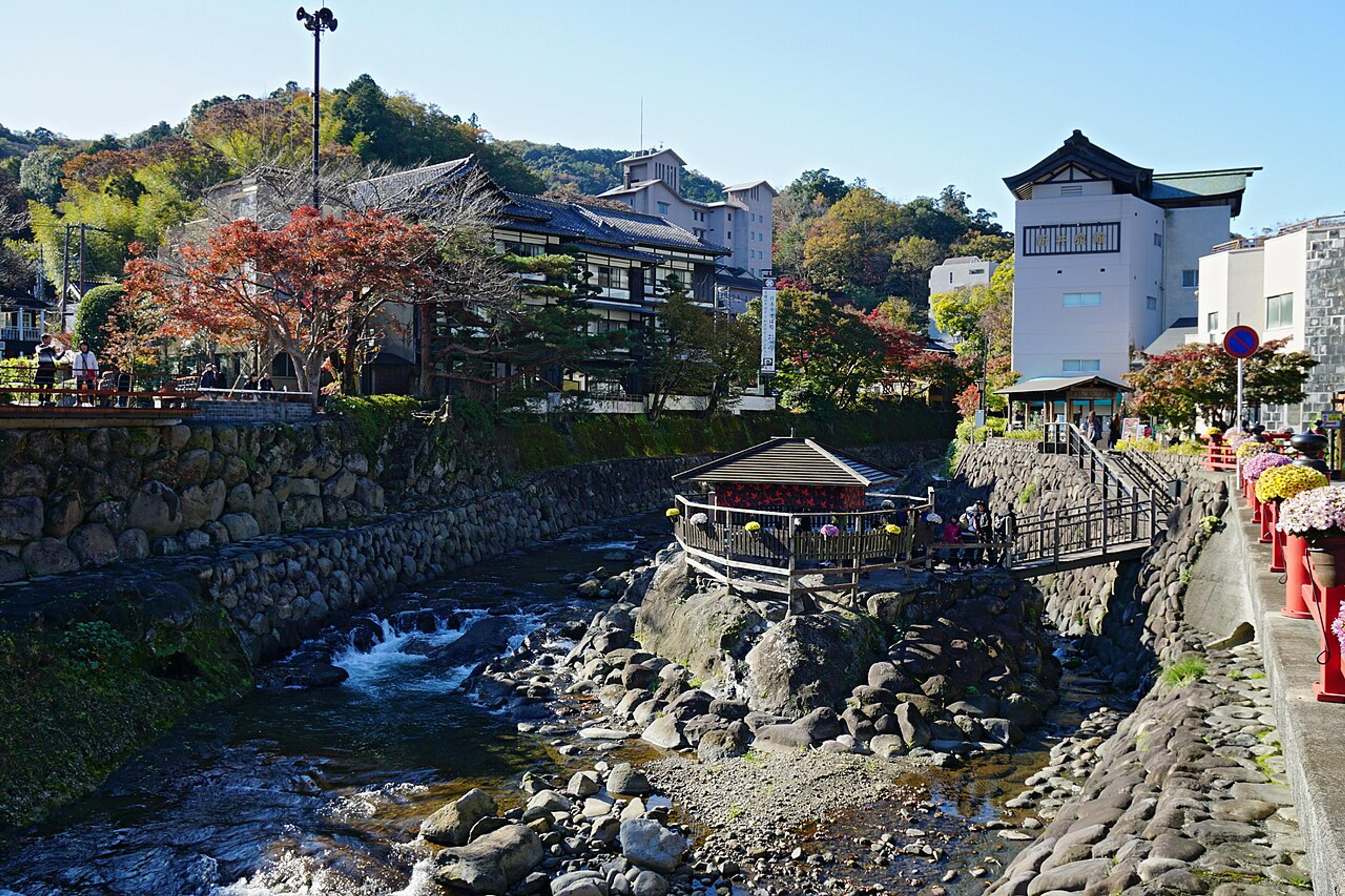
Shuzenji is the peninsula's interior hot spring town, set in a narrow valley where the Katsura River is lined with ryokan, red-lacquered bridges, and bamboo groves. The town has literary credentials that run deep: Natsume Soseki convalesced here in 1910 and nearly died of a stomach hemorrhage (the episode became central to his later writing), Yasunari Kawabata set stories here, and the general atmosphere of refined melancholy has attracted Japanese writers for centuries.
The Shuzenji hot spring, at the town's center, is the oldest on the Izu Peninsula, according to legend, discovered by the monk Kukai (Kobo Daishi) in 807 AD when he struck a rock with his staff and hot water emerged. The original riverside spring, Tokko no Yu, is now a viewing-only monument, but the town's ryokan draw from the same thermal source. The public bathhouses Hakoyu (¥350) and Kumasaka-no-Yu are affordable alternatives to the ryokan baths and use the same alkaline sulfate water that softens skin and loosens joints.
The Bamboo Grove Path (Take no Komichi) connecting Shuzenji Temple to the central bridge district passes through a grove of perfectly maintained bamboo, tall, straight culms creating a green canopy overhead. It is smaller than Kyoto's Arashiyama grove but utterly empty by comparison. Walk it at dusk when the light filters through the bamboo in horizontal bars and the ryokan lanterns begin to glow along the river.
Jogasaki Coast and Ito
The Jogasaki Coast, south of Ito city, is a nine-kilometer stretch of volcanic shoreline where black lava rock meets deep blue Pacific water. A well-maintained hiking trail follows the cliff edge, crossing suspension bridges over narrow inlets, passing a lighthouse, and offering views of offshore rock formations and, on clear days, the distant Izu Islands. The full trail takes about three hours at a moderate pace, with multiple entry and exit points for shorter walks.
The Kadowaki Suspension Bridge, near the trail's northern end, crosses a 48-meter-deep gorge with a waterfall dropping directly into the sea below. The bridge is 23 meters high and 60 meters long, and the view from its center, down to the crashing sea, up to the forested cliffs, is the trail's highlight. Ito, at the coast's northern end, is a mid-sized onsen town with over 780 spring sources and a relaxed, unpretentious character. The Ito Marine Town complex on the waterfront has a free foot bath overlooking the harbor and a seafood market where the morning catch is grilled to order.
The Jogasaki coast trail is free and requires no tickets or permits. Access it from the Jogasaki Kaigan bus stop (25 minutes from Ito Station, ¥720) or drive to the Izu Oceanic Park parking area (¥500). Bring water and snacks, there are no vending machines on the trail between the northern and southern trailheads. The trail is exposed and can be hot in summer; spring and autumn are ideal.
Shimoda and Perry's Landing
Shimoda, at the peninsula's southern tip, is where modern Japan began. In 1854, Commodore Matthew Perry's Black Ships sailed into Shimoda harbor, and the resulting Treaty of Shimoda opened Japan to American trade after 200 years of isolation. The Perry Museum (¥500) documents this pivotal encounter, and the annual Black Ship Festival in May re-enacts the arrival with parades and naval demonstrations. The Ryosenji Temple, where the treaty was negotiated, is a quiet site whose modest appearance belies its historical weight.
Beyond the history, Shimoda has some of Izu's finest beaches. Shirahama Beach, a 700-meter white sand arc, is the most popular. Tatadohama Beach, slightly further north, is less crowded and backed by a forested hillside. The water clarity in this area is exceptional, snorkeling straight off the beach reveals tropical fish species carried north by the Kuroshio Current, an anomaly at this latitude. The seafood at Shimoda's harbor restaurants reflects the Kuroshio influence: kinmedai (golden-eye snapper, a Shimoda specialty), sazae (turban shell), and seasonal ise-ebi (spiny lobster, October-March) served as sashimi or grilled.
Kinmedai is Shimoda's signature fish. The deep-water snapper has rich, pink flesh and a clean sweetness unlike any white fish. Order it as nitsuke (simmered in soy and ginger) at Ra-maru on the waterfront (kinmedai set meal ¥2,200) or as sashimi at the restaurants lining Perry Road. A whole grilled kinmedai at a ryokan dinner is the definitive Shimoda food experience.
Kawazu Sakura and the Wasabi Heartland
Kawazu, a small town between Shimoda and Ito, is famous for one thing: sakura that bloom a full month before Tokyo's. The Kawazu-zakura variety, discovered here in the 1950s, opens in early to mid-February and holds its deep pink blossoms for three to four weeks, far longer than the Somei-Yoshino cherries that define hanami season elsewhere. The Kawazu-gawa river, lined with 8,000 Kawazu cherry trees, becomes a tunnel of pink that is, for those three weeks, the earliest hanami experience in the Kanto/Chubu region.
Inland from Kawazu, the Amagi area is the center of Izu's wasabi cultivation. The mountain streams here provide the cold, mineral-rich running water that wasabi requires, and the farms, terraced stone beds built into forested streamsides, have operated for generations. The Wasabi no Sato farm in the Amagi highlands offers wasabi picking experiences (¥1,500, seasonal) and serves wasabi soba, wasabi ice cream, and freshly grated wasabi on rice, the sharp, nasal heat of real wasabi bearing no resemblance to the dyed horseradish paste served in most restaurants outside Japan.
The Kawazu Cherry Blossom Festival runs from early February through early March, with peak bloom typically in the last week of February. Weekend crowds are substantial, visit on a weekday if possible. The night illumination along the river (6-9 PM) is less crowded and the pink blossoms lit from below against the dark sky create an entirely different atmosphere than the daytime experience. Combine with an Amagi wasabi farm visit for a full day.

Turn this guide into a trip
We'll prioritize these 9 places when building your itinerary.